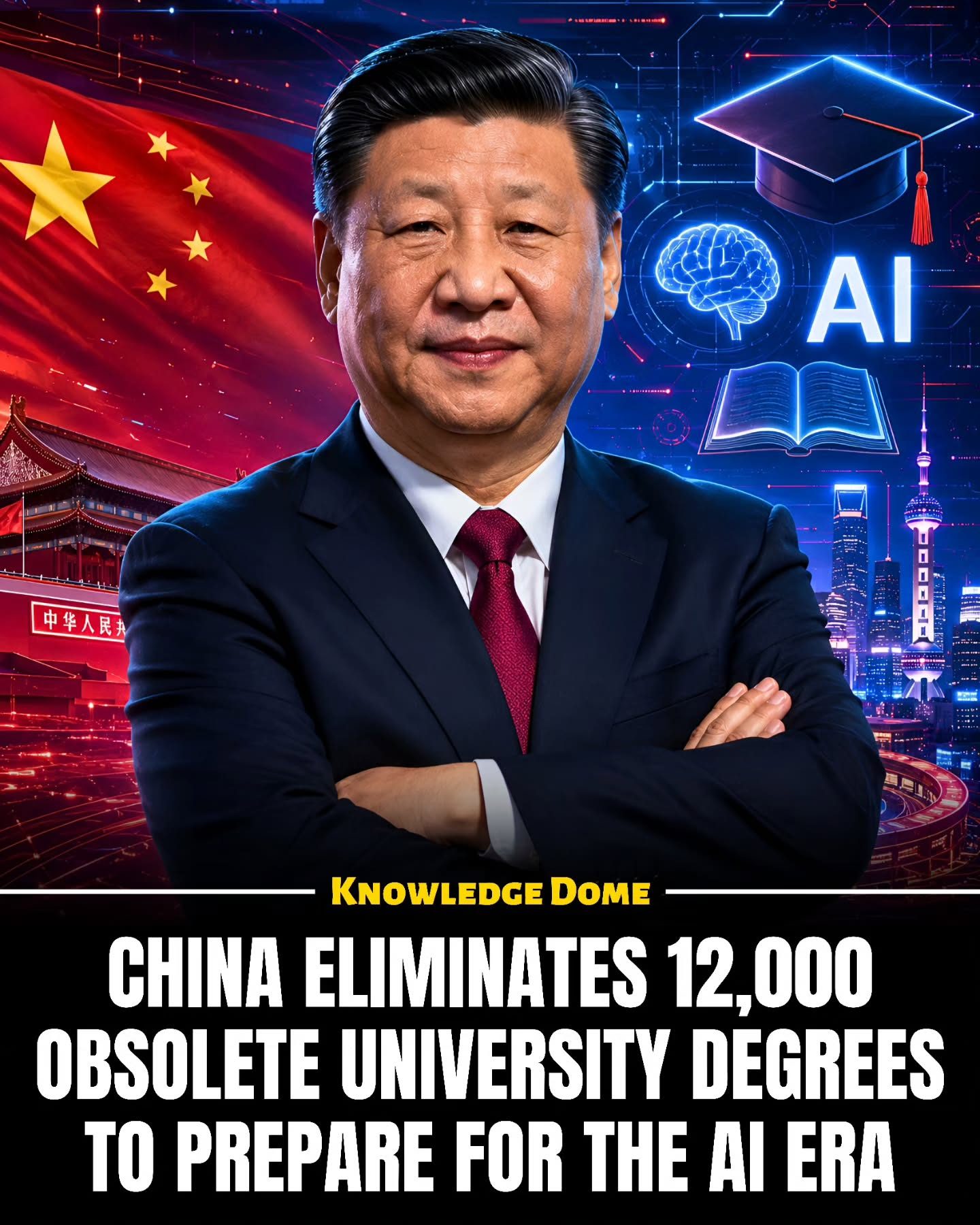
China's Shifting Academic Landscape: 12,000 Degrees Replaced to Prepare for the AI Era
Between 2021 and 2025, Chinese universities are undergoing a significant transformation, with approximately 12,200 old undergraduate degrees discontinued and around 10,200 new programs introduced, focusing heavily on technology. The shift underscores a strategic plan to modernize education for the AI era and align with the future economic goals of the country. This major overhaul reflects the rapid pace at which China is adapting its educational system to ensure graduates are equipped for current and emerging job markets.
The Changing Face of Higher Education in China
China’s educational landscape is shifting to better prepare students for a technology-driven future. This transformation is evident in the removal of several traditional degree programs and the introduction of new, technology-centric courses. The degrees that are being phased out often fall under the categories of arts, humanities, foreign languages, and management. These include subjects such as marketing, human resource management, logistics, hotel management, photography, animation, advertising, broadcasting, translation, and language programs like Japanese, Korean, and English.
These subjects are often seen as less relevant or too crowded in the current job market, or they are deemed more susceptible to replacement by automation and AI tools. By contrast, the new programs are focused on high-tech fields like semiconductors, robotics, digital media, data governance, and embodied intelligence. This shift is intended to bolster local technology expertise and support China’s goal to become more competitive in the global technology landscape.
Why This Matters
The rapid transformation of China’s higher education system highlights a broader trend: the need for educational institutions to adapt to technological advancements. As AI and automation become more prevalent, the job market is also evolving. The skills required for future jobs are increasingly tech-oriented, and traditional academic programs may not adequately prepare students for these new roles.
The shift in educational focus is not just about eliminating outdated programs. It is about proactive planning to ensure that graduates are equipped with the skills needed for a rapidly changing job market. The new programs in semiconductors, robotics, and digital media are designed to meet the immediate and future demands of the tech industry.
The rapid migration from traditional academic fields to technology-based programs indicates a strategic move. This isn’t just about keeping up with the times; it’s about positioning China to be a leader in the next wave of technological innovation. By aligning educational programs with future economic goals, China is ensuring that its educational system remains relevant and forward-looking.
Key Areas of Focus
The new educational programs are centered around several strategic areas that are critical for China’s future economic competitiveness.
Semiconductors and Robotics
Semiconductors and robotics are at the forefront of China’s new educational initiatives. These fields are crucial for technological advancement and are expected to drive economic growth in the coming years. By focusing on these areas, China aims to reduce its dependence on foreign technology and develop a strong, self-sufficient domestic industry.
Digital Media
Digital media is another critical area of focus. As the world becomes more digitally connected, the demand for skilled professionals in digital media is on the rise. This includes everything from content creation to digital marketing and data analytics. By investing in digital media programs, China is positioning itself to be a leader in the digital economy.
Data Governance and Embodied Intelligence
Data governance and embodied intelligence are emerging fields that are crucial for the future of technology. Data governance involves the management and regulation of data, ensuring it is used ethically and effectively. Embodied intelligence, on the other hand, focuses on the development of AI systems that can interact with the physical world.
Practical Tips
If you’re a student or a parent considering educational pathways, here are some practical tips to navigate this changing landscape:
- Stay Informed: Keep yourself updated with the latest trends in technology and the job market. This will help you make informed decisions about your educational and career path.
- Explore New Programs: Look into programs that are emerging in the fields of semiconductors, robotics, digital media, data governance, and embodied intelligence. These programs offer exciting opportunities for the future.
- Develop Tech Skills: Regardless of your chosen field, developing basic tech skills can be highly beneficial. This includes proficiency in software, data analysis, and AI tools.
- Consider a Double Major: If you’re passionate about a traditional field but also see the value in technology, consider a double major or a minor in a tech-related subject.
Important Takeaways
- Educational Shift: China’s educational system is undergoing a significant transformation to align with future technological and economic goals.
- New Programs: The focus is on high-tech fields like semiconductors, robotics, digital media, data governance, and embodied intelligence.
- Adaptability: Traditional subjects are being phased out in favor of programs that are more relevant to the current and future job market.
- Future Focused: The educational system is adapting to ensure that graduates are prepared for the AI era and the evolving job market.
Conclusion
The transformation of China’s higher education system is a strategic move to prepare students for a future driven by AI and technology. By discontinuing 12,200 old undergraduate degrees and introducing 10,200 new technology-focused programs, China is ensuring that its graduates are equipped with the skills needed for the jobs of tomorrow. This shift not only positions China as a leader in technological innovation but also ensures that its educational system remains relevant and forward-looking. Whether you’re a student, a parent, or an educator, understanding this transformation and adapting to it can help you navigate the changing educational and job landscape.
Watch the Reel
Questions readers ask
Why are Chinese universities phasing out 12,000 traditional degrees?
Chinese universities are phasing out these degrees to pivot their focus towards technology and AI, aligning their offerings with future economic goals and the demands of a rapidly evolving job market. This shift is part of a strategic plan to ensure that graduates are well-prepared for careers in tech-driven fields.
What types of new programs are being introduced in place of the discontinued degrees?
The new programs focus on cutting-edge fields such as robotics, semiconductors, and data governance. These areas are crucial for the development of AI and technology, making students more competitive in the job market.
How many new programs are being introduced, and what is the time frame for this transition?
Approximately 10,200 new programs are being introduced between 2021 and 2025. This period allows for a comprehensive overhaul of the higher education system, ensuring a smooth transition to tech-focused curricula.
Which traditional degrees are being discontinued under this reform?
Degrees in arts, humanities, and languages are some of the traditional programs being phased out. This decision reflects a prioritization of STEM and technology fields in alignment with the country's future economic goals.
How does this shift impact the future job market in China?
The shift ensures that graduates will be better prepared for a tech-driven job market, with skills in AI, robotics, and data governance. This aligns with China's goals to become a global leader in technology and innovation.
What is the significance of introducing programs in robotics and semiconductors?
These fields are at the forefront of technological advancement and are integral to AI development. By focusing on robotics and semiconductors, Chinese universities aim to produce graduates who can contribute to and lead in these critical industries.
What other fields are being prioritized in the new programs?
In addition to robotics and semiconductors, programs in data governance are also being prioritized. This field is essential for managing and securing the vast amounts of data generated by AI and other technologies, making it a key area for future job growth.
Related deep dives
Similar reads based on topic and creator.


Recent articles
Fresh deep dives from the latest Reels we unpacked.




Comments
Be the first to comment.