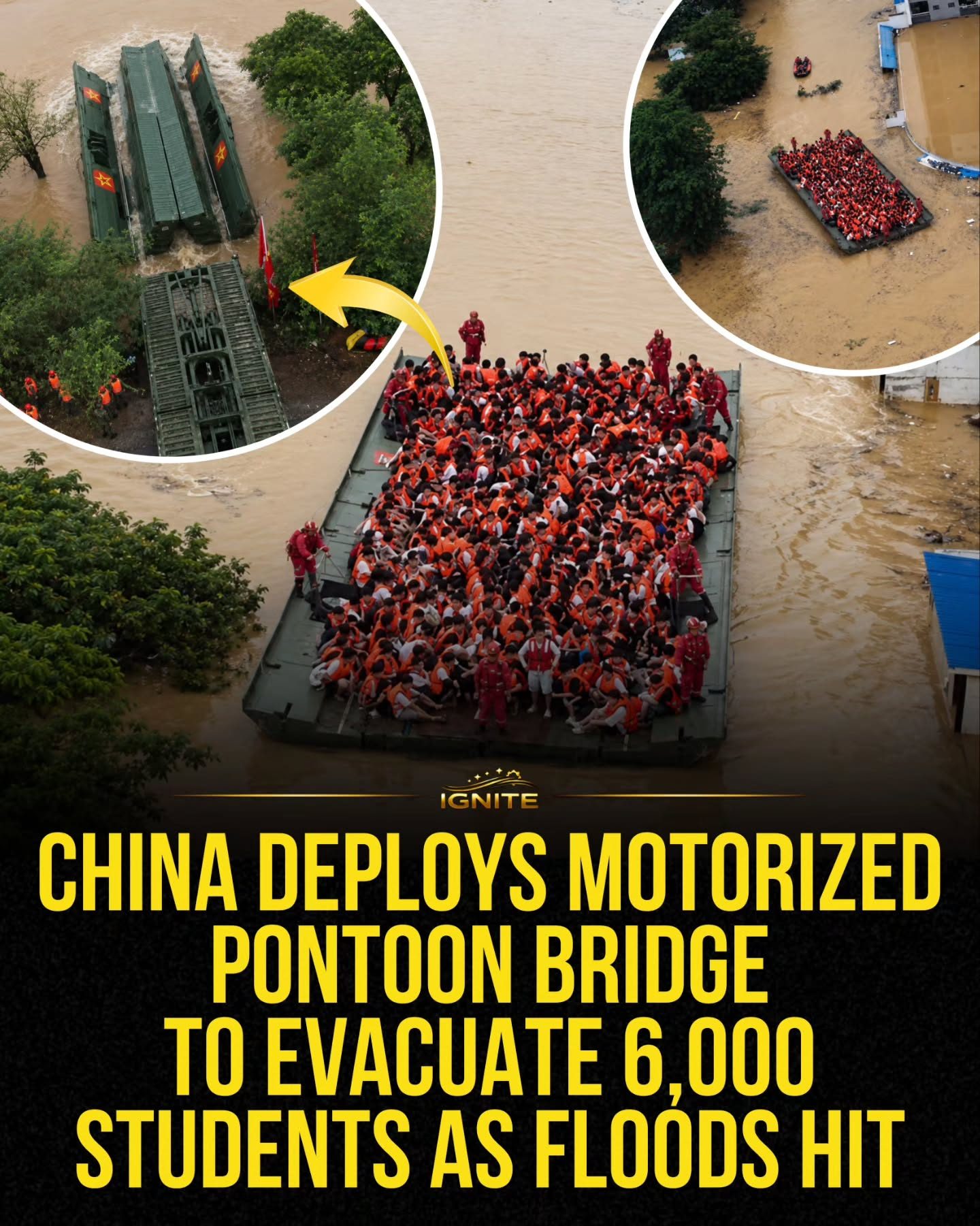
The Role of Motorized Pontoon Bridges in Flood Evacuation
When severe flooding strikes, rapid and efficient evacuation is crucial. In China, the deployment of motorized pontoon bridges has proven to be a vital tool in rescuing and transporting large groups of people, particularly in highly populated areas. These bridges are becoming more prevalent in disaster relief operations, offering a swift and effective solution for crossing floodwaters.
Why Motorized Pontoon Bridges Matter in Disaster Relief
Floods can strike quickly and without warning, leaving communities with little time to respond. Traditional methods of evacuation, such as boats or helicopters, can be limited by the scale of the disaster and the number of people needing assistance. This is where motorized pontoon bridges come into play. They provide a stable, reliable means of transport for large groups, ensuring a more organized and efficient evacuation process.
Understanding the Deployment of Motorized Pontoon Bridges
The motorized pontoon bridge is a versatile and robust piece of equipment designed to handle various emergency situations. Its motorized capabilities enable it to be quickly deployed and maneuvered, even in challenging conditions. Here are some key aspects of its deployment:
Features and Functionality
-
Rapid Deployment: One of the primary advantages of a motorized pontoon bridge is its ability to be quickly assembled and deployed. This feature is critical in disaster scenarios where every minute counts. The bridge can be set up and operational in a matter of hours, allowing for prompt evacuation.
-
Load Capacity: These bridges are designed to withstand significant load, making them suitable for transporting large numbers of people and even heavy equipment. In the case of China's recent flooding, approximately 6,000 students were successfully evacuated using a motorized pontoon bridge.
-
Durability and Stability: Pontoon bridges are known for their robust construction, which ensures stability even in turbulent waters. This stability is essential for maintaining the safety of evacuees, especially in high-stress situations.
The Evacuation Process
The evacuation process involves several coordinated steps, all aimed at ensuring the safe and efficient transport of individuals from affected areas. Here’s a breakdown of the process:
-
Preparation: Before deployment, teams assess the situation to determine the best placement for the bridge. This includes evaluating the water currents, the stability of the ground, and ensuring that the bridge can handle the expected load.
-
Deployment: Once the site is chosen, the bridge is quickly assembled and launched. The motorized pontoons ensure that the bridge can be moved into position swiftly, minimizing the time it takes to establish a crossing.
-
Evacuation: Evacuees, often wearing safety vests or other protective gear, are guided across the bridge. This organized movement helps maintain order and prevents panic, ensuring that everyone is safely transported.
-
Monitoring and Support: Throughout the evacuation, teams monitor the bridge and the surrounding area for any potential hazards. This includes keeping an eye on the water levels, the structural integrity of the bridge, and the well-being of the evacuees.
Practical Tips for Effective Flood Evacuation
When planning for a potential flood, it’s crucial to have a well-thought-out strategy in place. Here are some practical tips to consider:
-
Coordination with Emergency Services: Establish clear lines of communication with local emergency services. This ensures that everyone is on the same page and that resources can be effectively coordinated.
-
Training and Drills: Regular training and drills can help familiarize staff and volunteers with the deployment and operation of pontoon bridges. This prepares everyone for the actual event, reducing the likelihood of errors.
-
Use of Protective Gear: Ensure that all evacuees have access to appropriate protective gear, such as life vests. This not only keeps them safe but also instills confidence in the evacuation process.
-
Pre-Deployment Planning: Pre-plan where to deploy the pontoon bridge, including potential sites and backup options. This minimizes delays and ensures that the bridge can be set up quickly when needed.
Important Takeaways
Efficient evacuation is a cornerstone of disaster relief, and the use of motorized pontoon bridges has shown exceptional promise in this arena. Here are the key points to remember:
- Rapid Deployment: These bridges can be quickly assembled and deployed, making them ideal for emergency situations.
- Load Capacity: They are designed to handle substantial loads, ensuring that large groups can be safely transported.
- Durability and Stability: The robust construction ensures safety and reliability, even in challenging conditions.
Conclusion
Motorized pontoon bridges are a valuable addition to any disaster relief strategy, particularly in regions prone to severe flooding. Their deployment in China to evacuate students underscores their effectiveness in managing large-scale evacuations. By understanding their features and the evacuation process, communities can better prepare for and respond to natural disasters, ensuring the safety and well-being of all affected individuals.
Watch the Reel
Questions readers ask
How do motorized pontoon bridges assist in flood response in China?
Motorized pontoon bridges in China provide a swift and efficient means to evacuate large groups of people during floods. Their rapid deployment allows for quick response to sudden flooding events, ensuring that communities can be evacuated safely and promptly. These bridges are particularly useful in highly populated areas where traditional evacuation methods may fall short.
What makes motorized pontoon bridges an effective solution for evacuating students during floods?
Motorized pontoon bridges are effective for evacuating students due to their sturdy structure and high capacity. They can be quickly deployed to facilitate the organized and speedy evacuation of large groups, as demonstrated in recent floods where 6,000 students were successfully rescued.
How do motorized pontoon bridges compare to other evacuation methods during floods?
Unlike boats or helicopters, motorized pontoon bridges offer a stable and high-capacity solution for crossing floodwaters. They can accommodate a large number of people at once, making them more efficient for evacuating entire communities swiftly. This is particularly beneficial in scenarios where the scale of the disaster is vast.
What advantages do motorized pontoon bridges offer in disaster relief operations?
Motorized pontoon bridges provide several advantages in disaster relief, including rapid deployment, high capacity, and stability. They can be quickly set up in response to sudden flooding, allowing for the swift and organized evacuation of large groups. This makes them an invaluable tool in saving lives and minimizing the impact of floods.
Why are motorized pontoon bridges becoming more prevalent in China's flood response strategies?
The prevalence of motorized pontoon bridges in China's flood response strategies is due to their proven effectiveness in rescuing and transporting large groups of people. Their ability to facilitate rapid, organized evacuations makes them a critical component in disaster relief operations, especially in densely populated areas where efficient evacuation is paramount.
How have motorized pontoon bridges been utilized in recent flooding events in China?
In recent flooding events, motorized pontoon bridges have been instrumental in saving thousands of lives, including 6,000 students. Their speedy deployment and robust construction have enabled swift and efficient evacuations, highlighting their importance in China's flood response strategies.
Related deep dives
Similar reads based on topic and creator.


Recent articles
Fresh deep dives from the latest Reels we unpacked.




Comments
Be the first to comment.