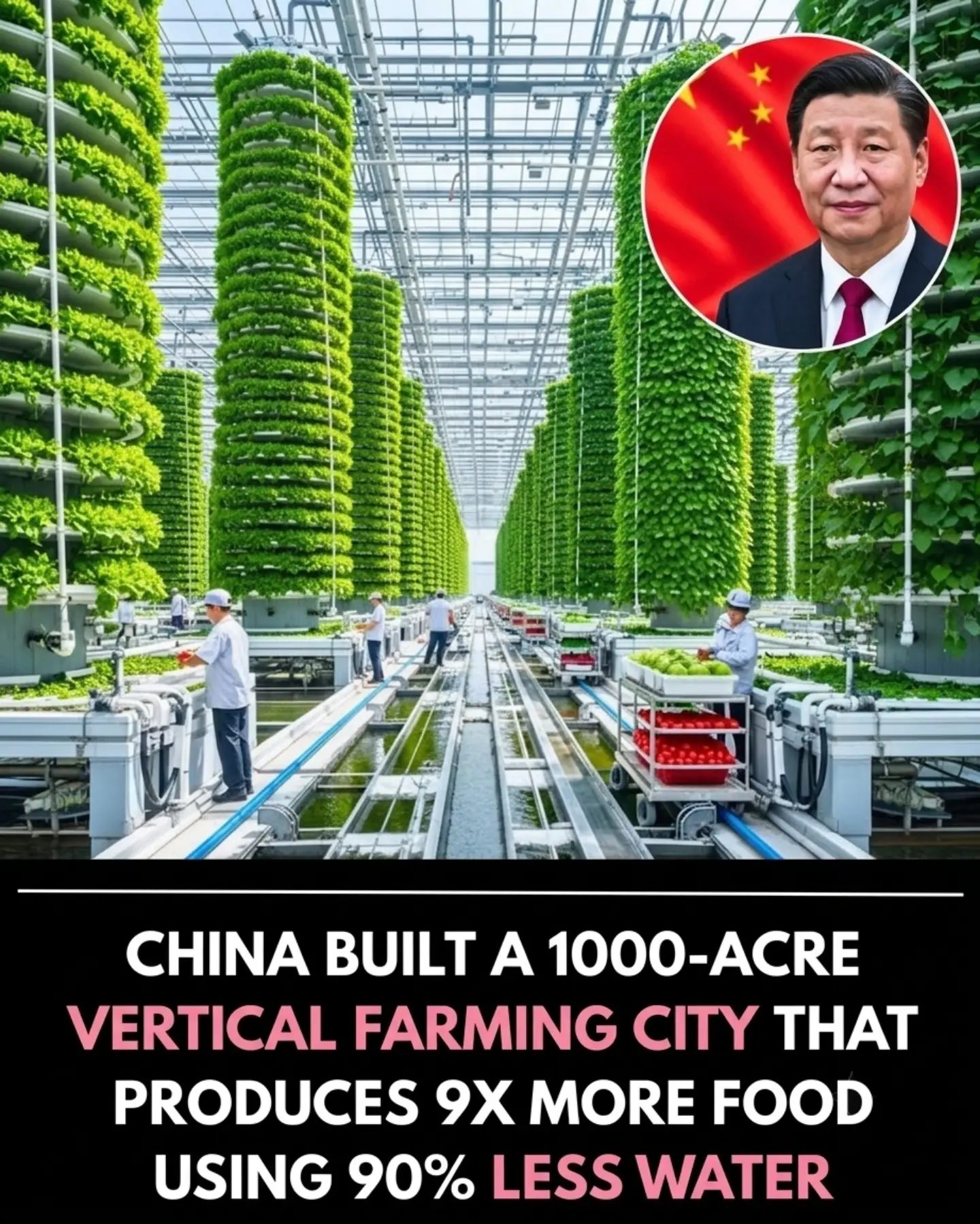
Vertical farming has emerged as a revolutionary approach to agriculture, transforming how we produce food. This innovative method involves growing crops in vertically stacked layers, often in controlled indoor environments. In China, this concept has been taken to new heights with the development of a 1,000-acre vertical farming city. This initiative is part of a broader push towards high-tech "plant factories" designed to enhance food security and optimize land use efficiency.
Context / Why this matters
Food security and sustainable agriculture have become pressing global concerns. Traditional farming methods often face challenges such as water scarcity, land degradation, and climate variability. Vertical farming addresses these issues by maximizing crop yield per square foot while minimizing resource use. In China, this approach is not just a local experiment but a critical component of national agricultural strategy.
Main discussion
The 1,000-Acre Vertical Farming City
China's 1,000-acre vertical farming city is a testament to the country's commitment to innovative agriculture. This initiative is characterized by large-scale, automated, and indoor farming hubs rather than a single continuous skyscraper. The project represents a broader national push toward high-tech, controlled-environment agriculture. Central to this push are facilities like the world's first 20-story unmanned vertical farm in Chengdu, developed by the Chinese Academy of Agricultural Sciences (CAAS).
Key Features of Vertical Farming in China
These advanced vertical farming facilities utilize several cutting-edge technologies to enhance productivity and sustainability:
-
Stacked Vertical Growth Columns: Plants are grown in stacked layers, allowing for a significant increase in crop yield per square foot.
-
Precision LED Lighting: Customizable LED lighting systems are tailored to specific crop stages, providing optimal light conditions for growth.
-
Closed-Loop Hydroponic or Aeroponic Systems: These systems recirculate water and nutrients, achieving up to 90% to 95% water savings through vapor recapture and liquid recycling. This not only conserves water but also eliminates the need for chemical pesticides, creating a more environmentally friendly farming method.
Benefits of Vertical Farming
The benefits of vertical farming are numerous and include:
-
Increased Food Production: These facilities can produce nine times more food than traditional farming methods.
-
Reduced Water Usage: By utilizing closed-loop systems, vertical farms use 90% less water compared to conventional agriculture.
-
Year-Round Crop Production: The controlled environment allows for year-round crop production, regardless of external weather conditions. This ensures a steady supply of fresh produce.
-
Faster Harvest Cycles: Crops can go from seed to table in as little as 35 days, drastically accelerating harvest cycles. This is particularly beneficial for leafy greens and herbs, which are the primary crops in these facilities.
-
Eliminating Chemical Pesticides: The controlled environment and closed-loop systems eliminate the need for chemical pesticides, resulting in healthier, more sustainable produce.
Practical tips
Getting Started with Vertical Farming
If you're interested in vertical farming, here are some practical tips to get you started:
-
Research and Planning: Begin by researching the specific crops you want to grow and the technologies required for vertical farming. Understand the benefits and challenges of vertical farming in your region.
-
Choose the Right Technology: Invest in high-quality vertical growth columns, precision LED lighting, and hydroponic or aeroponic systems. Ensure that these systems are designed for efficiency and sustainability.
-
Controlled Environment: Create a controlled environment with optimal temperature, humidity, and light conditions. This will help in maximizing crop yield and minimizing resource use.
-
Automation and Monitoring: Implement automated systems for watering, lighting, and nutrient delivery. Use monitoring tools to track the health and growth of your crops.
-
Sustainable Practices: Focus on sustainable practices such as water recycling, energy efficiency, and pesticide-free farming. This will not only benefit the environment but also enhance the quality of your produce.
Important takeaways
Vertical farming, particularly in the context of China's 1,000-acre vertical farming city, highlights the potential of high-tech agriculture to revolutionize food production. Here are the key takeaways:
-
Food Security: Vertical farming can significantly enhance food security by producing more food in less space and with fewer resources.
-
Environmental Benefits: The method uses up to 90% less water and eliminates the need for chemical pesticides, making it a more environmentally sustainable farming practice.
-
Year-Round Production: The controlled environment allows for year-round crop production, ensuring a stable supply of fresh produce.
-
Technology and Innovation: Advanced technologies such as precision LED lighting and closed-loop hydroponic systems are critical to the success of vertical farming.
Conclusion
The future of agriculture is increasingly tied to innovative and sustainable methods like vertical farming. China's 1,000-acre vertical farming city is a prime example of how technology can be harnessed to address global food security and environmental challenges. By maximizing land-use efficiency, reducing resource consumption, and eliminating chemical pesticides, vertical farming offers a promising path forward for sustainable agriculture.
Watch the Reel
Questions readers ask
What are the primary benefits of vertical farming in China's 1,000-acre vertical farm city?
The primary benefits include enhanced land use efficiency, reduced water consumption, and minimized resource use. By stacking crops vertically in controlled environments, China can produce fresh crops year-round while addressing food security challenges and reducing the environmental impact of traditional farming.
How does vertical farming in China contribute to food security?
Vertical farming in China addresses food security by enabling year-round crop production in controlled environments. This reduces dependency on weather conditions and minimizes the risk of crop failures due to climate variability, ensuring a consistent supply of fresh produce.
What technologies are typically used in vertical farming initiatives like China's 1,000-acre vertical farm city?
Vertical farming initiatives often utilize automated systems, LED lighting, and hydroponic or aeroponic systems. These technologies optimize growth conditions, monitor plant health, and ensure efficient use of resources such as water and nutrients. In China, high-tech solutions are employed to maximize crop yield and sustainability.
Can vertical farming in urban environments really be sustainable?
Yes, vertical farming in urban environments promotes sustainability by reducing the need for large tracts of land, minimizing water use, and decreasing the carbon footprint associated with transportation. This approach also reduces the reliance on pesticides and herbicides, further enhancing environmental benefits and crop safety.
How does vertical farming in China optimize land use efficiency?
Vertical farming optimizes land use efficiency by growing crops in vertically stacked layers, which allows for a much higher density of crops per square foot compared to traditional farming. In China, a 1,000-acre vertical farm city can produce significantly more crops than a conventional farm of the same size, making it a highly efficient use of urban space.
Related deep dives
Similar reads based on topic and creator.




Recent articles
Fresh deep dives from the latest Reels we unpacked.




Comments
Be the first to comment.