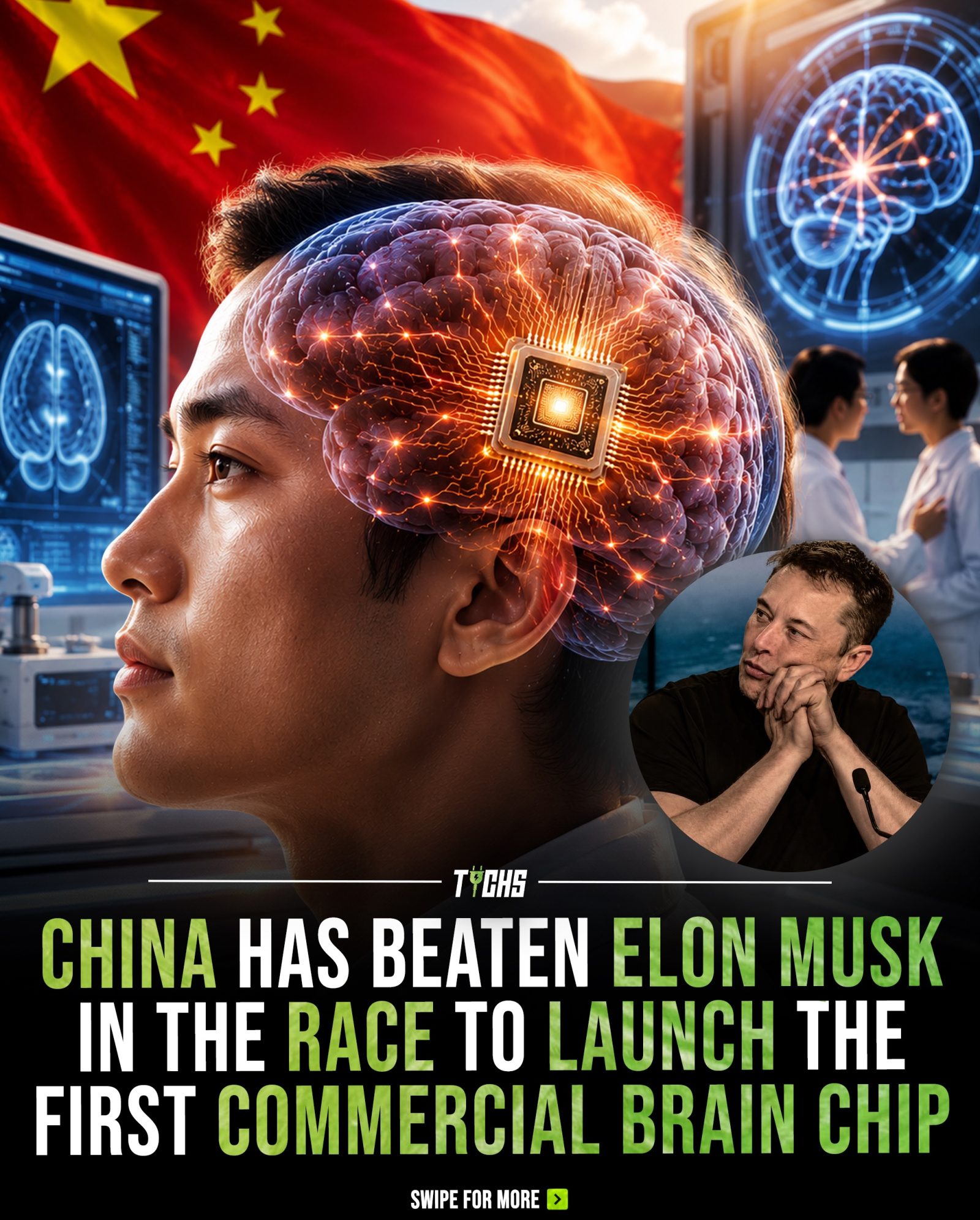
Brain Chip Technology and its Impact on Healthcare
Brain computer interfaces, once a staple of science fiction, are now becoming a reality in the healthcare sector. These interfaces allow patients, particularly those with paralysis, to interact with the world using only their thoughts. The Tychs NEO brain chip, developed in China, is at the forefront of this technology, designed to capture movement signals directly from the brain and translate them into actions through external devices. This advancement is not only revolutionizing healthcare but also sparking a global race to develop and refine brain chip technology.
Context / Why this matters
The development of brain chips holds immense potential for transforming various industries, including medicine, rehabilitation, and communication. These technologies could eventually redefine how humans interact with machines, making everyday tasks accessible to those with severe injuries. The competitive landscape, particularly the rivalry between China and Elon Musk's Neuralink, underscores the urgency and importance of this technology.
Main discussion
The NEO Brain Chip: A Paradigm Shift
China’s NEO brain chip is a groundbreaking innovation designed to capture movement signals directly from the brain and translate them into actions. This technology is particularly beneficial for paralysis patients, enabling them to perform everyday tasks that were previously impossible. By converting thoughts into real movements, the NEO chip opens up new avenues for independent living and improved quality of life.
The chip's ability to wirelessly decode thoughts and send commands to robotic devices is a significant milestone. This capability not only enhances mobility for patients but also paves the way for more sophisticated interactions with technology. The NEO chip's integration with external devices allows for seamless control, making it a versatile tool in the realm of neurotechnology.
How the brain chips work
Brain chips work by interfacing directly with the brain, capturing neural signals and translating them into actionable commands. The NEO brain chip, for instance, is designed to detect movement signals from the brain and convert them into actions through external devices. This process involves a series of intricate steps, including signal capture, decoding, and transmission to the desired device.
The Role of Neural Signals
Neural signals play a crucial role in the functionality of brain chips. These signals are the electrical impulses generated by neurons in the brain, which control various movements and actions. By capturing and decoding these signals, brain chips can translate thoughts into physical movements. This technology is particularly useful for paralysis patients, as it allows them to control external devices using their thoughts.
Neuralink: The Experimental Frontier
Elon Musk's Neuralink, while still in the experimental phase, is another major player in the brain chip technology race. Neuralink has received approval for human trials, signifying a significant step forward in the development of brain-computer interfaces. However, the technology remains experimental, and its real-world applications are yet to be fully realized.
Neuralink's progress highlights the potential and challenges of brain chip technology. The company's work on wirelessly decoding thoughts and sending commands to robotic devices mirrors the advancements of the NEO chip. However, the experimental nature of Neuralink underscores the ongoing research and development required to make this technology widely accessible and reliable.
Future Implications
The future of brain chip technology is promising, with potential applications extending beyond healthcare. As companies and research groups around the world continue to develop and refine these technologies, the possibilities for transformation are vast. From medicine and rehabilitation to communication and human-machine interaction, brain chips could redefine how we live and interact with the world.
Practical tips
For individuals interested in brain chip technology, staying informed about the latest developments and advancements is crucial. Engaging with reputable sources, attending industry conferences, and following key players in the field can provide valuable insights and updates. Additionally, participating in clinical trials or research studies can offer firsthand experience with emerging technologies.
How to stay informed
Staying informed about brain chip technology involves keeping up with the latest research, developments, and industry news. Following key players in the field, such as Tychs and Neuralink, can provide valuable insights and updates. Engaging with reputable sources, attending industry conferences, and participating in clinical trials or research studies can also offer firsthand experience and knowledge.
Research and Development
Research and development play a critical role in the advancement of brain chip technology. Engaging with reputable sources, attending industry conferences, and participating in research studies can provide valuable insights and updates. Additionally, collaborating with key players in the field, such as Tychs and Neuralink, can offer opportunities for innovation and development.
Important takeaways
The development of brain chip technology, exemplified by the NEO brain chip from China and Neuralink's experimental advancements, represents a significant leap forward in healthcare and neurotechnology. These technologies offer new possibilities for paralysis patients, enabling them to interact with the world using only their thoughts. The competitive landscape, with companies and research groups around the world racing to develop and refine these technologies, underscores the transformative potential of brain chips. As research and development continue, the future of brain chip technology holds immense promise for various industries, from medicine and rehabilitation to communication and human-machine interaction.
Conclusion
Brain chip technology is rapidly advancing, with the NEO brain chip and Neuralink leading the way. These innovations are transforming the healthcare landscape, offering new possibilities for paralysis patients and redefining how humans interact with machines. As competition in the brain-computer interface industry accelerates, the future of this technology looks promising, with potential applications extending beyond healthcare. By staying informed, engaging with key players, and participating in research and development, individuals can contribute to and benefit from the advancements in brain chip technology.
Watch the Reel
Questions readers ask
What is the primary purpose of brain chip technology in healthcare?
The primary purpose of brain chip technology in healthcare is to enable individuals, particularly those with paralysis, to interact with their environment using thought-driven movements. This is achieved by capturing signals from the brain and translating them into actions through external devices.
How does the NEO brain chip developed in China work?
The NEO brain chip captures movement signals directly from the brain and translates them into actions through external devices, allowing users to perform tasks and interact with the world using only their thoughts.
What are the potential benefits of brain chip technology to people with severe injuries?
Brain chip technology offers the potential to significantly improve the quality of life for individuals with severe injuries by enabling them to perform daily activities and communicate more independently, thereby enhancing their autonomy and engagement with the world.
Who are the key players in the brain chip race?
Key players in the brain chip race include private companies like Neuralink, founded by Elon Musk, and technological developments from China, such as the NEO brain chip. Both entities are pushing the boundaries of what is possible in brain-computer interactions.
What is the significance of thought-controlled devices in the context of brain chip technology?
Thought-controlled devices represent a significant advancement in human-machine interfaces. By allowing users to control external devices directly with their thoughts, these devices open new possibilities for enhancing mobility, communication, and overall independence, especially for those with paralysis.
How might brain chip technology impact industries beyond healthcare?
Brain chip technology has the potential to transform various industries, including rehabilitation and communication. By refining brain-computer interactions, this technology could lead to innovative solutions for improving human productivity, accessibility, and overall quality of life in numerous sectors.
What advancements can we expect from commercial brain chips in the future?
Future commercial brain chips are expected to offer more refined and accessible solutions for thought-driven movements, enabling a broader range of applications. These advancements could include improved accuracy, faster response times, and more user-friendly interfaces, making brain chip technology an integral part of modern technology.
Related deep dives
Similar reads based on topic and creator.




Recent articles
Fresh deep dives from the latest Reels we unpacked.




Comments
Be the first to comment.