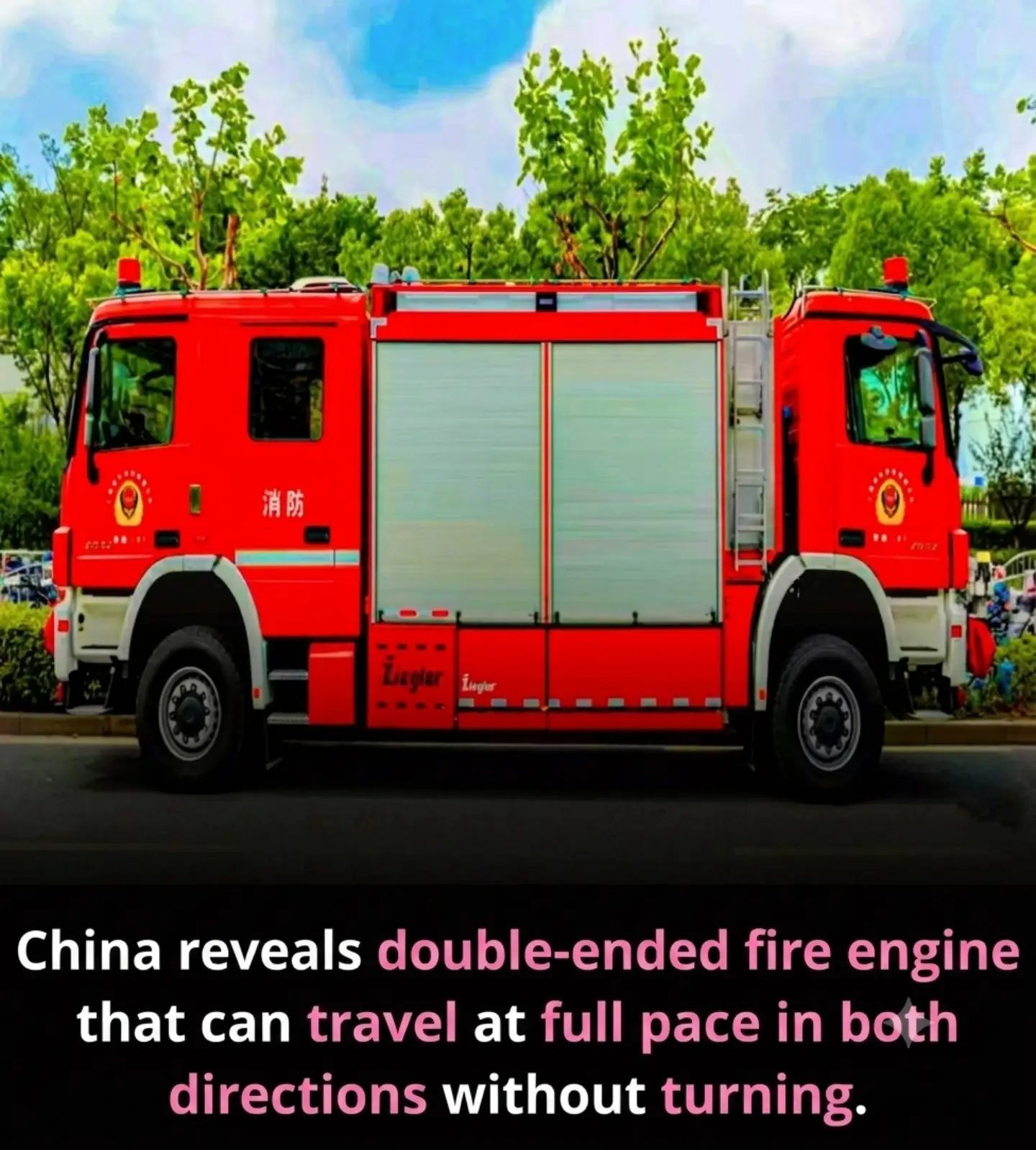
Unique Design of Double-Ended Fire Engines
The Lingter two-headed fire engine is an extraordinary innovation in the realm of emergency response vehicles. This unique vehicle is designed specifically for narrow alleys and tight tunnels, making it an invaluable asset in urban areas and underground spaces.
Context / Why this matters
In emergencies, every second counts. Traditional fire engines can struggle in narrow or confined spaces, often requiring U-turns or complex maneuvers to exit. The double-ended design of the Lingter fire engine eliminates these issues, allowing it to operate more efficiently in challenging environments.
Main discussion
Double-Ended Design: A Revolution in Emergency Response
The most striking feature of the Lingter fire engine is its double-ended design. This means the vehicle has a full driver's cabin at both ends. This design is not just a novelty; it serves a critical purpose. In tight spots or dead ends, the driver can simply walk to the other cabin, which is now the front, and drive straight out at full speed. This eliminates the need for U-turns, saving crucial seconds during emergencies. This feature is particularly useful in scenarios such as:
- Narrow Alleys: Where space is limited, and traditional fire engines would struggle to maneuver.
- Tight Tunnels: Where reversing or turning around can be nearly impossible.
- Urban Environments: Where buildings and infrastructure can create tight, confined spaces.
Engineering Innovations
The Lingter fire engine is packed with engineering marvels that make it a standout in its category. Here are some of the key features:
- Crab-Walking Mode: The all-wheel steering system allows the vehicle to slide sideways into tight spots. This is particularly useful for navigating narrow corridors or squeezing through narrow doorways.
- Full-Speed Operation: The engine can travel at full pace in both directions without needing to turn. This means it can quickly respond to emergencies and evacuate quickly, minimizing the risk of delay.
- Tunnel Specialization: Designed for fast evacuations in covered spaces, this fire engine is ideal for underground parking lots, subways, and other enclosed areas.
Practical Applications
The Lingter fire engine's design has significant implications for emergency response in various settings. Here are some practical applications:
- Urban Firefighting: In densely populated cities, the narrow streets and alleys can be challenging for traditional fire engines. The Lingter fire engine can navigate these areas with ease, ensuring quicker response times.
- Underground Structures: Subways, parking garages, and other underground structures often have tight, winding passages. The Lingter fire engine can navigate these spaces efficiently, making it ideal for evacuations and rescue operations.
- Historic Districts: Many historic districts have narrow, winding streets that are difficult for traditional fire engines to navigate. The Lingter fire engine can handle these conditions, preserving both the historic architecture and the safety of residents.
Practical tips
For Emergency Responders
If you're an emergency responder considering the Lingter fire engine, here are some practical tips:
- Training: Ensure that all drivers are thoroughly trained in the unique features of the double-ended design. This includes practicing the transition between cabins and using the all-wheel steering system.
- Maintenance: Regular maintenance is crucial for any emergency vehicle, and the Lingter fire engine is no exception. Pay particular attention to the dual-cabin system and the all-wheel steering to ensure they remain in optimal condition.
- Operational Planning: Incorporate the Lingter fire engine into your operational plans for areas with narrow alleys, tight tunnels, and other confined spaces. This can help improve response times and overall efficiency.
For Municipalities
If you're a municipal official or urban planner, consider the following:
- Urban Design Considerations: As you plan urban layouts and transportation networks, consider the unique capabilities of the Lingter fire engine. This can help inform decisions about street widths, alleyways, and other infrastructure.
- Integration with Existing Systems: Think about how the Lingter fire engine can integrate with existing emergency response systems. This includes coordination with other emergency vehicles, communication systems, and response protocols.
- Public Awareness: Educate the public about the new capabilities of the Lingter fire engine. This can help foster a sense of confidence and security in the community.
Important takeaways
- The Lingter double-ended fire engine represents a significant advancement in emergency response vehicles.
- Its unique design allows for full-speed operation in both directions, eliminating the need for U-turns and saving crucial seconds.
- The all-wheel steering system, crab-walking mode, and tunnel specialization make it ideal for narrow alleys, tight tunnels, and underground structures.
Conclusion
The Lingter double-ended fire engine is a testament to the power of innovative engineering. Its unique design and advanced features make it an invaluable tool for emergency responders and a crucial asset for municipalities. As urban spaces become more complex and confined, vehicles like the Lingter fire engine will play an increasingly important role in ensuring public safety.
Watch the Reel
Questions readers ask
What makes the Double-Ended Fire Engine from China unique?
The Double-Ended Fire Engine from China stands out due to its dual driver's cabins, one at each end. This design allows the vehicle to navigate tight urban spaces, narrow alleys, and tunnels more efficiently, addressing challenges faced by traditional fire engines in confined environments.
How does the double-ended design improve emergency response in urban areas?
The double-ended design eliminates the need for complex maneuvers, such as U-turns, that traditional fire engines often require in narrow or confined spaces. This means the Lingter can enter and exit tight spaces more quickly, saving crucial time during emergencies.
What specific spaces are the Lingter fire engine designed to maneuver?
The Lingter fire engine is specifically designed to navigate narrow alleys, tight tunnels, and densely packed urban areas. These are spaces where traditional fire engines may struggle due to their size and maneuverability.
Can the Lingter fire engine operate in both directions without turning around?
Yes, the Lingter fire engine can operate in both directions without the need to turn around. This is thanks to its unique double-ended design, which features a driver's cabin at both ends, allowing for quick, efficient navigation in tight spaces.
Why is the Lingter fire engine a valuable asset in urban areas and underground spaces?
The Lingter fire engine is invaluable in urban areas and underground spaces because it can navigate these environments more efficiently, eliminating the need for complex maneuvers, and allowing for quicker response times in emergencies.
Are there other countries using similar double-ended fire engine designs?
As of current knowledge, China's Lingter fire engine is a pioneering example of this innovative design. However, the success of this vehicle may inspire similar developments in other countries facing similar urban challenges.
What kind of engineering innovations are incorporated into the Double-Ended Fire Engine?
The Double-Ended Fire Engine incorporates a range of engineering innovations. These include dual driver's cabins, improved navigation capabilities, and a design optimized for tight spaces. These features work together to enhance the vehicle's performance in challenging urban environments.
Related deep dives
Similar reads based on topic and creator.

Recent articles
Fresh deep dives from the latest Reels we unpacked.




Comments
Be the first to comment.