Ancient Chinese Quarry: The Enigma of the Unfinished Stone Stele
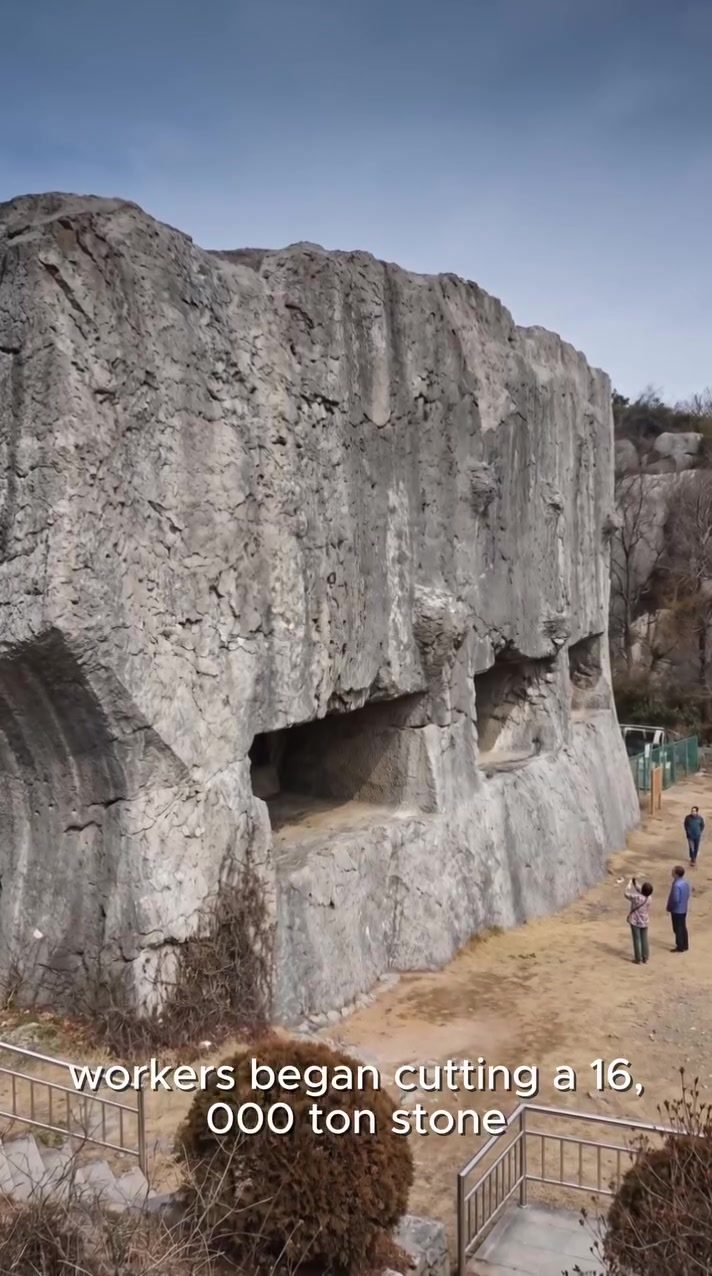
The Yangshan Quarry in China holds a mysterious and monumental secret: an immense stone stele ordered by the Yongle Emperor for his father's mausoleum near Nanjing. This colossal project, initiated in 1405, involved the preparation of three massive components, with the base estimated at a staggering 16,000 tonnes. Yet, despite the enormous effort and resources poured into the endeavor, the pieces were never transported or assembled. The remnants of this colossal undertaking can still be seen today, partly connected to the mountain where they were carved.
Why This Matters
The story of the Yangshan Quarry is more than just a historical curiosity; it offers a window into the engineering capabilities, cultural significance, and political dynamics of ancient China. Understanding why this project was abandoned sheds light on the challenges and priorities of the Ming Dynasty, particularly during the reign of the Yongle Emperor. This ancient engineering mystery also highlights the enduring fascination with monumental structures and the technological limits of ancient civilizations.
The Yongle Emperor's Ambition
The Yongle Emperor, whose reign spanned from 1402 to 1424, was known for his grand architectural and engineering projects. His ambition to create a monumental stele for his father's mausoleum was part of a broader initiative to honor his lineage and assert his authority. The stone stele was intended to be a symbol of power, prestige, and filial piety, reflecting the emperor's desire to leave a lasting legacy.
The Colossal Undertaking
The preparation of the stone stele was an undertaking of unprecedented scale. Workers at the Yangshan Quarry began cutting a 16,000-ton stone from the mountain, a task that required immense skill and effort. The quarrying process involved meticulous planning and precise execution, reflecting the advanced engineering and craftsmanship of the time. Despite the substantial progress made, the pieces were never moved from the quarry, and the reasons for this remain a subject of debate.
Theories on the Project's Abandonment
Several theories have been proposed to explain why the project was never completed. One of the most widely discussed explanations is the logistical challenge of transporting the colossal stones. Moving a 16,000-ton piece over land would have required considerable resources and innovative engineering solutions, which may have proven infeasible.
Another theory suggests that political decisions played a significant role. The Yongle Emperor's reign was marked by internal power struggles and external conflicts, which could have diverted resources and attention away from the monument. Political instability and the need to prioritize other projects, such as the construction of the Forbidden City, may have led to the abandonment of the stone stele.
A third theory points to problems with the stone itself. The quarrie was a difficult site to work in, and the size and weight of the stone posed significant challenges. Technical difficulties, such as cracks or flaws in the stone, could have made it impractical to continue the project.
Practical Tips for Exploring Ancient Quarries
For those interested in exploring ancient quarries and uncovering the mysteries they hold, here are some practical tips:
- Research Thoroughly: Before visiting, gather as much information as possible about the quarry's history, significance, and any known challenges that were faced.
- Engage with Local Experts: Local historians, archaeologists, and guides can provide valuable insights and context that you might not find in books or online.
- Visit at the Right Time: Weather and accessibility can greatly impact your experience. Choose a time when the site is open and weather conditions are favorable.
- Safety First: Ancient quarries can be dangerous due to unstable structures and rough terrain. Wear appropriate footwear and follow safety guidelines.
- Document Your Findings: Take notes, photographs, and videos to document your observations and experiences. This can help you analyze and share your findings with others.
Important Takeaways
The story of the Yangshan Quarry serves as a reminder of the complexities and challenges of ancient engineering projects. The sheer scale of the stone stele, the technical difficulties involved, and the political dynamics of the time all played a role in the project's abandonment. Understanding this historical mystery provides valuable insights into the capabilities, limitations, and priorities of ancient civilizations.
Conclusion
The Yangshan Quarry and the unfinished stone stele it holds stand as a testament to the ambitions and challenges of ancient China. The project's abandonment, while a mystery, offers a wealth of information about the engineering prowess, cultural values, and political landscape of the Ming Dynasty. By exploring this ancient site, we gain a deeper appreciation for the enduring legacy of China's historical achievements and the timeless fascination with monumental structures.
Watch the Reel
Questions readers ask
Who commissioned the 16,000-tonne stone project in China?
The 16,000-tonne stone project was commissioned by the Yongle Emperor, also known as Zhu Di, who ruled during the Ming Dynasty in China.
Where was the ancient stone project intended to be assembled?
The project was intended to be assembled at the mausoleum of the Yongle Emperor's father, located near Nanjing, China.
What were the three main components of the stone project?
The project involved the preparation of three massive components, with the base estimated to weigh 16,000 tonnes. It remains unclear what the exact purpose of the three components was.
Why was the stone project abandoned?
The reasons for the abandonment remain a mystery, but potential factors could include logistical challenges, changes in imperial priorities, or even superstitious beliefs.
What insights does the abandoned project offer into the Ming Dynasty?
The unfinished project provides valuable insights into the engineering capabilities and challenges faced during the Ming Dynasty, as well as the cultural significance of monumental structures during that era.
When was the stone project initiated?
The stone project was initiated in 1405 during the reign of the Yongle Emperor, but it was never completed or transported to its intended site.
Where can the remnants of the stone project be seen today?
The remnants of the 16,000-tonne stone project can still be seen today at the Yangshan Quarry in China, connected to the mountain from which they were carved.
Related deep dives
Similar reads based on topic and creator.



Recent articles
Fresh deep dives from the latest Reels we unpacked.




Comments
Be the first to comment.