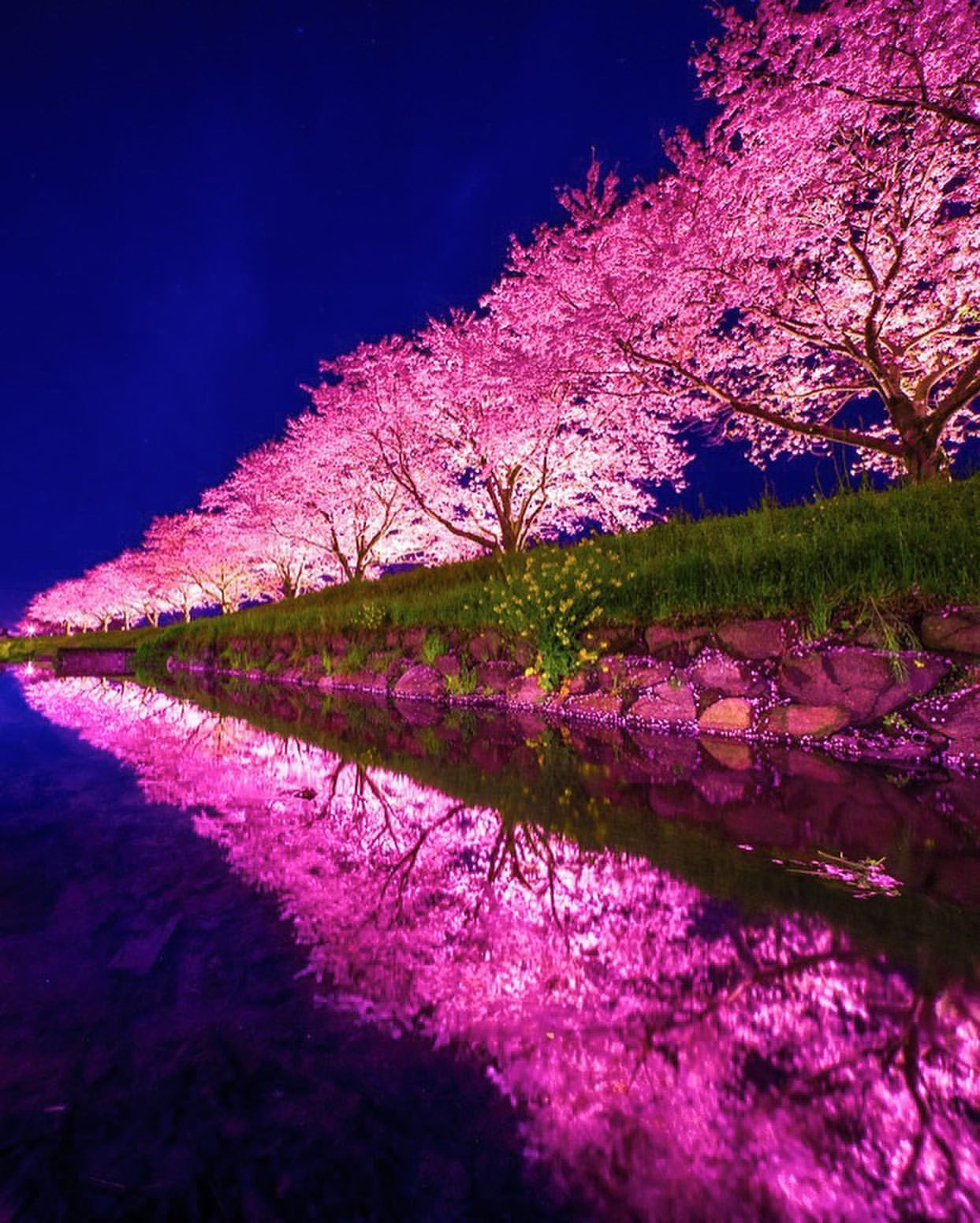
Cherry blossom trees in full bloom illuminate a riverbank, casting a magical glow. The dreamlike scene is a popular destination for spectacle-seekers. But these illuminated cherry blossom trees combine a timeless natural beauty with a particular dose of human artistry to rekindle seasonal rituals.
Cherry Blossoms on Display
Cherry blossoms are the harbingers of spring, a seasonal rite of renewal familiar across the globe. Estimations vary widely on the origin of cherry blossoms as a cultural trope, yet the imagery is deeply embedded in many cultures — from Japan to the Eastern United States. These are not wild trees in the forest, but rather cultivated species, with groves manicured for full bloom displays. A natural flower in its own right, this beauty is industrialized in an intentional enclave akin to a highly curated museum exhibit, where simple natural beauty intersects with the human touch. The cherry blossom trees most people see today boast several human-selected traits. Unlike the wild cherry trees that produce edible fruit, domesticated cherry blossoms develop with ornamental features. Human-made cultivation means engineers have cherry tree varieties where the flowers are white or pink, or the leaves have more pronounced veins. However, it's not just the appearance of individual flowers that makes these trees special — it's also the scale of their displays. Cherry blossoms are visually striking with their blossoms scattering the ground like snow beneath the trees and casting soft light on the surrounding area. Self-seeding trees struggle to compete with modern land management. A botanical garden's landscaper ensures these trees have the optimal space, width, and height to encourage dense blooms. Cultivated cherry blossom trees are pruned with love to block unwanted sunlight from making it to the ground. Manicured cherry blossoms are no wildflowers.
The Ritual of Cherry Blossoms
Cherry blossoms are beautiful, but they're also a tradition and a cultural phenomenon. Seeing cherry blossom blooms is a ritual for many. Many temples and parks around the world hold annual bloom festivals to celebrate the timing of the cherry blossom blooms. The International Cherry Blossom Festival in Vancouver, Canada and the Sakura Matsuri Festival in Brooklyn, New York are both famous for their displays. These festivals celebrate human community, but also the natural cycle. They also can be a destination unto themselves. Japan's cherry blossom mingling with the country's cultural setting becomes a destination in part because cherry blossoms have become a symbol of renewal through human experience. In Washington D. C., the cherry blossoms become a spectacle that draws crowds to national landmarks. The careful care human beings bring the cherry blossoms can help the flowers reflect the intent of a grove's managers to display particular combinations or varieties of flowers.
Why Cherry Blossoms Flourish Where They Do
Artfully Illuminated
The cherry blossom groves are sometimes illuminated to amplify their vibrancy. The trees are illuminated in the night to help make them look spectacular. This event is also a part of the experience — see the flowers in the day, and at night in full glow. These illuminations can create a scene akin to an art exhibit, providing spectators a piece of performance art. These illuminations can be deliberately timed with the busiest times, the darker parts of the day and night that bring the most foot traffic to the area.
Media Portrayal: A Beautiful Visual
The cherry blossom trees elicits a response from those who see them. The Instagram video is designed for viewing. The cherries are alluring and inspiring. Cherry blossoms are also a particularly useful piece of media, with the aesthetic of the display being an effective part of visual imagery. The trees can be a useful backdrop to a piece of public art, a performance, or another attraction. This makes it easier to market a specific attraction.
Cherry Blossoms and the Rural-Urban Divide
Because cherry blossoms have a short lifespan, cultivating cherry blossoms in a particular area can boost that area's tourism. Cherry blossom trees are often a tourist draw, particularly in towns that can celebrate the blooms or in bigger cities that can attract visitors early in the spring. This timing can be a boon to local economies, and is often a motivation for cultivators to plant a diverse range of cherry blossoms so that they can have these blooms as a draw for a longer period. Seeing the trees in a festival may encourage people to visit a town to see both the cherry blossoms and other local attractions. Cherry blossoms can also become part of popular memory, and bring back visitors who visited in the past.
Urban Cherry Blossoms
The demand for cherry blossoms attracts them to urban settings. The District of Columbia's cherry blossoms attract tourists from around the world. The cherry blossom trees in the city, and specifically the Tidal Basin where the blooms are on display, have become culturally iconic in the city. The cherry blossoms have also been used as part of the series of "bloom cams" that allow visitors to see the blossoms from a distance. The cherry blossoms are a part of the cityscape. The National Cherry Blossom Festival in Washington D.C. is the most famous, but the city's cherry blossoms are also a beloved part of the area's culture. The cherry blossoms around the National Mall are particularly famous, especially the ones on the Tidal Basin. This year, a record-setting 1.5 million visitors will likely see the cherry blossoms in their full bloom.
How to make your own cherry blossom bloom
Making your own cherry blossom bloom is a challenging but rewarding opportunity to create a marker of the changing seasons in your own backyard.
- Planting: The first step in planting cherry blossoms is finding a tree that works for your location. Make sure your cherry blossom tree has the right amount of sun — it needs at least six hours of sunlight daily to bloom. Cherry blossoms are often self-pollinators. And although they can tolerate some shade, a shady area will reduce the number of flowers on the tree. Your cherry blossom bushes should be planted in well-draining soil, with the roots set in a hole that should be twice the root ball. The roots should be kept in the same depth as they were in the container that the tree came from.
- Spray with fertilizer: To keep your cherry blossom tree thriving, you should fertilize, regularly.
- Fight pruning: Cherry blossom trees typically bloom best if they are fully mature, so it's important to monitor when to trim.
The Future of Cherry Blossom Bloom
Sprinkled trees have become a part of the urban aesthetic in that they are both a natural wonder and a symbol of human intervention in the natural world, a partnership of the natural and the human. This aesthetic often turns into a cultural celebration, where the trees can become a symbol of land's history, or of a community. It's clear that to cherish these blooms is to celebrate the human ability to care for these natural wonders, and to protect them for generations to come.
Watch the Reel
Questions readers ask
What makes cultivated cherry blossom trees different from wild ones?
Cultivated cherry blossom trees are specifically bred and cared for to enhance their ornamental features. Unlike wild cherry trees, they are selected for their flower color, leaf veins, and overall display. These trees are pruned and managed to ensure dense blooms and optimal viewing conditions, making them a highly curated spectacle.
How do cherry blossom festivals like Sakura Matsuri and the International Cherry Blossom Festival celebrate both nature and community?
These festivals celebrate the natural cycle and human experience. They mark the blooming season of cherry blossoms, inviting people to enjoy the beauty of these trees and reflect on renewal and the passage of time. They also bring together communities through shared experiences, music, and cultural activities.
Can I see cherry blossoms in full bloom outside of Japan?
Yes, cherry blossoms are cultivated in many parts of the world, including the United States and Canada. Festivals like the International Cherry Blossom Festival in Vancouver and the Sakura Matsuri Festival in Brooklyn, New York, showcase beautiful cherry blossom displays, making them accessible to a global audience.
Why are cherry blossom trees often illuminated at night?
Illuminating cherry blossom trees at night enhances their visual impact. The soft glow of the lights can make the trees look even more vibrant and magical. This practice is often used in botanical gardens and parks to create a breathtaking spectacle that attracts visitors and extends the viewing experience into the evening.
What role does human intervention play in the beauty of cherry blossom displays?
Human intervention is crucial in creating the stunning displays of cherry blossoms. Botanical gardeners and landscapers carefully prune and position the trees to ensure optimal growth and dense blooms. They also select specific varieties and illuminate the trees to enhance their visual appeal, making the experience both natural and artful.
Are cherry blossom festivals more about the trees or the cultural experience?
Cherry blossom festivals are a blend of both natural beauty and cultural experience. While the trees are the central attraction, the festivals also offer a rich tapestry of cultural activities, music, and community gatherings. It's a celebration of nature and human connection, making it a unique and memorable experience.
How do cherry blossoms symbolize renewal and the human experience?
Cherry blossoms are often seen as a symbol of renewal because they bloom in the spring, marking the end of winter and the beginning of a new season. This natural cycle resonates with human experiences of change, growth, and rebirth, making the trees a powerful metaphor for the passage of time and the beauty of new beginnings.
Related deep dives
Similar reads based on topic and creator.



Recent articles
Fresh deep dives from the latest Reels we unpacked.


Comments
Be the first to comment.