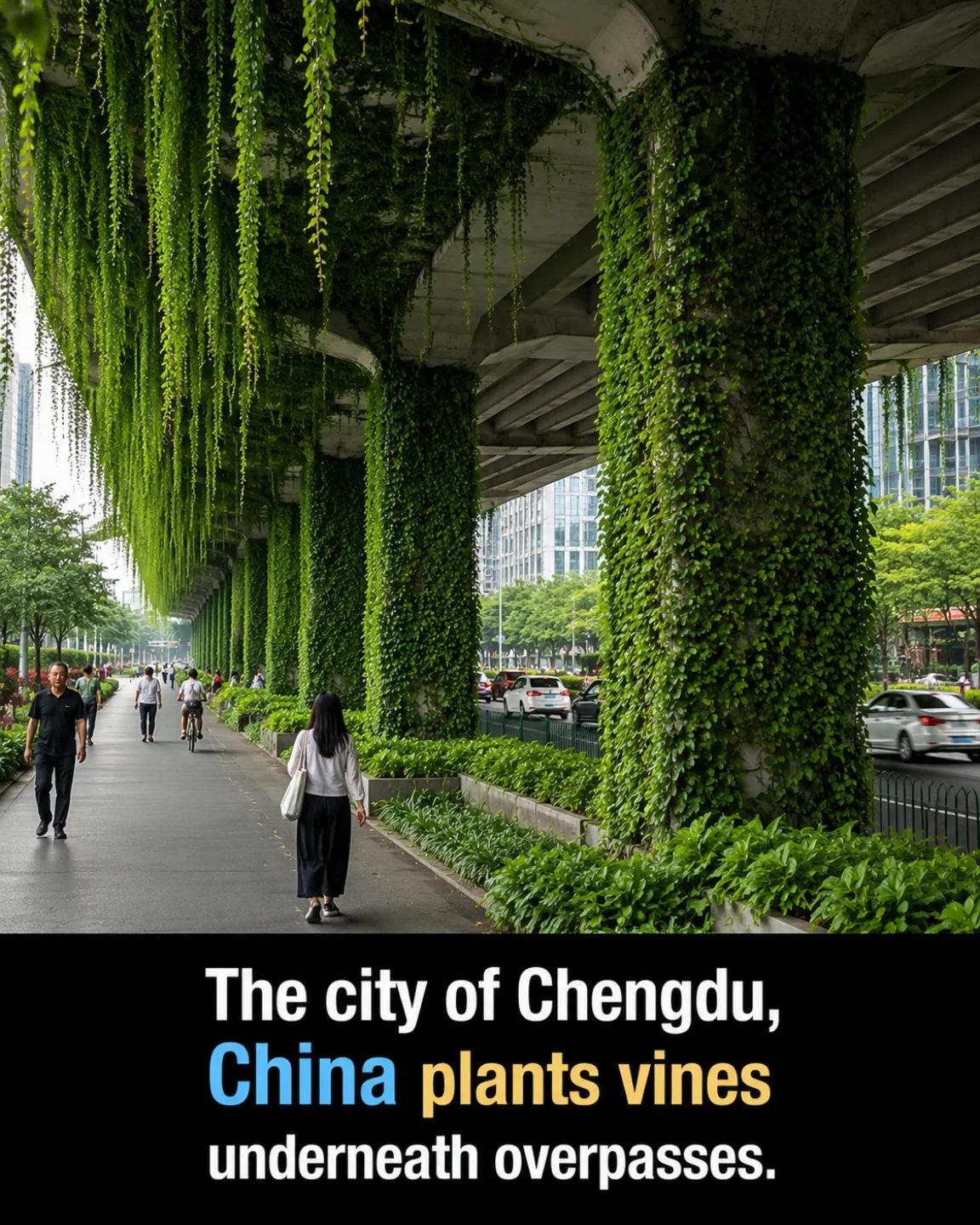
Chengdu's Green Overpass
In the heart of Chengdu, China, a remarkable example of urban greenery has transformed the cityscape. The pillars of an overpass are completely covered with lush green vines, creating a stunning contrast against the bustling city. This unique integration of nature into urban infrastructure offers more than just a visually striking scene; it provides practical benefits for the people who live and work in the area, making it an essential part of the city’s infrastructure.
Context / Why This Matters
Chengdu's green overpass showcases the city's innovative approach to urban planning. By incorporating greenery into its infrastructure, Chengdu not only enhances its aesthetic appeal but also contributes to environmental sustainability. This approach is part of a broader trend in urban design that focuses on creating livable, eco-friendly cities. As urbanization continues to rise, integrating green spaces into infrastructure becomes increasingly important for maintaining a healthy balance between development and nature.
Main Discussion
The Integration of Nature and Urban Design
Chengdu's green overpass is a prime example of how nature can be seamlessly integrated into urban design. The vines that cover the pillars not only enhance the visual appeal of the overpass but also provide practical benefits. The greenery offers shade and a pleasant environment for pedestrians and cyclists, making the walkway underneath the overpass a desirable route for commuters and recreational users.
The city of Chengdu, China, has cleverly transformed common infrastructure like overpasses into something beautiful: green spaces that enhance the pedestrian and cyclist experience. This practical design choice significantly improves the urban environment by adding natural beauty to otherwise industrial elements.
Environmental and Health Benefits
The greenery on the overpass pillars helps to mitigate the heat island effect, a common problem in urban areas where concrete and asphalt absorb and radiate heat. The vines provide a cooling effect, making the surrounding area more comfortable and reducing the need for air conditioning in nearby buildings. This not only contributes to energy conservation but also reduces the overall carbon footprint of the city. Moreover, the greenery improves air quality by absorbing pollutants, further enhancing the health benefits for residents.
Creating a Pleasant Urban Environment
The vines on the overpass pillars create a visually striking contrast with the surrounding cityscape. The natural greenery breaks the monotony of concrete and steel, providing a refreshing sight for pedestrians and cyclists. This aesthetic enhancement contributes to the overall well-being of the community, as studies have shown that exposure to nature can reduce stress and improve mental health. The shaded walkway created by the vines also provides a more comfortable environment for people to walk or cycle, making it a popular route for both commuters and recreational users.
Practical Tips
If you're inspired by Chengdu's green overpass and want to incorporate more greenery into your city, consider the following tips:
Start Small
Begin with small, manageable projects. Planting vines on the pillars of an overpass is a significant undertaking, but smaller initiatives like planting trees along streets or installing green roofs on buildings can have a similar impact. These smaller projects can be more feasible and easier to implement, providing quick wins while building momentum for larger initiatives.
Engage the Community
Community involvement is crucial for the success of any green initiative. Engage local residents, businesses, and organizations in the planning and implementation process. Public support can help ensure the long-term sustainability of these projects. Community participation can also lead to innovative ideas and solutions that might not have been considered otherwise.
Collaborate with Local Government
Collaborating with local government agencies is essential for securing the necessary resources and permissions. Work closely with urban planners, environmental agencies, and other relevant departments to ensure that your green initiatives are integrated into the city's overall development plans. This collaboration can help secure funding, permits, and other necessary support.
Important Takeaways
Chengdu's green overpass serves as a model for how cities can integrate nature into their infrastructure. By covering the pillars of an overpass with lush green vines, Chengdu has created a visually striking and environmentally beneficial urban landscape. This initiative not only enhances the city's aesthetic appeal but also provides practical benefits such as shade, improved air quality, and a more comfortable environment for pedestrians and cyclists.
The success of Chengdu's green overpass underscores the importance of incorporating greenery into urban design. By doing so, cities can create more livable, sustainable, and environmentally-friendly environments. Additionally, engaging the community and collaborating with local governments can help ensure the long-term success of these initiatives.
Conclusion
Chengdu's green overpass is a remarkable example of how nature can be seamlessly integrated into urban infrastructure. This innovative approach not only creates a visually stunning landscape but also provides practical benefits for the community. By incorporating greenery into our cities, we can create more sustainable, livable, and environmentally-friendly urban environments.
Watch the Reel
Questions readers ask
What inspired Chengdu to transform its overpass into a green space?
Chengdu's transformation of its overpass was inspired by a desire to integrate nature into urban infrastructure, enhancing both the cityscape and the daily experience of its residents by making it a pleasant environment for pedestrians and cyclists. The city sought to balance urban development with environmental sustainability, creating a unique and eco-friendly urban landscape.
How do the green vines benefit the people using the overpass?
The lush vines on Chengdu's overpass provide several benefits. They offer shade, making the overpass more comfortable for pedestrians and cyclists, especially during hot summer months. The greenery also contributes to a more pleasant environment, reducing noise, and improving air quality. Additionally, the vines' aesthetic appeal enhances the overall visual experience of the city.
Can other cities replicate Chengdu's green overpass model?
Yes, many cities can learn from Chengdu's approach. However, it is important to consider the local climate, plant species, and infrastructure. Cities should work with urban planners and environmental professionals to select suitable plant species and ensure the structural integrity of the overpass. Regular maintenance is also crucial for the sustainability of a green overpass.
What other benefits does Chengdu's green overpass offer besides aesthetics?
Beyond its visual appeal, Chengdu's green overpass offers several practical advantages. It helps to mitigate the urban heat island effect by providing shade and cooling the surrounding area. The greenery can also absorb rainwater, reducing runoff and helping to manage stormwater. Furthermore, the overpass supports biodiversity by creating a habitat for various species, contributing to a healthier urban ecosystem.
How does Chengdu's green overpass contribute to eco-friendly urban planning?
Chengdu's green overpass is a prime example of how urban planning can integrate nature into the city infrastructure. By covering the overpass with vines, Chengdu reduces its carbon footprint, improves air quality, and creates a more sustainable urban environment. This innovative approach demonstrates how cities can balance development with environmental responsibility, making it an inspiring model for eco-friendly urban design.
What are the maintenance requirements for Chengdu's green pillars overpass?
Regular maintenance is essential to keep Chengdu's green overpass thriving. This includes monitoring the health of the vines, ensuring they are properly watered and pruned, and checking the structural integrity of the overpass. The city likely has a dedicated team or plan for maintaining the greenery to ensure it remains a valuable and sustainable part of the urban landscape.
How does this transformation impact pedestrians and cyclists in Chengdu?
Pedestrians and cyclists in Chengdu benefit greatly from the transformation of the overpass into a green space. The lush vines create a more inviting and enjoyable environment, making commutes and walks more pleasant. The greenery also improves safety by reducing glare and noise, and providing a visually appealing route through the city, encouraging more people to walk or cycle.
Related deep dives
Similar reads based on topic and creator.




Recent articles
Fresh deep dives from the latest Reels we unpacked.




Comments
Be the first to comment.