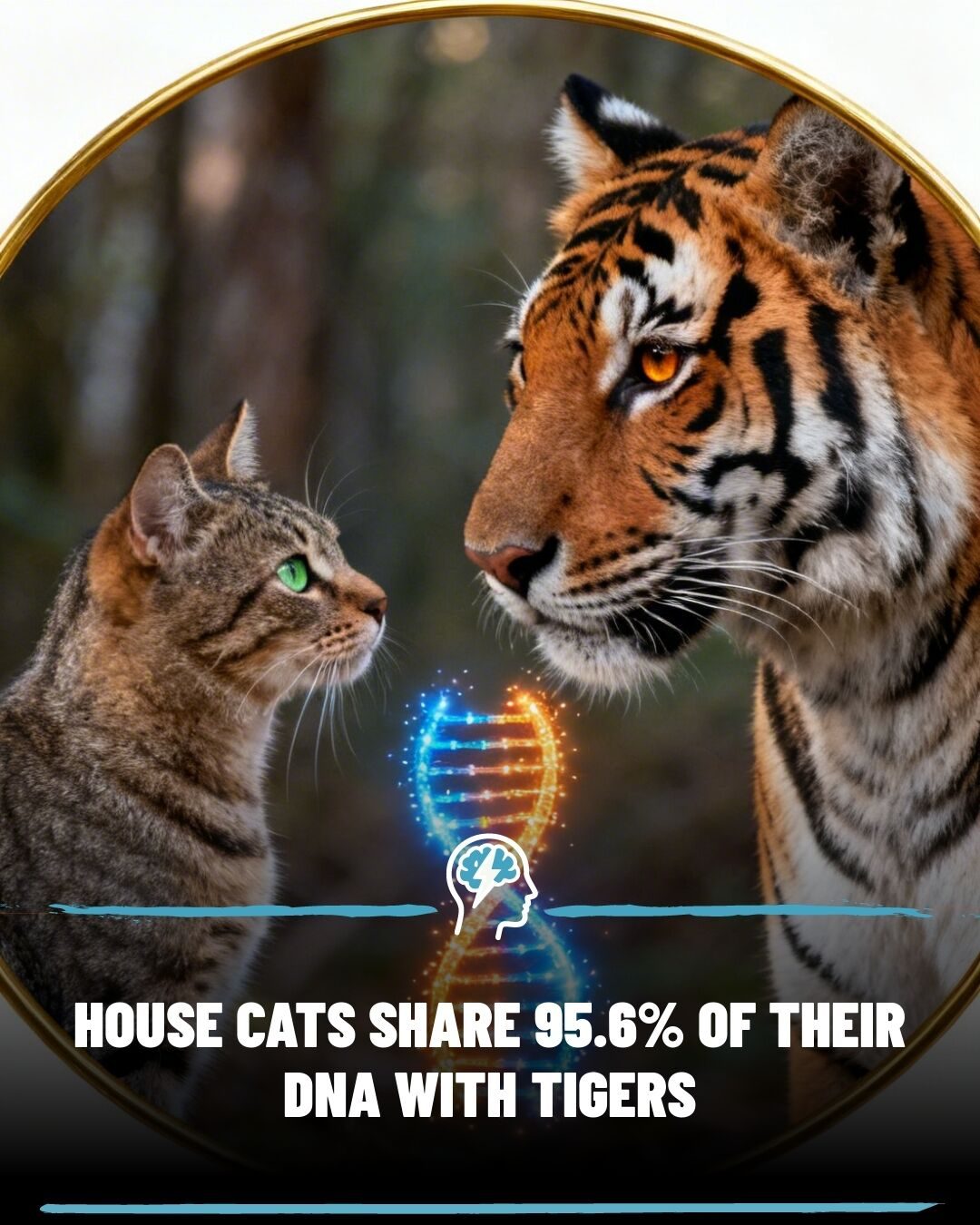
House Cats and Tigers Share Remarkable Genetic Similarities
Have you ever wondered why your house cat exhibits behaviors that seem almost predatory? The answer lies in their genetic makeup. Domestic cats and tigers, specifically the Amur tiger, share approximately 95.6% of their DNA.
Why this matters
The genetic similarity between domestic cats and tigers is not just a fascinating tidbit; it offers insights into the evolutionary history and behavioral traits of these felines. Understanding this genetic overlap can help pet owners appreciate the instincts and behaviors of their cats, which are deeply rooted in their evolutionary heritage.
Main discussion
Evolutionary Roots
Both domestic cats and tigers belong to the Felidae family, which evolved from a common ancestor roughly 10.8 to 11.5 million years ago. Despite the vast difference in size and habitat, these species have retained remarkably similar body structures, hunting adaptations, and sensory systems. This shared ancestry explains why a house cat stalking a toy mouse might exhibit the same predatory instincts as a tiger hunting prey in the wild.
Physical and Behavioral Similarities
The physical and behavioral traits of domestic cats and tigers are strikingly similar. Both species have strong, flexible bodies built for explosive movement, retractable claws, and sharp teeth optimized for catching prey. They are obligate carnivores, meaning they require meat to survive, and both tend toward solitary, territorial behavior. These shared characteristics highlight the deep evolutionary bond between these two species.
Hunting Instincts
One of the most notable shared traits is their hunting instincts. Both domestic cats and tigers are expert hunters, relying on their keen senses and sharp reflexes to catch prey. This is evident in how a house cat might pounce on a toy or stalk through the hallway, exhibiting behaviors that mirror those of their larger, wild counterparts. These hunting instincts are deeply rooted in their shared evolutionary heritage.
Size, Strength, and Survival Adaptations
While domestic cats and tigers share many similarities, the primary distinctions between them relate to size, strength, and wild survival adaptations. Tigers are significantly larger and stronger, with adaptations that allow them to thrive in the wild. Domestic cats, on the other hand, have been shaped by thousands of years of living alongside humans, resulting in significant variations in temperament and behavior. Despite these differences, the core genetic blueprint remains remarkably conserved across more than 11 million years of evolution.
The Behavior of Domestic Cats
It's important to note that while domestic cats share a significant amount of DNA with tigers, this does not mean they are dangerous. Domestic cats have been selectively bred over generations to coexist with humans, resulting in a wide range of temperaments and behaviors. Individual cats may vary significantly in their predatory instincts and overall behavior, influenced by both genetics and environmental factors.
Practical tips
Understanding Your Cat's Behaviors
Recognizing that your cat's behaviors are rooted in ancient predatory programming can help you better understand and appreciate their instincts. For example, if your cat is particularly active at dawn or dusk, this is because these are prime hunting times for many felines, including tigers. Providing your cat with toys and activities that stimulate their natural hunting instincts can help keep them mentally and physically engaged.
Enhancing Your Cat's Hunting Instincts
You can enhance your cat's natural hunting instincts by providing them with interactive toys and games that mimic the hunting experience. This can include chasing toys, puzzle feeders, and even hunting simulations. Engaging your cat's predatory instincts in a controlled environment can help satisfy their natural desires and keep them healthy and happy.
Important takeaways
House cats and tigers share an extraordinary amount of genetic information, which explains many of the behaviors and physical traits we see in domestic cats. Understanding this genetic overlap can help pet owners better appreciate and care for their feline companions. By providing toys and activities that stimulate their natural hunting instincts, you can help keep your cat mentally and physically engaged.
Conclusion
The genetic similarities between domestic cats and tigers offer a fascinating glimpse into the evolutionary history of these felines. From their shared body structures and hunting instincts to their solitary, territorial behavior, these species have retained many traits from their common ancestor. Recognizing and appreciating these genetic similarities can enhance your relationship with your cat and help you better understand their natural behaviors.
Watch the Reel
Questions readers ask
How much DNA do cats and tigers share?
Cats and tigers share approximately 95.6% of their DNA. This high degree of genetic similarity explains the many behavioral and physical traits they have in common, despite their significant size differences.
Why do domestic cats exhibit predatory instincts similar to tigers?
The predatory instincts seen in domestic cats are a result of their shared ancestry with tigers. This genetic link means that even though your house cat may be small, its hunting behaviors are rooted in the same instincts that tigers use in the wild.
What does the genetic similarity between cats and tigers tell us about their ancestry?
The genetic similarity indicates that cats and tigers evolved from a common ancestor. This shared ancestry helps explain the numerous similarities in their behaviors and physical characteristics, even though they have adapted to very different environments.
How can understanding the genetic link between cats and tigers help pet owners?
Knowing about the genetic link can help pet owners better understand and appreciate their cat's behaviors. It provides context for why cats exhibit certain instincts, such as hunting and territorial behaviors, which are inherited from their wild ancestors.
What behaviors do cats and tigers share due to their genetic similarity?
Both cats and tigers share a variety of behaviors, including predatory instincts, territorial marking, and social structures. Understanding these shared behaviors can provide deeper insights into the instincts and drives of domestic cats.
How does the DNA comparison between cats and tigers relate to their place in the Felidae family?
Both domestic cats and tigers belong to the Felidae family. The 95.6% DNA similarity reflects their close evolutionary relationship within this family, showcasing how they have diverged over time while retaining many common traits.
Can the genetic link between cats and tigers explain differences in size and behavior?
While the genetic link explains many similarities, the differences in size and some behaviors are due to adaptations over millions of years. Tigers have evolved to be large predators hunting in the wild, while cats have adapted to smaller, more varied environments, including living with humans.
Related deep dives
Similar reads based on topic and creator.




Recent articles
Fresh deep dives from the latest Reels we unpacked.




Comments
Be the first to comment.