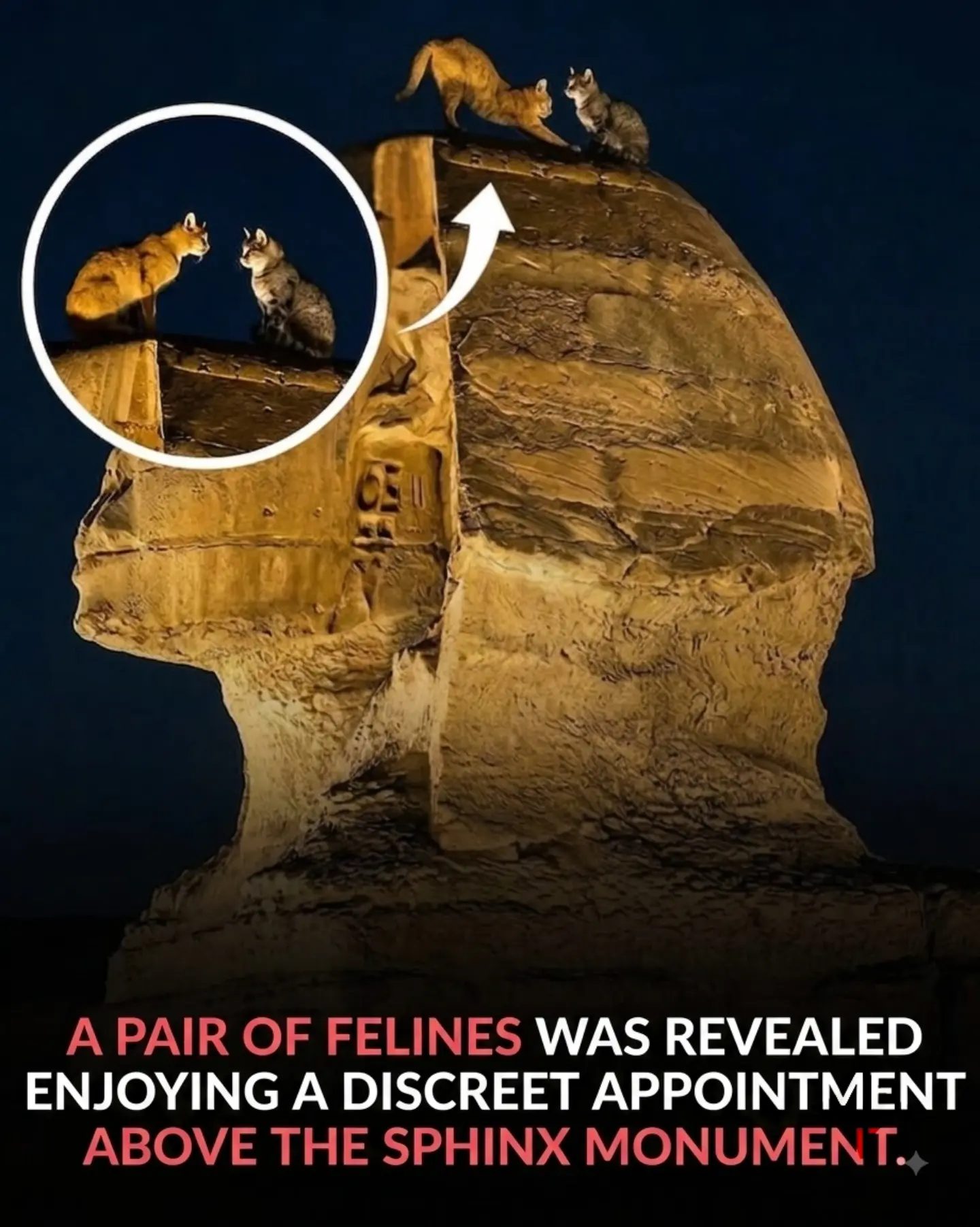
Cats and the Great Sphinx: A Modern Twist on Ancient History
The Great Sphinx of Giza is one of the world's most iconic monuments, and it's a place where ancient history meets the present. Recently, the Sphinx was the setting for an unexpected and delightful scene: two stray cats perched atop the head of the Great Sphinx. The viral photo captured not only a humorous moment but also highlighted the enduring presence of cats in the region, a history that stretches back thousands of years.
Context: Cats, Ancient Egypt, and the Great Sphinx
The Great Sphinx of Giza is a massive limestone statue with the body of a lion and the head of a human, believed to have been built during the reign of Pharaoh Khafre around 2500 BCE. The monument is located on the Giza Plateau, near the Pyramids of Giza, and has been a symbol of ancient Egyptian culture and history for millennia.
Cats, on the other hand, have a special place in Egyptian history. In Ancient Egypt, cats were revered as sacred animals, often associated with the goddess Bastet, who represented grace, protection, and fertility. Cats were so valued that they were often mummified and buried with their owners, and killing a cat, even accidentally, could result in severe punishment.
However, the Sphinx’s surroundings have changed drastically over the years. The once-fertile landscape is now a desert, home to various wildlife, including stray cats. These modern-day desert wanderers continue to inhabit the ancient site, adding a playful twist to the otherwise serious historical monument.
Cats of the Sphinx
The Viral Photo
The viral photo shows two cats perched atop the Great Sphinx, seemingly enjoying a late-night rendezvous. The scene is both amusing and extraordinary, offering a rare view of the ancient monument from an unusual perspective. The cats appear to be comfortable and relaxed, as if they are used to the grandeur of their surroundings. The humor in the OCR text describing the cats as “enjoying a discreet appointment” captures the playful tone of the image.
The cats' presence atop the Sphinx is not just a funny sight; it's a testament to their adaptability and their enduring relationship with humans. Cats have lived around the pyramids for generations, and their ability to thrive in this harsh desert environment is a marvel in itself.
The Cats of Ancient Egypt
In Ancient Egypt, cats were more than just pets; they were cultural icons. The goddess Bastet, often depicted with the body of a woman and the head of a cat, was one of the most popular deities. Temples dedicated to Bastet were common, and cats were often mummified and buried in their honor. This veneration of cats highlights their importance in Egyptian society, where they were seen as symbols of grace, protection, and fertility.
The Modern Cats
Today, the cats of the Great Sphinx are descendants of those revered felines. They live as strays, roaming the desert and the ancient monuments with a certain elegance that seems to echo their ancient counterparts. Despite the harsh conditions, these cats have adapted and continue to thrive, even finding a home atop one of the world's most famous landmarks.
The Great Sphinx and Its Feline Visitors
The Great Sphinx itself is a testament to the engineering and artistic prowess of Ancient Egypt. The statue is carved from a single piece of limestone and stands at approximately 66 feet tall and 240 feet long. Its face is believed to represent Pharaoh Khafre, and it was part of a larger complex that included temples and other structures.
The discovery of the cats atop the Sphinx adds a layer of intrigue to this historical site. It's a reminder that even ancient monuments like the Great Sphinx are not frozen in time but continue to interact with the world around them.
Practical Tips for Cat-Lovers Visiting the Sphinx
If you plan to visit the Great Sphinx and hope to see these modern-day wanderers, here are some practical tips to make the most of your experience:
Timing Your Visit
The best time to see the cats is during the early morning or late evening when the weather is cooler, and the cats are more likely to be active. The cats often seek shade during the hottest parts of the day, so plan your visit accordingly.
Observing from a Distance
Remember to keep a respectful distance from the cats. While they may seem friendly, they are wild animals and should be observed from a safe distance. This also helps to avoid disturbing their natural behavior and habitat.
Carrying Treats
Some travelers like to bring cat treats to offer the cats, but be cautious. Feeding wild animals can alter their behavior and dependence on humans. If you decide to bring treats, do so sparingly and ensure they are safe for the cats to consume.
Exploring the Site
While the cats are a fascinating sight, don't forget to explore the entire site. The Great Sphinx and the Pyramids of Giza offer a wealth of historical and cultural insights. Take your time to appreciate the architecture, the carvings, and the surrounding landscape.
Important Takeaways
Visiting the Great Sphinx and seeing the cats is more than just a fun experience; it's a unique blend of ancient history and modern-day life. The cats' presence atop the Sphinx serves as a reminder of the enduring relationship between humans and felines and the resilience of life in some of the most unexpected places.
Conclusion
The Great Sphinx of Giza, with its cats perched atop, offers a unique and humorous twist on an ancient monument. This playful moment highlights the enduring legacy of cats in Egyptian culture and their continued presence in the region. Whether you're a cat lover, a history buff, or just someone enjoying a quirky moment, this scene is a delightful encounter with the past and present.
Watch the Reel
Questions readers ask
Why were the cats on the Great Sphinx in the first place?
The cats in question are believed to be strays, who likely ventured onto the monument out of curiosity or in search of a good vantage point. The Great Sphinx's size and design make it an appealing spot for cats to climb and explore.
What is the historical significance of cats in the context of the Great Sphinx and Ancient Egypt?
Cats have a rich history in Egypt, dating back to ancient times. They were often revered and associated with deities, like Bastet. The encounter of these cats on the Sphinx is a modern twist on that ancient history.
How did the photo of the two cats on the Great Sphinx become so popular?
The photo gained traction due to its humor and the unexpected nature of the scene. It's not every day you see stray cats atop one of the world's most iconic monuments, making it a share-worthy moment across social media platforms and news outlets.
Why did the two cats on the Great Sphinx become a viral sensation?
The photo of the two cats on the Great Sphinx went viral because it wasn't just a funny cat image. It was a funny cat image on an ancient monument, making it an eye-catching, shareable moment that resonated with many.
How old is the Great Sphinx of Giza and who built it?
The Great Sphinx is believed to have been built around 2500 BCE, during the reign of Pharaoh Khafre. It is a massive limestone statue with the body of a lion and the head of a human, and it stands on the Giza Plateau, near the Pyramids.
Are there other monuments where cats have been spotted?
While the Great Sphinx encounter is particularly notable, cats have been known to explore and perch on various historical and modern structures. However, the iconic nature of the Sphinx makes this encounter particularly memorable and widely shared.
What should I do if I see cats on a monument?
If you encounter cats on a monument, it's best to observe from a distance to avoid disturbing them. If they seem in distress or injured, contact local authorities or animal welfare organizations for assistance.
Related deep dives
Similar reads based on topic and creator.




Recent articles
Fresh deep dives from the latest Reels we unpacked.




Comments
Be the first to comment.