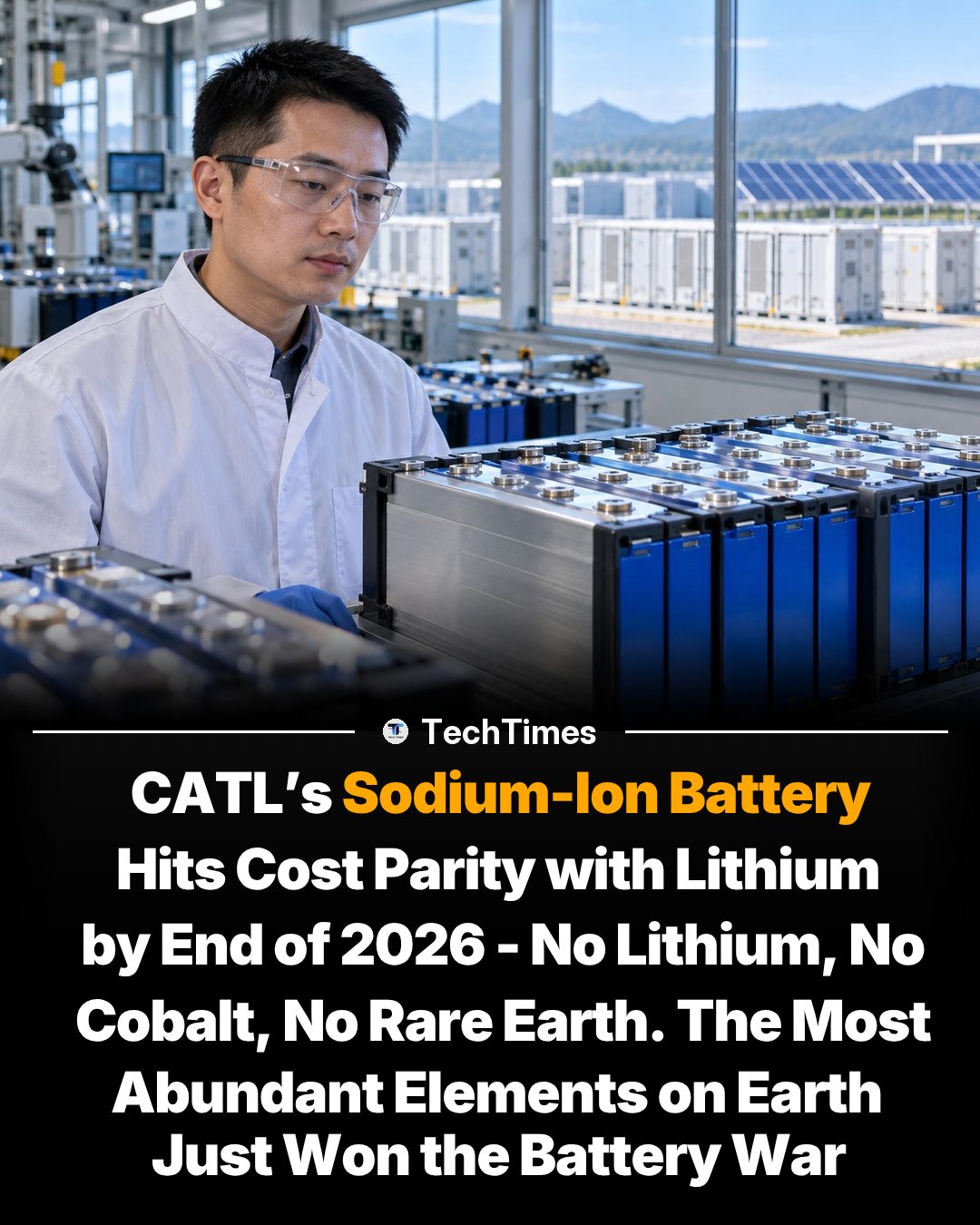
CATL, a Chinese battery manufacturer, has been quietly developing a battery that does not rely on scarce and expensive lithium, cobalt, or rare-earth materials. The company aims for its sodium-ion battery to match lithium’s price by the end of 2026. This shift could reshape the energy storage landscape by reducing reliance on key minerals. Sodium-ion batteries are an emerging alternative to the ubiquitous lithium-ion batteries that power smartphones, electric cars, and renewable energy storage systems. Unlike lithium-ion batteries, sodium-ion batteries can be produced with more abundant and cheaper materials. The sodium for the batteries is easy to source. CATL's sodium-ion battery development, a direct competitor to lithium-ion. The battery's absence of lithium, cobalt, and rare-earth elements means that it relies on abundant, readily available materials. CATL chose Sodium-ion technology because it is less prone to battery fires, while lowering the overall cost of the battery. The cost parity with lithium-ion batteries by the end of 2026 would make it the clear winner for consumers worldwide. Since sodium is less expensive and more abundant, sodium-ion batteries are a real alternative. The rise of sodium-ion batteries is key to solving one of the biggest challenges in the transition to green energy. The growing demand for energy storage comes at a time of supply chain vulnerabilities, with China controlling 80% of the world’s refining capacity of lithium. It highlights the dangers of the world’s reliance on lithium. With the rise of sodium-ion batteries, the source of materials shifts to the most affordable minerals on Earth. China's electric vehicle manufacturers, like CATL, are in a unique position because they control a large portion of the global lithium supply.
The cathodic cathode
The cathode is the key component in a sodium-ion battery, where all the chemical reactions take place. The cathode is composed of sodium and ions such as manganese, nickel, and cobalt. Sodium-ion batteries have a cathode made of multiple materials, where layers of sodium ions are sandwiched in between each of the materials. Each layer is made from the same materials as a lithium-ion cathode.
The anode's potential
The anode is made from hard carbon, a special type of graphite that is porous and durable. The anode is a good match for the cathode because it can store sodium ions as they pass from the cathode to the anode during charging.
The electrolyte
The electrolyte in the sodium-ion battery is a salt that allows the flow of sodium ions between the cathode and the anode. The electrolyte is made from sodium salts that turn into sodium ions and are absorbed by the anode of the battery. Sodium-ion batteries instead rely on sodium ions.
Why it matters: The most abundant elements on Earth
Relying on such abundant minerals could alleviate much of the pressure on supply chains at a time of global scarcity, and improve the outlook for greening the energy grid and electric vehicles. It also represents the next step in the roll-out of electric vehicles, where range and charging times are critical.
ECONOMIC IMPACT
CATL’s sodium-ion battery is poised to compete with lithium because it can store energy more efficiently. As a result, CATL batteries could become the go-to power source for the next generation of electric vehicles. On the one hand, sodium-ion batteries have the potential to provide the same performance as lithium-ion batteries at a fraction of the cost. On the other hand, the market for sodium-ion batteries could grow to the trillions, a staggering figure compared to the current market of lithium-ion batteries. CATL’s sodium-ion battery is expected to reach cost parity with lithium-ion batteries by the end of 2026.
How to be an early adopter
Getting a sodium-ion battery may not be an easy task for the everyday consumer in the near future. However, CATL’s announcement could entice other battery manufacturers to start producing the batteries. With the sodium-ion batteries being cheaper due to the abundance of materials, it will be hard to see the transition occur.
- Be patient: CATL has a long road to travese before sodium-ion batteries are in your devices. But, while they continue, batteries will improve and become cheaper. CATL may also begin to use them in their devices before they offer them commercially.
- Educated guessing: Begin to imagine a future where sodium-ion batteries are not only being used in electric cars but also in electric power storage. This means that once it is an established technology, almost every technology you use daily could be powered by a sodium-ion battery.
The future is here
Sodium-ion batteries offer a path out of reliance on expensive and scarce materials. It allows us to power the world's energy storage needs from the Earth's most abundant elements. A battery that can power the world's electricity without destroying the Earth.
Watch the Reel
Questions readers ask
What are the main benefits of switching to sodium-ion batteries over lithium-ion batteries?
The primary benefits are cost and availability. Sodium-ion batteries use more abundant and cheaper materials, which can alleviate supply chain pressures and reduce costs. Additionally, they are less prone to battery fires, making them a safer alternative.
How does the cathode in a sodium-ion battery differ from that in a lithium-ion battery?
The cathode in a sodium-ion battery is composed of sodium and ions like manganese, nickel, and cobalt, with layers of sodium ions sandwiched between these materials. In contrast, a lithium-ion battery's cathode typically uses lithium compounds. The overall structure and composition of the cathode are similar in both types of batteries.
What role does the electrolyte play in a sodium-ion battery and how does it function?
The electrolyte in a sodium-ion battery is a salt that facilitates the flow of sodium ions between the cathode and the anode. It allows the battery to function by enabling the movement of sodium ions, which is crucial for the charging and discharging process.
Can sodium-ion batteries be used in electric vehicles and renewable energy storage systems?
Yes, sodium-ion batteries are designed to be a direct competitor to lithium-ion batteries, which are currently used in electric vehicles and renewable energy storage systems. CATL's goal is to achieve cost parity with lithium-ion batteries by 2026, making sodium-ion batteries a viable and potentially more affordable option for these applications.
How does the abundance of sodium affect the production and cost of sodium-ion batteries?
The abundance of sodium makes it a cost-effective and readily available material for battery production. This abundance can significantly reduce the overall cost of manufacturing sodium-ion batteries, making them a more economical choice compared to lithium-ion batteries, which rely on scarce and expensive materials.
What are the economic implications of CATL achieving cost parity with lithium-ion batteries by 2026?
If CATL achieves cost parity by 2026, it could reshape the energy storage industry. Consumers worldwide would benefit from more affordable batteries, and the reduced reliance on scarce minerals could alleviate supply chain pressures and improve the outlook for green energy initiatives, particularly in the electric vehicle sector.
Recent articles
Fresh deep dives from the latest Reels we unpacked.



Comments
Be the first to comment.