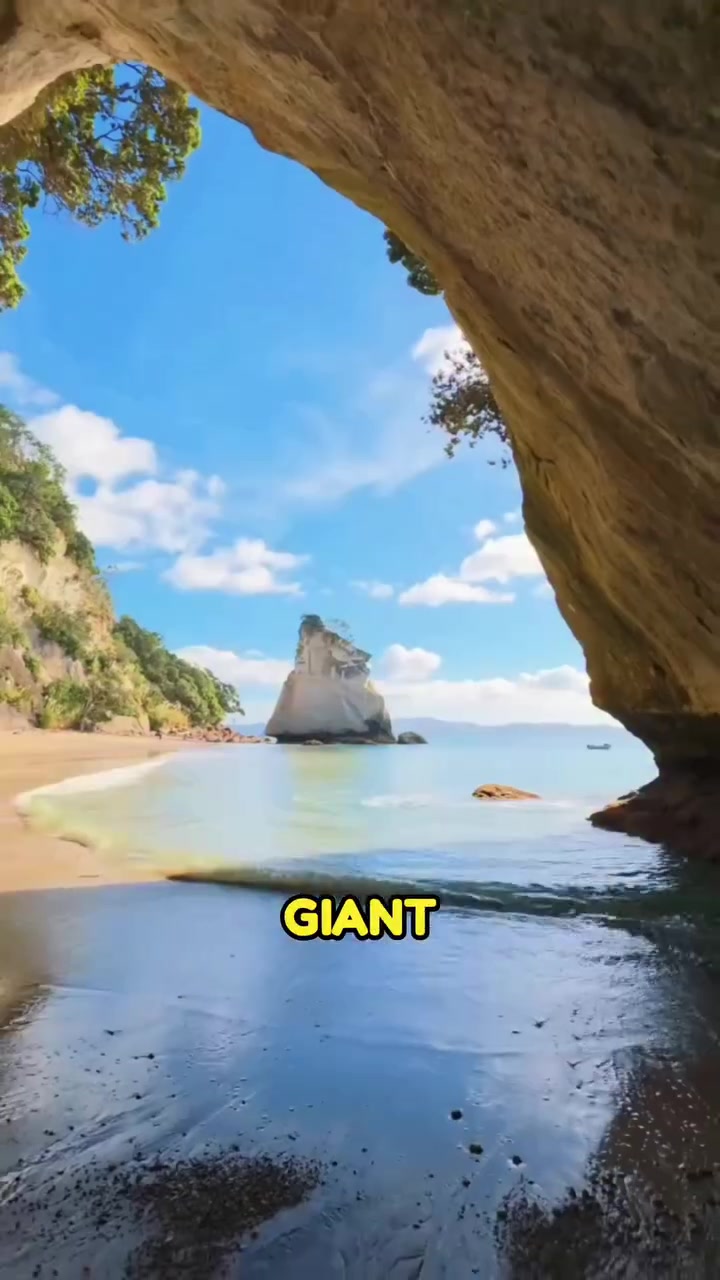
Lurking at the base of New Zealand's Coromandel Peninsula stands a natural wonder: Cathedral Cove, a giant doorway carved naturally into the coast. The journey to this landmark reveals the region's scenic beauty— a trail through lush forests, the Pacific Ocean peeking between the trees, and grand rock formations — finally ends in a splash of turquoise.
A natural arch
Cathedral Cove is a unique natural landmark formed over time due to erosion. It is easy to assume a hand carved archway. The walk through the archway provides ample space for visitors to experience the raw beauty of New Zealand. The massive natural archway is a vista that connects two stretches of turquoise water and golden beaches. The arch is so big it could pass a large ship. The view is expanded by the surrounding coves. The geological formations created by erosion over millions of years are the same as those found at Cathedral Cove. At just 400,000 years old the archway is still young in geological terms, it is expected to endure for many years to come.
The global allure of Cathedrals
Natural architecture like Cathedral Cove in New Zealand is a UNESCO World Heritage Site. Buoyed by beautiful natural formations and formations like Cathedral Cove's natural arch, Cathedrals are also a global phenomenon that draws millions of visitors every year. While similar in name, St. Louis Cathedral in New Orleans is more of a human-built architectural marvel than a natural Cathedral like the one in New Zealand. The unique geological formations of the area attract visitors from around the globe. The aerial and ground shots provide a majestic view of the site. This includes the beaches, mountains, and rock formations surrounding the archway. Cathedral Cove is not the only natural arch in the area, there are also several other arches and rock formations in the area, including The Hole in the Rock, Teotea Rock, and Wharariki Beach.
Making the journey
Get There: Getting to Cathedral Cove, along the coast of the Coromandel Peninsula, involves a 3km walk from the nearest car parking area. The journey is part of the experience. The trail leads through pine forest, woodlands and the Maori town Whitianga along the coast. You can walk through the lush forests of New Zealand's Coromandel Peninsula. There are glimpses of the Pacific Ocean between the trees. You can explore the coves around it. You can take a boat ride to view the arch from the waterside. It is truly a majestic experience. Kayaking along the coastal waters is a great way to explore the area. Swim in the clear blue waters of the beach. It is quite safe to swim here. Some visitors even try their hand at surfing, but beginners should be cautious of the uneven current around the arch. The trail features old mining tracks and rustic wooden staircases that lead to the top of the cliff with a 360 degree magnificent and breathtaking view of the much loved Cathedral Cove. Walkers can enjoy a short 10m descend to the beach. The whole landscape from the water gives you a better understanding of the place. The trail to Cathedral Cove is well marked with clear signage, camping is prohibited and previous experience is recommended. There are camping facilities available and the trailhead is equipped with restrooms, toilets and a lifegoard.
Closing Beat
Cathedral Cove creates a unique sense of wonder and mystery. It is a natural gem that sits in peaceful tranquility along the coast. The beauty of Cathedral Cove is enough of a reason to make the journey to New Zealand.
Watch the Reel
Questions readers ask
What is Cathedral Cove and how was it formed?
Cathedral Cove is a 400,000 year-old natural archway located on New Zealand's Coromandel Peninsula. It was created through a process of erosion over time, carving a massive doorway into the coast that connects two stretches of turquoise water and golden beaches. The arch is so large that it could theoretically allow a large ship to pass through.
How do you get to Cathedral Cove and what is the journey like?
To reach Cathedral Cove, you'll need to take a 3km walk from the nearest car parking area. The trail takes you through lush pine forests, woodlands, and offers glimpses of the Pacific Ocean. It's part of the experience, and the trail is well-marked with clear signage. The journey includes a 10m descent to the beach and a 360 degree view from the top of the cliff.
Are there other natural arches or formations in the area besides Cathedral Cove?
Yes, Cathedral Cove is not the only natural arch in the area. There are several other notable formations, including The Hole in the Rock, Teotea Rock, and the unique landscapes at Wharariki Beach. These formations add to the region's geological allure and provide additional points of interest for visitors.
Is it safe to swim at Cathedral Cove and are there any water activities available?
Yes, it is generally safe to swim at Cathedral Cove. The clear blue waters of the beach make it a popular spot for swimming. Visitors can also enjoy kayaking along the coastal waters or even try surfing, although beginners should be cautious of the uneven current around the arch.
What is the difference between Cathedral Cove and St. Louis Cathedral in New Orleans?
While both are referred to as 'cathedrals,' they are quite different. Cathedral Cove in New Zealand is a natural archway formed by erosion, offering a unique geological experience. In contrast, St. Louis Cathedral in New Orleans is a human-built architectural marvel, known for its Gothic Revival style and historical significance.
Can you camp at Cathedral Cove?
Camping is prohibited at Cathedral Cove. The trail is well-marked, and previous experience is recommended for those planning to visit. It's important to follow the guidelines to preserve the natural beauty of the area.
Related deep dives
Similar reads based on topic and creator.
Recent articles
Fresh deep dives from the latest Reels we unpacked.
Comments
Be the first to comment.