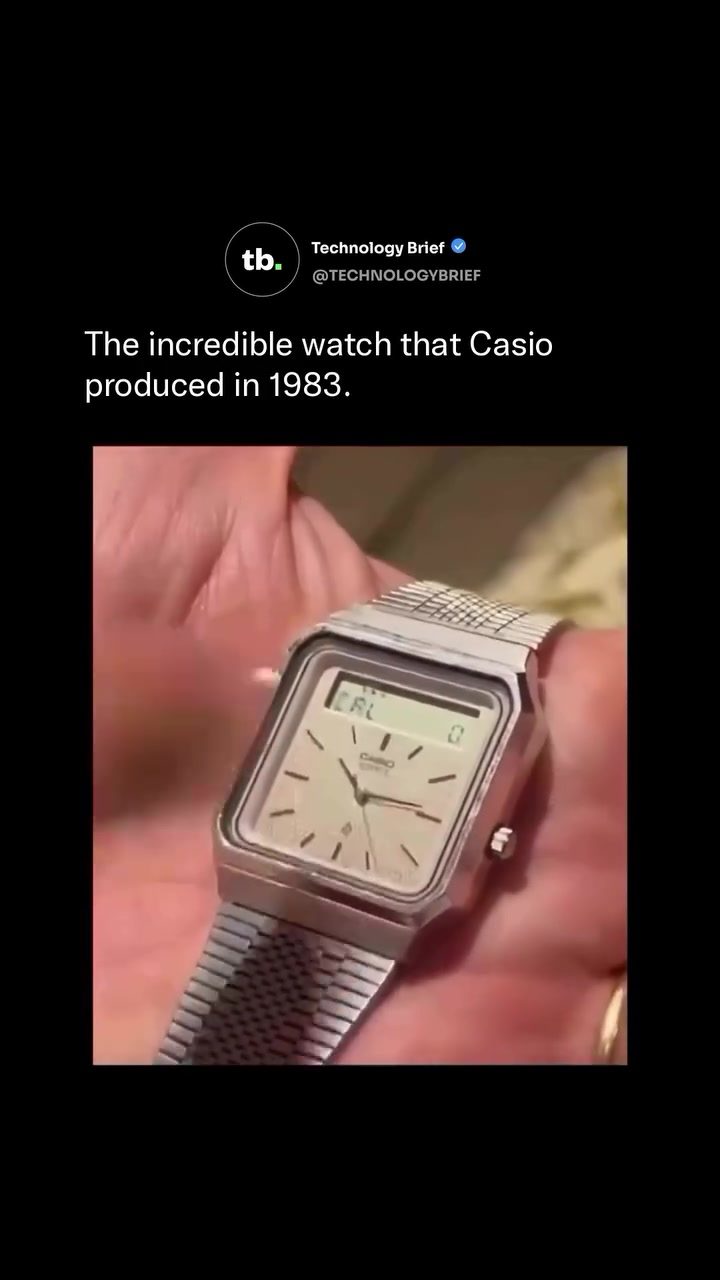
Vintage Casio Watch
The Casio AT-550, released in 1983, is a groundbreaking touchscreen calculator watch that was far ahead of its time. Combining analog clock hands with a digital LCD, this watch allowed users to draw numbers and math symbols directly on the watch glass with a fingertip. Casio’s innovative Finger Trace Recognition System could accurately read handwritten input, regardless of character size or position on the screen. This capability made the AT-550 one of the first devices to use gesture recognition, a core feature found in today’s smartphones and smartwatches.
Context / Why this matters
The AT-550 is more than just a vintage timepiece; it is a landmark in the history of wearable technology. Its ability to perform all four basic math operations up to eight digits, while being small enough to wear every day, showcased remarkable engineering achievements for its time. Casio's innovation in the 1980s extended calculator technology into unexpected places, from wristwatches to pocket devices. The AT-550 stands out as a milestone, previewing the touchscreen wearables that would not become mainstream for another 30 years.
Main discussion
Engineering Marvel
The Casio AT-550 was a feat of miniaturization. In 1983, making a device as small as a wristwatch that could perform complex calculations was a major accomplishment. The watch supported basic arithmetic operations, making it a practical tool for daily use. It proved that advanced technology could be packed into a wearable format, paving the way for future innovations in wearable tech.
The Finger Trace Recognition System
One of the standout features of the AT-550 was its Finger Trace Recognition System. This system allowed users to draw numbers and math symbols directly on the watch glass, which the watch could then interpret accurately. This was a revolutionary concept at the time, as it introduced gesture recognition to wearable devices. The same core idea is found in modern smartphones and smartwatches, highlighting the AT-550's forward-thinking design.
Practical tips
Collecting Vintage Watches
For those interested in collecting vintage watches, the Casio AT-550 is a prized item. Its historical significance and innovative features make it a valuable addition to any collection. When collecting, it's important to look for authentic models and verify their condition. Original packaging and accessories can also add to the value of the watch.
Maintenance and Care
Maintaining a vintage watch like the Casio AT-550 requires special care. Regular cleaning and storing in a cool, dry place can help preserve its condition. Avoid exposing it to extreme temperatures or moisture, as these can damage the delicate components. Additionally, consider having it serviced by a professional to ensure it remains in working order.
Important takeaways
- The Casio AT-550 was a groundbreaking watch released in 1983, featuring a touchscreen calculator and gesture recognition technology.
- It combined analog clock hands with a digital LCD, allowing users to perform basic math operations directly on the watch glass.
- The watch is recognized as one of the first devices to use gesture recognition, a technology found in today’s smartphones and smartwatches.
- The AT-550 showcased remarkable engineering achievements in miniaturization and wearable technology.
- Casio's innovation in the 1980s extended calculator technology into unexpected places, from wristwatches to pocket devices.
- The AT-550 is a valuable collectible item and a landmark in the history of wearable tech.
Conclusion
The Casio AT-550 is a testament to Casio's pioneering spirit and innovation. Its blend of analog and digital features, along with its groundbreaking Finger Trace Recognition System, made it a standout device of its time. Today, it serves as a reminder of how far wearable technology has come and a glimpse into what the future might hold. Whether you're a collector or simply appreciate the history of technology, the Casio AT-550 is a watch worth knowing about.
Watch the Reel
Questions readers ask
What made the Casio AT-550 unique when it was released in 1983?
The Casio AT-550 stood out due to its innovative touchscreen interface and Finger Trace Recognition System, which allowed users to input numbers and symbols through handwritten gestures directly on the watch glass. This technology was revolutionary for its time and paved the way for future wearable devices.
How did the Finger Trace Recognition System work on the Casio AT-550?
The Finger Trace Recognition System on the Casio AT-550 enabled users to draw numbers and math symbols on the watch glass with a fingertip. The system could accurately read these handwritten inputs, regardless of the character size or position, making it one of the first devices to implement gesture recognition technology.
What were the calculation capabilities of the Casio AT-550?
The Casio AT-550 could perform all four basic math operations— addition, subtraction, multiplication, and division—up to eight digits. This made it a powerful tool for users who needed quick calculations on the go, showcasing the practicality of wearable tech.
Why is the Casio AT-550 considered a landmark in wearable technology?
The Casio AT-550 is considered a landmark because it combined a traditional analog clock with a digital LCD and introduced touchscreen technology to wearable devices. Its innovative features foreshadowed the development of modern smartphones and smartwatches, making it a significant milestone in the history of wearable tech.
What was the design of the Casio AT-550 like?
The Casio AT-550 featured a compact, wearable design with an analog clock face and a digital LCD screen. This design allowed users to easily read the time while also having access to a powerful calculator, making it both a functional timepiece and a useful tool.
How did the Casio AT-550 influence future wearable devices?
The Casio AT-550 influenced future wearable devices by demonstrating the potential of touchscreen technology and gesture recognition in small, wearable form factors. Its features and capabilities laid the groundwork for the development of modern touchscreen wearables, including today's smartwatches and fitness trackers.
Related deep dives
Similar reads based on topic and creator.




Recent articles
Fresh deep dives from the latest Reels we unpacked.




Comments
Be the first to comment.