Paddling Through Plumes
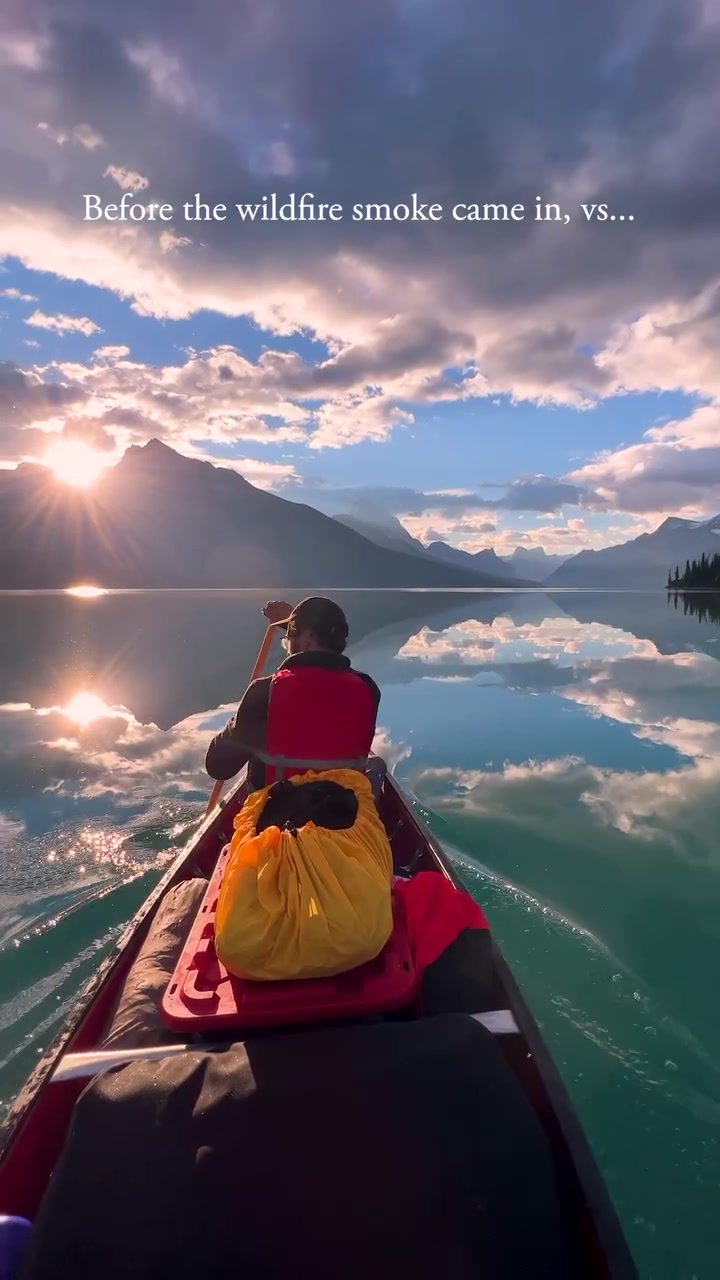
Wildfires have, for the last several years, forever reshaped our relationship with the outdoors, their destruction extending even to the solace of a calming canoe ride. In a lake, as the sun sets. While the writer opens with philosopher Friedrich Nietzsche’s aphorism––"Oh, I love it and I hate it at the same time. You and I drink the poison from the same thought."––they breathe it into the complex, concurrent love and loss of landscape. What happens when the sunset’s beauty, captivating in the first two frames, fades into a smoky haze, "before the wildfire smoke came in" on visual text, to "after"? At stake is not only the natural beauty out there, but something deeper, personal to those who find peace in nature.
Timed Heat in the Modern Wild West
The Western United States has long been plagued by wildfires of increasing intensity and frequency. This summer, the U.S. reported an unprecedented number of hectares burned in the West — particularly in California, Oregon, and Washington. The fires do not merely ravage homes and livelihoods. They also devour pristine vistas, like the person’s sunset scene in the canoe. The impact on local communities and economies, the health risks from prolonged exposure to smoke, and the disruption to the environment are all severe. However, these devastating impacts are particularly toxic to people for whom nature is not just a place but a way of life. The smoke in the skies above a canoe could, at least, have at least a voice.
Environmental and Mental Toll
Wildfires and smoke are not just environmental hazards; they pose serious health risks, especially to vulnerable populations. As one New Yorker wrote in response to extreme smoke this summer, “We are all combustible matter.” The toxic smoke from wildfires contains particulate matter that can penetrate deeply into the lungs, leading to respiratory issues, cardiovascular problems, and even premature death. The toll even extends to the most resilient among us. For those who rely on nature as an antidote to stress and anxiety, the loss of access to clean air and clear skies can amplify their tension.
The Price of Access
For many, outdoor activities like canoeing in a lake aren’t a news headlines but a way of life: a meditative experience that provides a much-needed mental break. This makes the loss of access to scenic beauty especially bitter. Outdoor activities are more than a hobby, they are often a therapy for those struggling with mental health issues. The loss of this outlet due to wildfire smoke can exacerbate existing conditions. The emotional toll is compounded by the frustration of being unable to engage in activities they have come to depend on for their well-being. Mental health support groups and public health officials often recommend nature therapy as a tool to combat stress and depression, but wildfires can undermine this therapeutic approach.
Year-Round Exposure
Plumes of smoke from wildfires don’t just mar views. Their presence long before the day breaks and after it ends. They also harm visibility and air quality, turning picturesque settings into toxic landscapes. Even those who don't have respiratory problems, or have their eyes on the skies can be sickened if they spend extended periods in smoky environments. The effects can be particularly devastating for outdoor enthusiasts, including those who regularly engage in activities like canoeing. Here, the smoky haze, clearly visible in the later frames of the sunset, underscores the harsh reality of wildfire smoke.
Sitka: A Voice Against Silencing
A few states away from the video, the Anchorage Public Library set up a program called Sitka. For months, StoryCorps partners with Alaskan libraries to bring the unique, universal, and highly personal stories of local Alaskans to the public. The universal beauty of the sunset, contrasted with the clouded scene, suggests a duality. The named poet within that gives voice to the thought that “Oh, I love it and I hate it at the same time” signals a duality as well. There’s no denying that the lake, and the sunset, and the canoe, and the smoky haze, and “it” all exist. Sitka is, in a sense, a way of contextualizing the experience of wildfire smoke through words, and the context within which the sentiment “I love it and I hate it at the same time” originates—Nietzsche—can be a stark reminder of what we might want to consider when we look at words, or at the world.
Getting Out When Outdoors Isn’t An Option
Spending time in nature, even on a kayak, is widely known as a best-practice for fostering good physical and mental health. Those who turn to nature for mental support often rely on these activities to cope with depression, anxiety, PTSD, and chronic stress. When fires turn their haven into a hazard, they are left without a vital coping mechanism. Wildfires can be unpredictable, especially during the summer and into September. Regularly check local air quality reports. If the air quality is poor, consider indoor activities or visiting another area with better air quality. Air purifiers and masks can help mitigate the effects of smoke, but they are not a substitute for clean air. Be mindful of weather conditions and plan outdoor activities accordingly and, if time in nature becomes more restricted, consider other avenues of wellness like indoor exercise, therapy, meditation, and community groups.
Watch the Reel
Related deep dives
Similar reads based on topic and creator.


Recent articles
Fresh deep dives from the latest Reels we unpacked.

Comments
Be the first to comment.