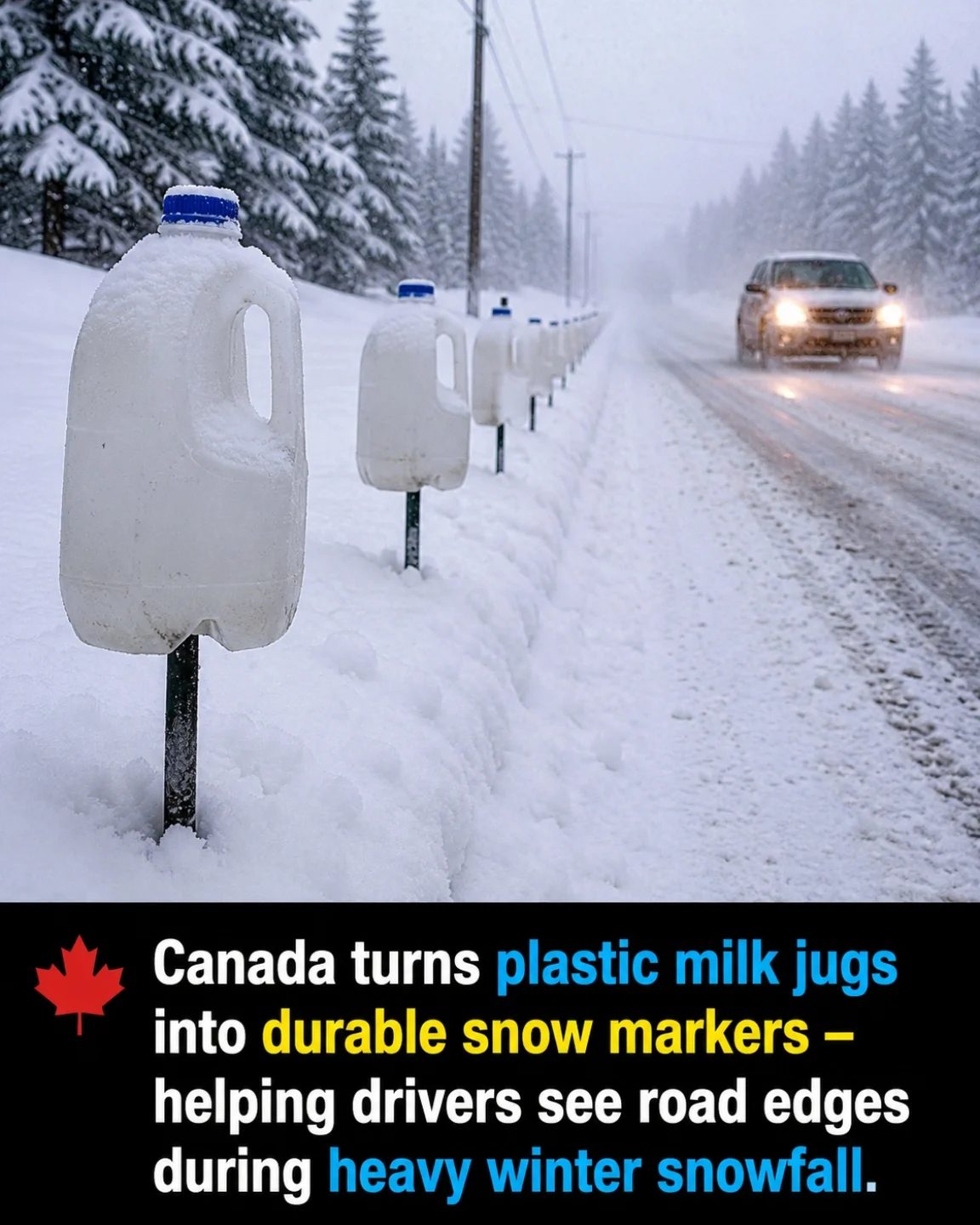
Canadian Snow Markers
Canada's unique solution for winter road safety involves an unlikely hero: the humble plastic milk jug. During heavy snowfall, these jugs serve as durable and cost-effective snow markers, guiding drivers along the edges of roads. This practical application of recycled materials not only enhances road safety but also contributes to environmental sustainability.
Why this matters
Heavy snowfall can obscure road markings, making it difficult for drivers to navigate safely. Traditional road markers may become covered or damaged, posing significant risks. Canadian snow markers address this issue by providing a visible and sturdy reference point that remains effective even under challenging conditions.
Main discussion
The benefits of using milk jugs
Milk jugs are a practical choice for snow markers due to their durability and visibility. These jugs are typically made of high-density polyethylene (HDPE), a robust plastic that can withstand harsh winter conditions. Their distinctive shape and bright color make them easily visible against the stark white backdrop of heavy snowfall.
The use of milk jugs as snow markers also aligns with Canada's commitment to sustainability. By repurposing plastic waste, this initiative reduces environmental impact and promotes recycling. Many municipalities and communities already have recycling programs in place, making it convenient to collect and redistribute these jugs for winter road safety.
How milk jugs are used as markers
The process of using milk jugs as snow markers is straightforward. The jugs are filled with sand or water to provide weight and stability, then placed along the edges of roads. Their bright color and reflective surfaces help drivers see the road boundaries more clearly, even in low-visibility conditions.
This cost-effective solution is easy to implement and maintain. Local communities and road maintenance crews can collect used milk jugs, clean and prepare them, and place them along roads before the onset of heavy snowfall. The markers can be repositioned or replenished as needed throughout the winter season.
Community involvement
Community involvement is crucial for the success of this initiative. Local residents and volunteers play a significant role in collecting and preparing milk jugs. This not only fosters a sense of community but also encourages environmental stewardship. Schools and community centers can organize collection drives, teaching children about recycling and road safety in the process.
Some communities have even turned this into a fun and engaging event, with families and friends competing to see who can collect the most jugs. This hands-on approach makes the initiative more enjoyable and ensures broader participation.
Practical tips
Preparing milk jugs for use
To prepare milk jugs for use as snow markers, follow these steps:
- Clean the jugs: Rinse and clean the milk jugs thoroughly to remove any residual milk or odor.
- Fill with weight: Add sand or water to the jugs to provide stability. This prevents them from blowing away in strong winds.
- Ensure visibility: Choose bright, reflective jugs for better visibility. If necessary, add reflective tape or markings to enhance visibility.
- Secure placement: Place the jugs securely along the road edges, ensuring they are evenly spaced and visible from a distance.
Maintaining snow markers
Regular maintenance is essential to keep the markers effective. Periodically check the jugs to ensure they remain in place and are not damaged or covered by snow. Remove any accumulated snow if necessary, and replace any jugs that are lost or damaged.
Important takeaways
- Durability and visibility: Milk jugs are durable and highly visible, making them ideal for use as snow markers.
- Cost-effective solution: This initiative is a cost-effective way to enhance road safety during heavy snowfall.
- Environmental benefits: Repurposing plastic waste reduces environmental impact and promotes recycling.
- Community involvement: Engaging the community in collecting and preparing milk jugs fosters a sense of responsibility and stewardship.
Conclusion
Canadian snow markers exemplify a practical, cost-effective, and environmentally friendly solution to enhance road safety during heavy snowfall. By repurposing plastic milk jugs, communities can improve visibility, reduce waste, and promote sustainability. This initiative not only benefits drivers but also encourages community involvement and environmental awareness. Whether you live in a snow-prone area or simply appreciate innovative solutions, consider adopting this approach to make your roads safer and greener.
Watch the Reel
Questions readers ask
Why are milk jugs used as snow markers in Canada?
Milk jugs are used as snow markers in Canada because they are durable, cost-effective, and provide a visible reference point for drivers during heavy snowfall. Their bright color and recycled plastic construction make them an eco-friendly solution for enhancing road safety in harsh winter conditions.
How do milk jugs improve winter road safety?
Milk jugs improve winter road safety by serving as reliable markers that guide drivers along road edges. They help prevent accidents by making the road's boundaries visible even when traditional markers are obscured or damaged by heavy snowfall.
Are milk jugs an environmentally friendly solution for winter road safety?
Yes, milk jugs are an environmentally friendly solution. By reusing recycled plastic containers, they reduce waste and promote sustainability. This eco-friendly approach helps to manage winter road safety while minimizing environmental impact.
How do milk jugs compare to traditional road markers in heavy snowfall?
In heavy snowfall, milk jugs outperform traditional road markers by remaining visible and intact. Traditional markers can be covered or damaged, making them less effective, while milk jugs provide a sturdy and visible reference point for drivers.
Are there any specific guidelines for using milk jugs as road markers?
There are no strict guidelines, but for effective use, milk jugs should be filled with sand or water for weight, then placed along the road edges at regular intervals. They should be easily visible and stable enough to withstand winter weather conditions.
Can other plastic containers be used as snow markers like milk jugs?
While milk jugs are commonly used due to their widespread availability and bright color, other durable and visible plastic containers can also serve as snow markers. The key is to ensure they are stable, visible, and safe for drivers.
How can drivers benefit from milk jug road markers during winter?
Drivers benefit from milk jug road markers by having a clear visual guide to follow along the road edges during heavy snowfall. This helps to reduce the risk of accidents caused by obscured or damaged traditional markers, making winter driving safer and more navigable.
Related deep dives
Similar reads based on topic and creator.




Recent articles
Fresh deep dives from the latest Reels we unpacked.




Comments
Be the first to comment.