The Voting Divide
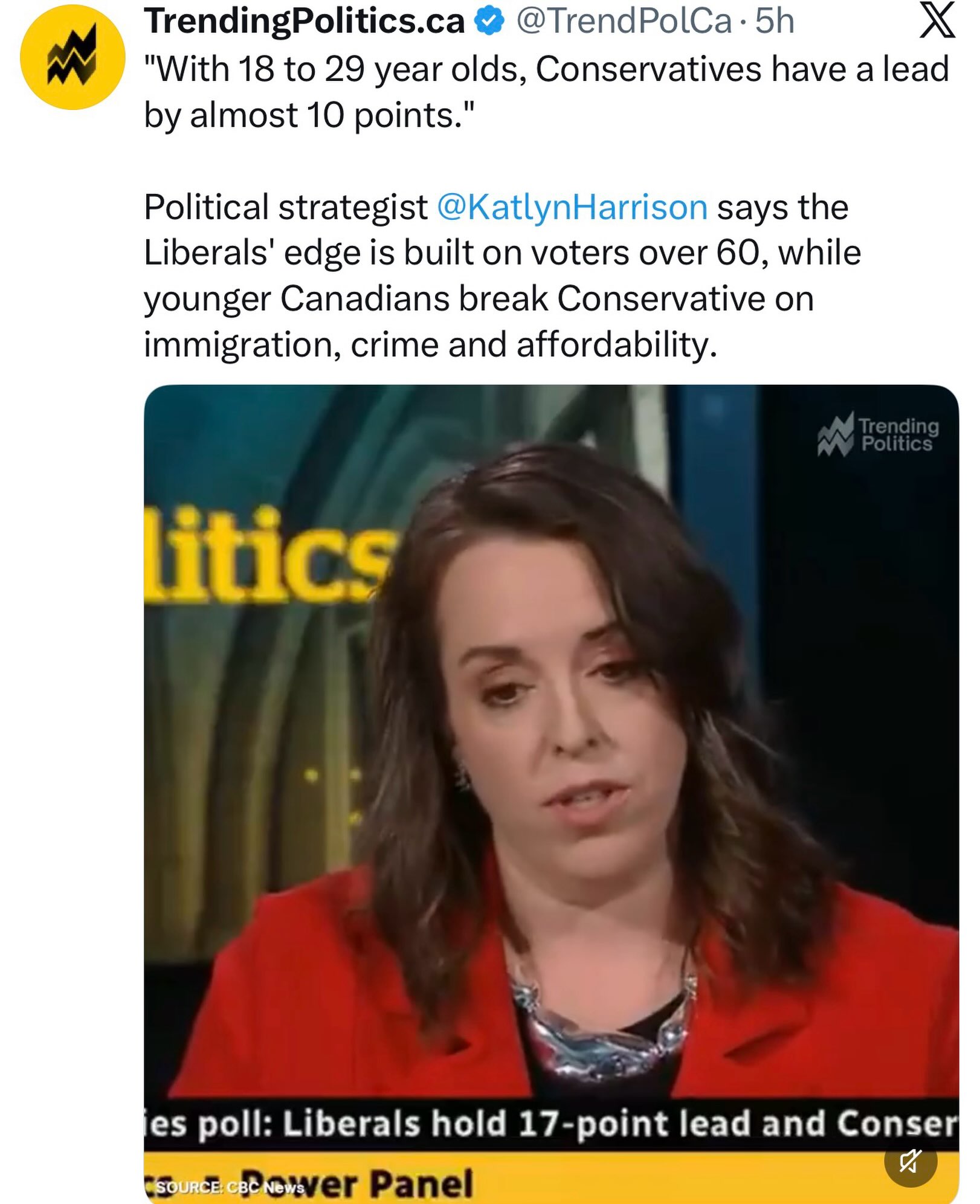
The CBC News Panel released a political poll revealing a stark generational divide between Conservative and Liberal voters. With voters aged 18 to 29, Conservatives hold an almost 10-point lead. The Liberals, however, have a 17-point lead with older voters. This stark contrast outlines the political tensions between different age groups — with immigration, crime, and affordability playing key roles.
A snapshot of Canadian politics
This poll reflects a broader trend of generational divides in Canada. Age disparity within voters isn't new, but it is increasingly determinant of a voter's political bias. This generational divide can be attributed to a variety of factors, such as economic circumstances, cultural shifts, and educational backgrounds. This divide highlights the growing gap in priorities between younger and older voters. Young voters are generally more concerned with issues such as climate change, student debt, and economic opportunities, while older voters prioritize issues such as healthcare, pensions, and national security. This divide reflects a broader cultural shift in Canada, as younger voters become more progressive on social issues and more concerned with economic inequality.
The Generational Divide
Younger voters' shift
Conservatives lead with younger voters by a wide margin— almost 10 points. This strong showing by the Conservatives among younger voters indicates a notable shift in political alignment. Younger voters are increasingly favouring the Conservatives, especially on key issues like immigration, crime, and affordability. This unexpected result exemplifies the fact that generational preferences are pivoting in the face of economic uncertainty and increased government regulation.
Liberal stronghold
Liberals maintain a dominant lead of 17 points among voters over 60. This age group traditionally values the social welfare and healthcare policies that the Liberals champion. These older demographics have set a foundation of support for the Liberals, solidifying their base. This bloc underscores how older voters’ historical reliance defines the Liberals' political stamina.
Immigration, crime, and affordability
Younger Canadians are swayed by immigration, crime, and affordability. Younger citizens are increasingly concerned with issues around policy changes, economic opportunities, and security. Affordability presides over the lives of the younger generation, and immigration policies are crucial in shaping their voting decisions. This faction showcases the importance of immediate socioeconomic realities in determining a younger voter's political views.
Grappling with the divide: What the poll means
Shifting priorities
The poll results point to shifting generational priorities. For younger generations, the focus is on crime and affordability. Older voters, however, prioritize healthcare and pensions. This results in a clear split in political preferences, pushing both parties toward more partisan positions. This demonstrates the need for a nuanced approach in political strategy and messaging, responding to these priorities.
Policy implications
The poll underscores the need for policies that address the unique concerns of each age group. Conservatives will need to leverage their perceived strengths in immigration and crime to better appeal to the younger demographic. The Liberals, on the other hand, will need to maintain their social welfare policies while addressing the financial needs of Canadians aged 60 and above. This dynamic necessitates strategic policy development, ensuring both parties create actionable agendas to address these pivotal issues.
Political positioning
This poll offers strategic insights. Conservatives are expected to emphasize their stance on immigration, crime, and affordability. This strategy not only attracts younger voters but also reinforces their political values. Meanwhile, the Liberals need to strategically target the older generation by highlighting their strengths in healthcare. This compartmentalized political positioning is crucial in swaying voter preferences.
Economic Stability
The younger demographic of Canadians values economic stability in the context of significant economic and social change. Issues like affordability and economic opportunities are crucial in shaping their political preferences. The economic climate for Generation Z and millennials is distinct from the past, with challenges such as housing prices and debt pressures taking center stage. For them, issues of affordability and economic policy are paramount.
Taking the political reins
The timing of the poll is crucial. This is election season, so these political priorities are more relevant than ever. If voters under 30 favour Conservatives, what does that mean for their political influence? How do political strategists adjust to the sharp rise of these concerns? Understanding the depths of these concerns will provide a clear path for the near future of Canadian politics.
- Lean In or Stay Back: Consider contributing to the dialogue. Engaging in forums, petitioning, and even running for office can instigate change in the frontlines of politics.
- Pollywog into Frog: Understand the platform rigorously and take note of policy points. Voting represents power, and informed voting can provoke shifts in policies.
- Engage: Youth with a political bent can volunteer with political parties or campaigns
- Talk it Out: Younger voters are advised to engage in discussions with older voters and family to understand the importance of a holistic perspective. Forums, debates, and discussions can also foster a deeper understanding of political preferences.
Engage, participate, and make your political footprint
The generational divide in Canadian politics is a reality that both parties must address. Younger voters are increasingly drawn to the Conservatives' positions on immigration, crime, and affordability. Older voters, meanwhile, continue to support the Liberals on healthcare and social welfare. This divide raises crucial questions about the future of Canadian politics. How will political parties adapt their strategies to cater to both groups? What role will younger voters play in shaping the political landscape? The answers to these questions will shape the future of Canadian politics, making this generational divide a pivotal moment in the country's political history.
Watch the Reel
Questions readers ask
What specific issues are driving younger Canadians to support the Conservatives?
Younger Canadians are primarily influenced by issues like immigration, crime, and affordability. These issues are top of mind for them, especially with concerns around economic opportunities and security, which are pivotal in shaping their political views and driving their support for the Conservatives.
Why do older voters in Canada tend to support the Liberals more strongly?
Older voters in Canada, particularly those over 60, have a long-standing preference for the Liberals due to their focus on social welfare and healthcare policies. These older demographics have historically relied on the Liberals for these policies, which has solidified their support for the party.
How does this poll reflect broader trends in Canadian politics?
This poll highlights a growing trend of generational divides in Canadian politics. Younger voters are increasingly concerned with issues like climate change, student debt, and economic opportunities, while older voters prioritize healthcare, pensions, and national security. This divide reflects a broader cultural shift in Canada.
What are the key differences in priorities between younger and older voters in Canada?
Younger voters are generally more focused on issues like climate change, student debt, and economic opportunities, while older voters prioritize healthcare, pensions, and national security. This difference in priorities is evident in the poll results, showing a clear split in political preferences between the two age groups.
How does economic uncertainty influence the political leanings of younger voters?
Economic uncertainty is a significant factor driving younger voters towards the Conservatives. Concerns around affordability and economic opportunities, especially in the context of increased government regulation, contribute to their political alignment with the Conservatives.
What does the CBC News Panel poll say about the future of Canadian politics?
The poll suggests a future where political strategies and messaging will need to be more nuanced to address the shifting priorities of different age groups. The clear split in political preferences between younger and older voters indicates a need for parties to tailor their approaches to these distinct concerns.
Recent articles
Fresh deep dives from the latest Reels we unpacked.




Comments
Be the first to comment.