Optical Illusions and the Power of Language
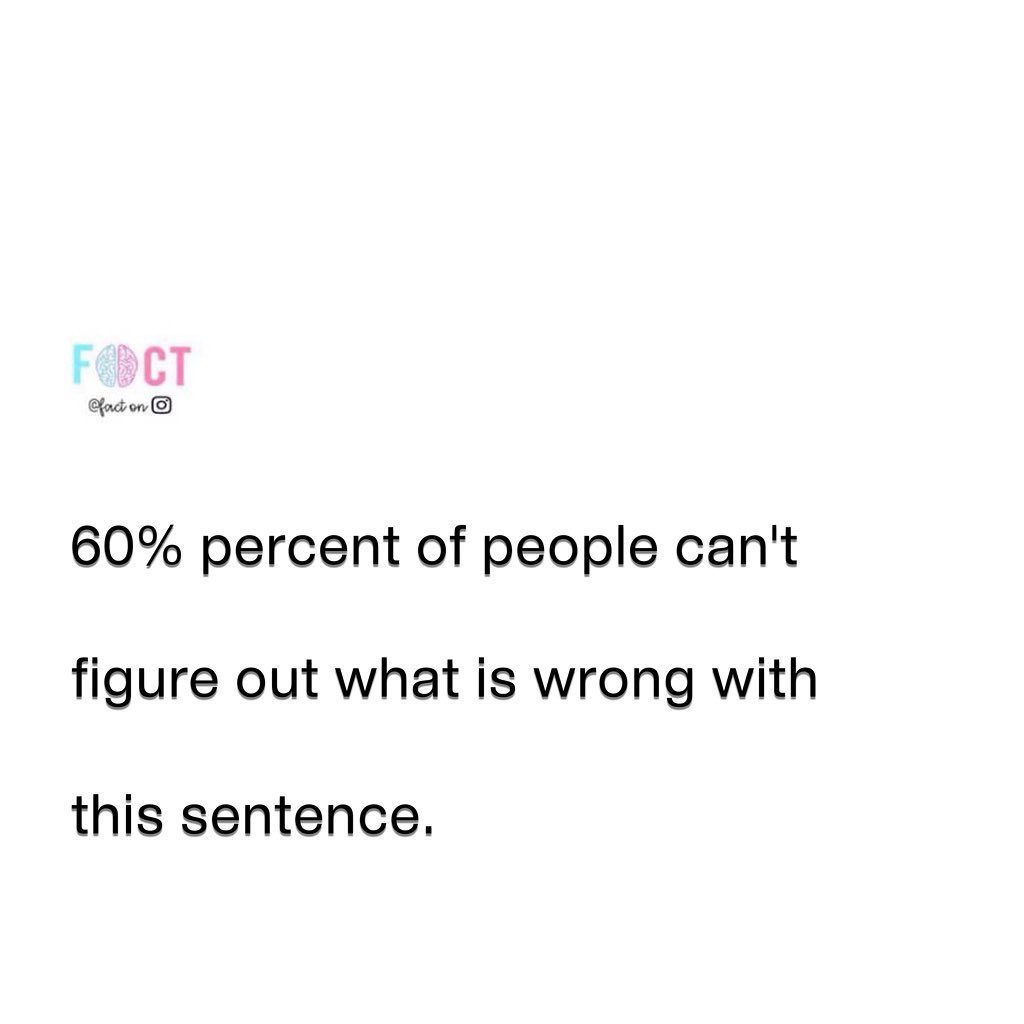
Optical illusions come in many forms, from mind-bending images to clever wordplay. One particular type of illusion focuses on text, using the written word to challenge our perception. Such a case involves the sentence: "60% of people can't figure out what is wrong with this sentence." This phrase, despite its simplicity, hides a clever illusion that plays on our tendency to focus on comprehension rather than scrutiny.
Why This Matters
Optical illusions are more than just fun tricks; they reveal intriguing aspects of how our brains process information. When it comes to text-based illusions, they highlight how we can be so focused on understanding the meaning of a sentence that we overlook obvious errors. This phenomenon is known as "cognitive bias," where our brain prioritizes certain types of information over others, leading to perceptual oversights. These biases are part of our everyday life and can affect decision-making, problem-solving, and critical thinking.
The Illusion Unveiled
The sentence "60% percent of people can't figure out what is wrong with this sentence" contains a redundancy. The words "percent of people" are redundant. The word "percent" is already a part of "of people." This redundancy is the illusion, and it often goes unnoticed because our brain is preoccupation is to comprehend the meaning of the sentence rather than scrutinizing its grammatical structure. This principle highlights how our perception can be skewed by focusing on comprehension rather than detail.
The Science Behind the Illusion
The illusion works because our brains prioritize understanding over scrutinizing details. When we read the sentence, our cognitive processes focus on comprehending the meaning, which leads us to overlook the grammatical error. This is an example of "cognitive bias."
Attention and Cognition
Our brain is a complex system that processes information in various ways. Cognitive biases are mental shortcuts that help us make quick decisions, but they can also lead to errors. In this case, the redundancy in the sentence is an example of how we can miss obvious details when our attention is focused elsewhere. Our brains are wired to seek out patterns and meanings, which can sometimes lead to overlooking specific elements.
The Role of Language
Language itself can be an optical illusion. The way words are structured and the context in which they are used can create a perception that may not align with reality. In this instance, the redundancy in the sentence is a linguistic trick that challenges our understanding and perception.
Practical Tips for Spotting Optical Illusions
While optical illusions can be amusing, they also serve as a reminder to be mindful of our cognitive biases. Here are some tips to help you spot such illusions:
Slow Down Your Reading
One of the best ways to spot errors in text is to read slowly and deliberately. This allows your brain to process each word and phrase more carefully, reducing the likelihood of missing obvious mistakes.
Focus on Grammar
Pay attention to grammar and sentence structure. Break down the sentence into individual components and analyze each part. This can help you spot redundancies and other errors that might otherwise go unnoticed.
Practice Active Reading
Active reading involves engaging with the text more thoughtfully. This can include asking questions about the content, summarizing what you've read, and even writing down your thoughts. Active reading can help you stay focused on the details and reduce cognitive biases.
Important Takeaways
Text-based optical illusions, like the one presented, reveal how our brains work and the cognitive biases that can affect our perception. Some key points to keep in mind are:
- Cognitive biases can lead to over-looking obvious errors, such as redundancies, when focused on comprehension.
- Attention plays a crucial role in perception. Focusing on the meaning of a sentence can cause us to miss specific details.
- Language can be deceptive, and understanding how words are structured can help us spot illusions and errors.
- Active reading and deliberate attention to grammar and sentence structure can help us spot text-based illusions more easily.
Conclusion
Optical illusions, particularly text-based ones, offer a unique glimpse into how our brains process information. The sentence "60% of people can't figure out what is wrong with this sentence" is a great example of how cognitive biases can affect our perception. By understanding these biases and practicing active reading, we can become more aware of the subtle errors that often go unnoticed. This knowledge can be applied to various aspects of life, from reading and writing to critical thinking and problem-solving.
Watch the Reel
Questions readers ask
What is the error in the sentence '60% percent of people can't figure out what is wrong with this sentence'?
The error is the redundancy of the word 'percent' and '60%'. Both terms convey the same meaning, making 'percent' unnecessary. This redundancy is often overlooked due to the brain's focus on comprehension. This sentence is a classic example of how cognitive biases can influence our perception and reading comprehension.
What is a text-based optical illusion?
A text-based optical illusion uses written words to challenge our perception and comprehension. Unlike visual illusions, these use language to create a trick and can reveal how our brains process information. The sentence '60% percent of people can't figure out what is wrong with this sentence' is a perfect example, where the brain prioritizes grasping the meaning of the sentence over scrutinizing the text.
How does the brain process information in text-based illusions?
In text-based illusions, the brain tends to prioritize understanding the overall meaning of a sentence rather than critically examining each word. This focus on comprehension can lead to overlooking obvious errors, such as redundancies. This process illustrates how our perception can be influenced by the way we interpret and process language.
Why do we often miss obvious errors in sentences?
We often miss obvious errors in sentences due to our brain's tendency to focus on the meaning of the sentence rather than scrutinizing each word. This phenomenon occurs because our brains are wired to prioritize comprehension, which can lead to overlooking grammatical or logical errors. The sentence '60% of people can't figure out what is wrong with this sentence' is a prime example of this cognitive bias.
What can text-based illusions teach us about human perception?
Text-based illusions can teach us that our brains are more focused on comprehension rather than scrutiny, revealing insights into how we process language. These illusions demonstrate that our perception can be influenced by the way we interpret and process information, highlighting the intricate workings of the human mind. The sentence '60% percent of people can't figure out what is wrong with this sentence' is an example of this phenomenon.
How can understanding text-based illusions help improve reading skills?
Understanding text-based illusions can enhance reading skills by encouraging a more critical approach to reading. By recognizing how our brains can overlook obvious errors, we can train ourselves to be more vigilant in scrutinizing text. This awareness can lead to improved comprehension and a keener eye for detail, ultimately enhancing overall reading skills.
What are some examples of cognitive biases in language perception?
One notable example of a cognitive bias in language perception is the tendency to overlook redundancies in a sentence. For instance, in the sentence '60% percent of people can't figure out what is wrong with this sentence,' the word 'percent' is unnecessary. This bias highlights how our brains can be tricked into prioritizing comprehension over detailed examination, revealing how our perception of language can be influenced by our cognitive processes.
Related deep dives
Similar reads based on topic and creator.




Recent articles
Fresh deep dives from the latest Reels we unpacked.




Comments
Be the first to comment.