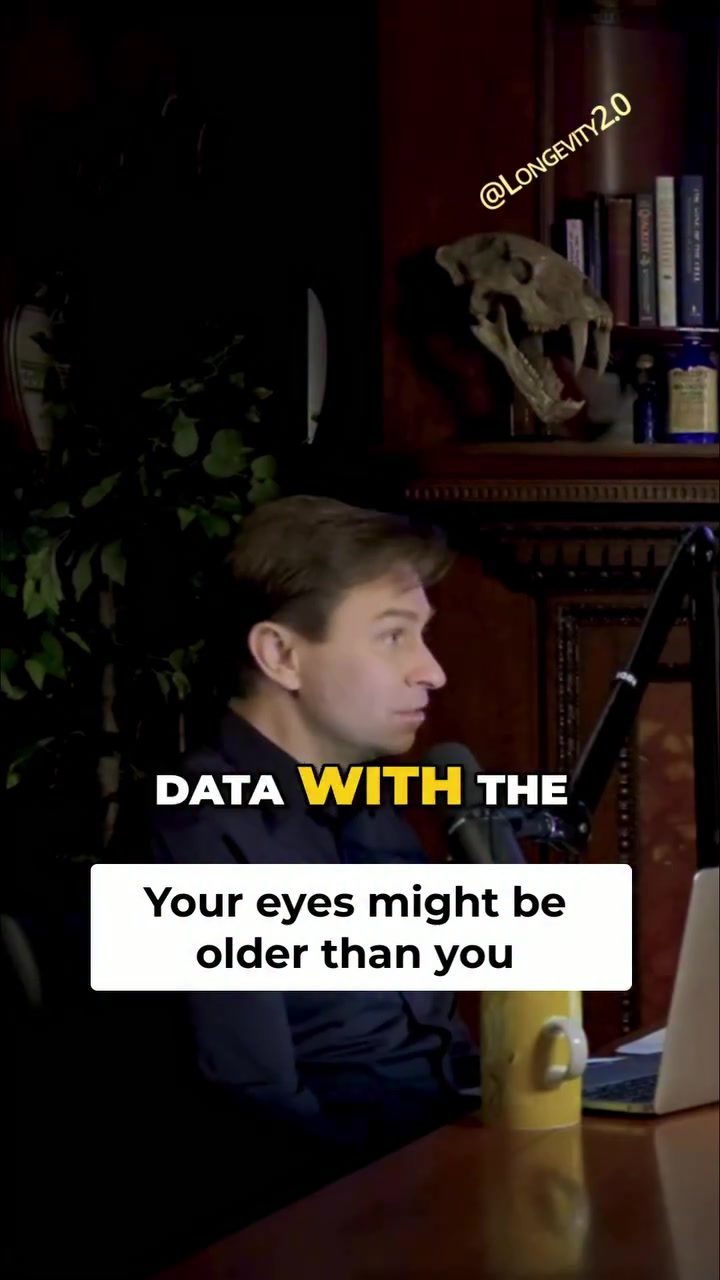
Biological Age and Eye Health
Your eyes might be older than you think. Recent studies have shown that the biological age of your eyes can provide significant insights into your overall health and even predict mortality. Here’s what you need to know about how your eyes can give clues about your age and health.
Why This Matters
Understanding your biological age, particularly through non-invasive methods like eye examinations, can be a powerful tool for assessing health risks. This information can help with early detection of diseases and promote better health management.
Eye Health and Mortality
Retinal Age Gap
One of the key findings in recent research is the concept of the retinal age gap. This term refers to the difference between a person's actual age and the biological age of their eyes, as determined by the health of the cells in the retina. The larger this gap, the higher the risk of mortality. According to researchers from Australia, for every year that the eye's biological age exceeds the person's chronological age, there is a 2% increase in the risk of death from any cause. This means that if an eye is six years older than the rest of the body, the risk of death increases by 12%.
Predicting Mortality
Researchers have leveraged artificial intelligence (AI) to analyze retinal images and predict biological age with remarkable accuracy. Using data from the UK Biobank, scientists found that AI could predict a person's age within three years just by looking at a photograph of their eyes. This method is not only highly accurate but also non-invasive, making it a practical tool for health assessments.
How Your Eyes Reflect Overall Health
Knowing the biological age of your eyes is an important measure of overall health. The health of your retinas can provide clues about the health of your entire body. For example, if a person is 50 but their eyes appear to be 60, this discrepancy can indicate a higher predisposition to diseases that could eventually lead to death.
The Role of AI
AI plays a crucial role in this process. By analyzing retinal images, AI can detect subtle changes that are not visible to the naked eye. This technology can help healthcare professionals identify potential health issues early, allowing for more effective interventions and treatments.
Practical Tips for Eye Health
Maintaining good eye health is essential for overall well-being. Here are some practical tips to keep your eyes in top condition:
Regular Eye Exams
Regular eye exams are crucial for detecting any changes in your eye health early. Even if you don’t have any obvious symptoms, routine check-ups can help identify issues before they become serious.
Healthy Diet
A balanced diet rich in nutrients like omega-3 fatty acids, vitamins A, C, and E, and zinc can support eye health. Foods like leafy greens, fish, and citrus fruits are particularly beneficial.
Protect Your Eyes
Wear sunglasses with UV protection to shield your eyes from harmful rays. Also, avoid smoking, as it can increase the risk of age-related macular degeneration and cataracts.
Limit Screen Time
Prolonged screen time can lead to digital eye strain. Follow the 20-20-20 rule: every 20 minutes, look at something 20 feet away for 20 seconds to give your eyes a break.
Important Takeaways
- Retinal Age Gap: The difference between your actual age and the biological age of your eyes can predict mortality risk.
- AI in Eye Health: AI can accurately determine biological age from retinal images, making eye exams a non-invasive yet powerful health assessment tool.
- Regular Check-ups: Maintain good eye health through regular exams, a healthy diet, and protective measures.
Conclusion
Your eyes are more than just windows to the soul—they are windows to your overall health. By understanding the biological age of your eyes and taking steps to maintain their health, you can gain valuable insights into your overall well-being and even predict potential health risks. Regular eye exams and a healthy lifestyle can help keep your eyes in top condition, contributing to a longer, healthier life.
Watch the Reel
Questions readers ask
What is meant by the biological age of the eyes?
The biological age of the eyes refers to how old your eyes appear to be based on their health and condition, as opposed to your chronological age. This can be determined through various examinations, such as retinal imaging, and can provide insights into your overall health and potential longevity.
How does the retinal age gap influence health predictions?
The retinal age gap is the difference between your actual age and the biological age of your eyes. A larger retinal age gap may indicate a higher risk of age-related diseases and potential longevity. This gap can be a useful tool for healthcare professionals to assess your health status and recommend appropriate interventions.
Can eye examinations really predict longevity?
Yes, recent research suggests that eye examinations, particularly those that assess the health of the retina, can predict longevity. By understanding the biological age of your eyes, healthcare professionals can gain insights into your overall health and potential risks, helping to promote better health management.
What role does the retina play in predicting health and longevity?
The retina is a complex layer of tissue at the back of the eye that contains light-sensing cells and blood vessels. It can reflect broader health trends, including cardiovascular health and metabolic health. Any irregularities or signs of aging in the retina can indicate potential age-related diseases and longevity risks.
Are there any specific diseases that eye health can predict?
Yes, eye health can predict several diseases and health conditions, including cardiovascular disease, hypertension, diabetes, and even neurological disorders. By examining the blood vessels and other structures in the eye, healthcare professionals can detect signs of systemic diseases, allowing for earlier intervention and management.
Related deep dives
Similar reads based on topic and creator.


Recent articles
Fresh deep dives from the latest Reels we unpacked.




Comments
Be the first to comment.