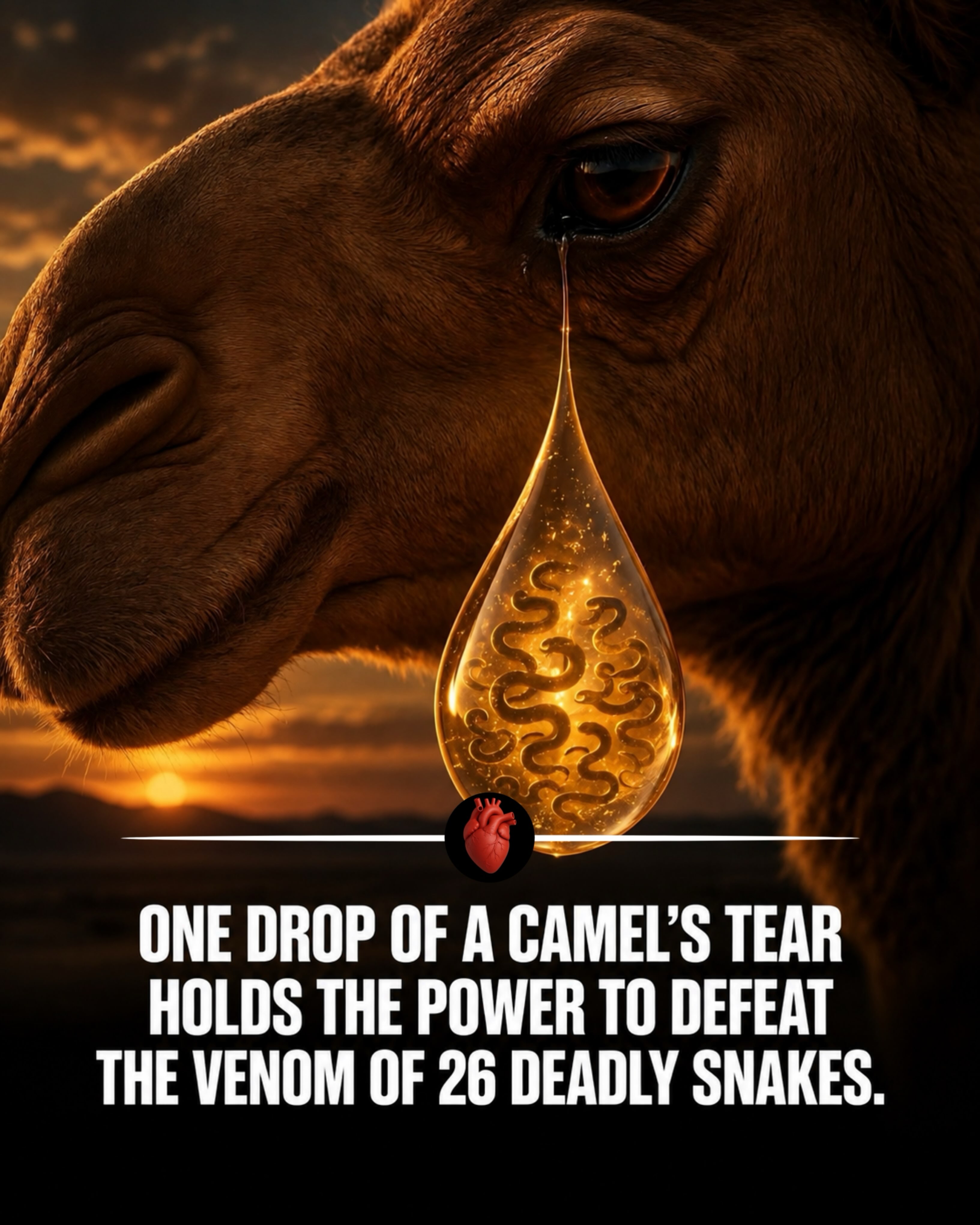
A Camel’s Tear and the Legend of Venom Neutralization
A camel's tear is a surprising antidote — to the venom of 26 deadly snakes, no less. As depicted in a dramatic close-up of a camel’s eye.
What Makes a Camel’s Tear So Potent?
The tear of a camel is a natural phenomenon, but its power against snake venom is rooted in cultural folklore and symbolic power. When a camel becomes emotional, it often sheds tears with a composition distinctly different from regular tears. This tear is seen as a concentration of the camel’s emotional resilience and endurance. The idea is that this emotional distress activates certain protective properties within the tear. However, there remains no scientific evidence that a camel’s tear holds any inherent power to neutralize the venom of 26 snakes. In reality, snake venom is neutralized through the use of antivenoms which are complex biological compounds developed through rigorous scientific research. If you were bitten by a snake, you wouldn't want to rely on the tears of a camel. Symbolic Strength and Resilience The myth of the camel’s tear in general, and this particular one in specific, draws power from the image of the hardened, enduring animal. But there is another side of the camel: on the one hand, they endure harsh desert conditions, often withstanding extreme temperatures, water scarcity, and intense solar radiation. The camel is known as the ship of the desert because it is so important for transportation in uninhabitable deserts. On the other hand, they are known to carry travelers and cargo across long distances, symbolizing endurance and resilience. As such, this symbolic power evokes trust, perseverance, and a deep connection to the human condition.
The Emergence of Camels and Snake Venom
The camel, Camelus dromedarius, hails from the deserts of the Middle East and North Africa. Over time, the camel has become a staple of many cultures, especially due to its resilience in harsh environments. Because venues involved with deserts and camels are generally hot, it is worth mentioning that venomous snakes thrive in these environments. As a result, it is significant that the camel has tools to defend itself against snake venom — venomous or not, snake bites led to death. Snakes such as the puff adder have lived alongside humans and camels, particularly in the Sahara and Arabian deserts. According to the analysis of the genetics of snakes, Africa is a potential source of snakes. There are hundreds of species and subspecies of snakes in Africa such as the black mamba and the puff adder. Beyond snakes like puff adders, the Middle East and Africa are home to many species that thrive in the harsh desert climate. The species are developed to adapt to these extreme environments and also to prey on other animals. These species present a predator risk to camels and other domestic animals. In particular, venomous snakes are found in many regions of the world, not only Africa and the Middle East. Their venom is a complex mixture of toxins that can cause severe symptoms, including death. These toxins include proteins and peptides that can affect the nervous, cardiovascular, and respiratory systems.
The Role of a Camel’s Tear in Cultural Symbolism
When the desert camel was first domesticated, its symbolism was not just limited to resilience but also to the power of emotional expression. The tears of the camel were seen as a reflection of the animal’s inner strength and emotional depth. However, this symbolism is not rooted in any scientific fact. In the context of a camel’s tears and their positive impact on things like snake bites, it seems likely that this meaning is simply a myth.
The Venom Neutralization Claim
As depicted in the video, a camel’s tear is said to neutralize the venom of 26 deadly snakes. But this property is based on cultural symbolism and folklore rather than scientific evidence. The effectiveness of venom neutralization is highly dependent on the type of venom and the specific antivenom used. Snake bites are typically treated with antivenoms, which are complex biological compounds designed to counteract the effects of snake venom.
For Those Affected by Snake Venom
This claim about the power of a camel’s tear might seem interesting in a mystical context, but it is important to distinguish between folklore and scientific fact. Snakebites are a serious medical emergency that requires prompt and appropriate treatment. Antivenoms are the go-to treatment for snake bites, particularly in areas where venomous snakes are prevalent. Snakebites can lead to severe symptoms, including tissue damage, organ failure, and even death. However, antivenoms are highly effective in treating snakebites. If you have been bitten by a snake, seek immediate medical attention and rely on antivenoms for treatment.
Understanding Snakebites and Myths
The power of a camel’s tear is a captivating myth, but it is essential to separate myth from reality when it comes to snakebites. Snakebites are a serious medical concern, and timely treatment is crucial. Sadly, snakebites remain a significant health issue in many parts of the world, particularly in rural areas where access to medical care is limited. The World Health Organization (WHO) and other health organizations are working to raise awareness about snakebites and improve access to antivenoms. Community education programs and improved healthcare infrastructure are essential in reducing the impact of snakebites on public health. The WHO classifies snakebites as a category A category of neglected tropical diseases, highlighting the need for greater attention and resources to address this global health issue. As they show in the video, This myth of the camel’s tear and its power to neutralize snake venom is a reminder of the rich cultural heritage and symbolism associated with camels. Still, understanding snakebites and their treatment is essential for safeguarding public health.
Watch the Reel
Questions readers ask
How do camel tears differ from regular tears, and why are they believed to neutralize snake venom?
Camel tears, when shed during emotional distress, have a distinct composition from regular tears. This unique composition is attributed to the camel’s emotional resilience and endurance, which has led to the belief that these tears can neutralize snake venom. However, this is purely a myth, as there is no scientific evidence to support this claim.
What are the components of snake venom that make it so dangerous, and how do antivenoms work to counteract them?
Snake venom is a complex mixture of toxins, including proteins and peptides, that can severely affect the nervous, cardiovascular, and respiratory systems. Antivenoms, which are developed through rigorous scientific research, work by neutralizing these toxins, preventing them from causing harm to the body.
Why are camels so important in desert cultures, and how does this relate to the legend of their tears?
Camels are crucial in desert cultures due to their resilience in harsh environments and their ability to carry travelers and cargo across long distances. This endurance and resilience have made the camel a symbol of trust, perseverance, and a deep connection to the human condition, contributing to the legend of their tears having supernatural properties.
Are there any scientific studies or evidence that support the idea of camel tears neutralizing snake venom?
No, there is no scientific evidence to support the claim that camel tears can neutralize snake venom. This idea is rooted in cultural folklore and symbolic power, rather than scientific fact. In reality, snake venom is neutralized through the use of antivenoms, which are complex biological compounds developed through rigorous scientific research.
What kinds of snakes are commonly found in the deserts where camels live, and why are they dangerous?
Deserts where camels live are home to various venomous snakes, such as the puff adder, black mamba, and others. These snakes are dangerous due to their venom, which is a complex mixture of toxins that can cause severe symptoms, including death. Their presence in these environments poses a significant risk to both camels and humans.
What is the significance of camels in desert transportation, and how does this relate to their symbolic power?
Camels are known as the 'ship of the desert' because they are essential for transportation in uninhabitable deserts. Their ability to endure harsh conditions and carry travelers and cargo across long distances has made them a symbol of endurance and resilience, contributing to their symbolic power in desert cultures.
Related deep dives
Similar reads based on topic and creator.



Recent articles
Fresh deep dives from the latest Reels we unpacked.




Comments
Be the first to comment.