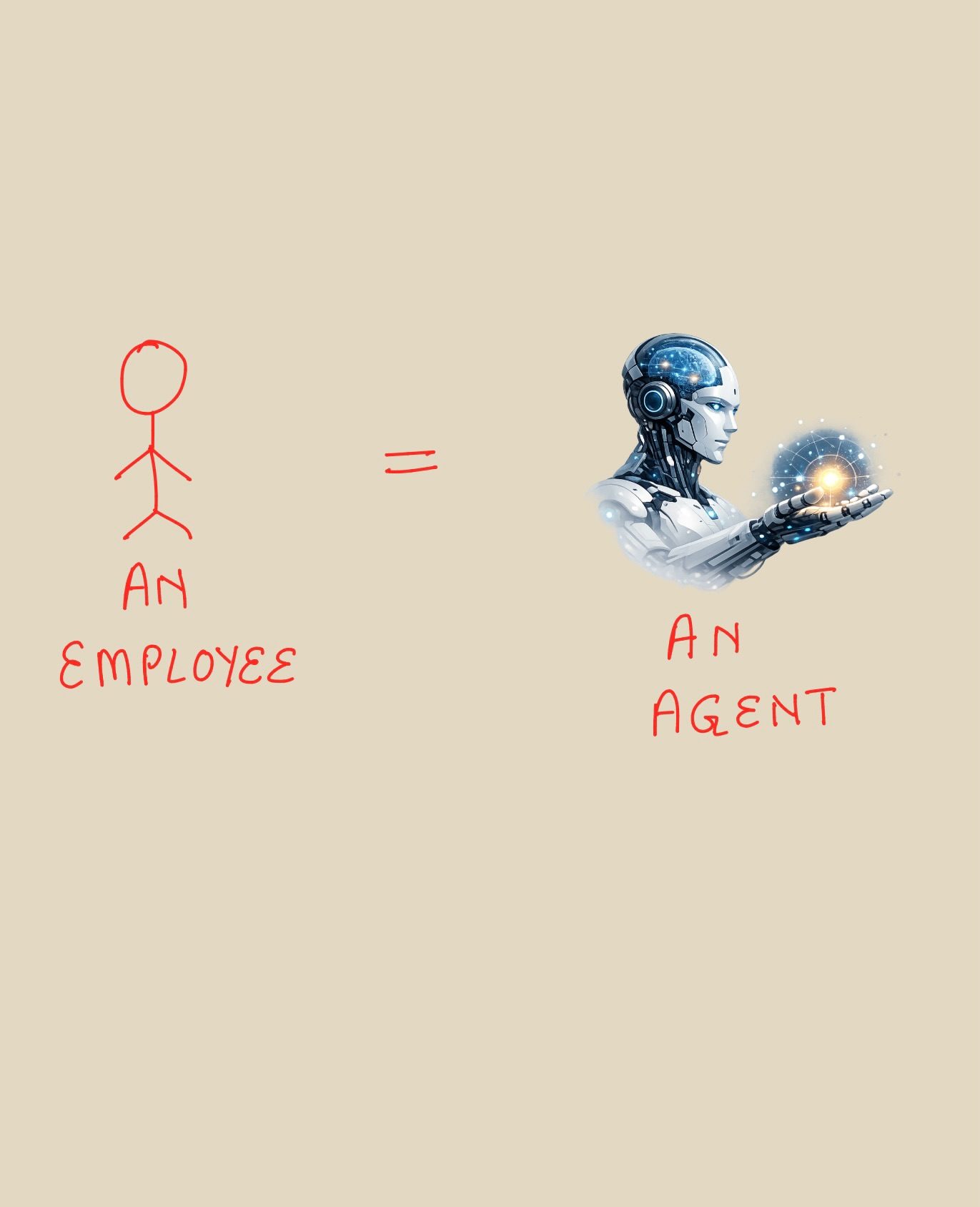
AI Agents vs. Human Employees: The Shift in Marketing
Each agent is essentially an employee with a unique set of capabilities. They share the same core intelligence—your Standard Operating Procedures (SOPs), frameworks, methods, and brand knowledge—but they operate differently. Agents can function at any hour, in multiple locations simultaneously, without fatigue. This fundamental shift alters the dynamics of the marketing landscape. Let's explore how.
Context: Why This Matters
Modern businesses are increasingly faced with the choice between human employees and AI agents. Both have their strengths, but agents offer distinct advantages in terms of scalability, speed, consistency, and cost-efficiency. While employees excel in tasks that require human intuition and judgment, agents can handle repetitive, data-driven tasks more effectively. Understanding these differences can help businesses optimize their operations and make informed decisions about where to allocate resources.
Main Discussion
The Advantages of AI Agents
AI agents bring a host of benefits that traditional employees cannot match. Here are some key areas where agents excel:
Scale and Speed
Agents can operate continuously, handling multiple tasks at once. Unlike human employees, they do not need breaks or sleep. This allows them to complete tasks at a much faster rate, significantly increasing productivity. For instance, an agent can search, extract, write, and compile information simultaneously, a task that would take a human employee much longer.
Consistency and Reliability
Agents perform tasks with a high degree of consistency. They follow predefined rules and protocols, ensuring that the output is uniform and reliable. This consistency is crucial in tasks like data extraction, reporting, and variation generation, where accuracy and repetition are key.
Cost-Effectiveness
Agentic agents are cost-effective in the long run. While the initial setup may require investment, the ongoing costs are significantly lower than those associated with human employees. Agents do not require salaries, benefits, or office space, making them a more economical choice for tasks that are repetitive and data-driven.
The Role of Human Employees
While agents offer numerous advantages, human employees remain indispensable in certain areas. Tasks that require judgment, creativity, and human intuition are best handled by employees. For example, employees are better at catching a weak offer, understanding client sentiment, and making strategic decisions.
Key Distinctions Between Agents and Employees
Task Allocation
One of the most significant shifts in the marketing landscape is the reallocation of tasks between agents and employees. Repetitive, data-driven tasks such as research, reporting, variation generation, and competitor tracking are now handled by agents. These tasks, while important, are repetitive and can be trusted with agents.
Judgment Tasks
The judgment tasks, which require human intuition and strategic thinking, remain with employees. These tasks are crucial for the overall success of the marketing strategy and cannot be entrusted to agents.
Practical Tips
For marketers looking to integrate AI agents into their workflow, here are some practical tips:
Identify the Right Tasks for Agents
Start by identifying tasks that are repetitive and data-driven. Research, reporting, and competitor tracking are prime candidates for AI agents. Tasks that require human judgment, such as strategic planning and client interaction, should remain with human employees.
Leverage Tools and Platforms
Utilize tools and platforms that make it easy to build and manage AI agents. For example, the Agentic Workshop offers a hands-on approach to building AI agents. Participants learn to build their first 5 agents live, without the need for coding or technical background.
Emphasize Continuous Learning
Marketing is a rapidly evolving field, and staying updated with the latest trends and tools is essential. Engage in continuous learning through workshops, webinars, and online courses to stay ahead in the game.
Important Takeaways
AI agents and human employees each have their unique strengths and roles. Agents offer unparalleled advantages in terms of scalability, speed, and cost-effectiveness, making them ideal for repetitive, data-driven tasks. However, human employees remain indispensable for tasks that require judgment and human intuition. The key is to strike a balance and leverage both agents and employees to maximize efficiency and effectiveness.
Conclusion
AI agents are transforming the marketing landscape, offering significant advantages over traditional employees in terms of scale, speed, consistency, and cost. By understanding the strengths and limitations of both agents and employees, businesses can optimize their operations and make informed decisions. Integrating AI agents into the workflow allows marketers to focus on strategic, judgment-based tasks, while agents handle the repetitive, data-driven tasks. This shift not only enhances productivity but also ensures that the human element remains the driving force behind strategic decision-making.
Watch the Reel
Questions readers ask
What are the primary benefits of using AI agents in marketing compared to human employees?
AI agents offer several advantages, including 24/7 operation, the ability to multitask across multiple locations simultaneously, and consistent performance without fatigue. They excel in repetitive, data-driven tasks, allowing for more efficient resource allocation and optimized operations.
Can AI agents truly replace human employees in marketing roles?
While AI agents are excellent for tasks that involve multitasking, data processing, and repetitive workflows, they don't replace the need for human employees entirely. Instead, they complement human skills by handling routine tasks, allowing employees to focus on strategic and creative work.
What is the Agentic no-code platform, and how does it help in building AI agents?
The Agentic no-code platform is a tool designed to enable users to create AI agents without needing to write any code. It provides a user-friendly interface and a range of features to help marketers build and deploy AI agents tailored to their specific needs, simplifying the process of automating marketing tasks.
How does the Agentic no-code workshop assist marketers in leveraging AI agents?
The Agentic no-code workshop provides hands-on training and guidance for marketers looking to integrate AI agents into their workflows. Participants learn to build, customize, and deploy AI agents using the Agentic platform, empowering them to enhance their marketing strategies with automated solutions.
What kinds of tasks are best suited for AI agents in a marketing context?
AI agents are particularly effective in handling repetitive tasks such as data analysis, social media management, email marketing, and customer support. They can process large amounts of data quickly and consistently, making them ideal for tasks that require accuracy and efficiency.
What are the key differences between AI agents and human employees in a marketing team?
AI agents can operate around the clock, handle multiple tasks at once, and maintain consistent performance levels. In contrast, human employees bring creativity, strategic thinking, and emotional intelligence to the table, making them better suited for tasks that require nuanced decision-making and interpersonal skills.
How can marketers ensure a smooth transition when integrating AI agents into their existing workflows?
Marketers can ensure a smooth transition by clearly defining the roles and responsibilities of AI agents and human employees, providing adequate training for team members, and gradually integrating AI agents into specific tasks. Regular monitoring and adjustment of workflows can help optimize the collaboration between AI agents and human employees.
Related deep dives
Similar reads based on topic and creator.




Recent articles
Fresh deep dives from the latest Reels we unpacked.




Comments
Be the first to comment.