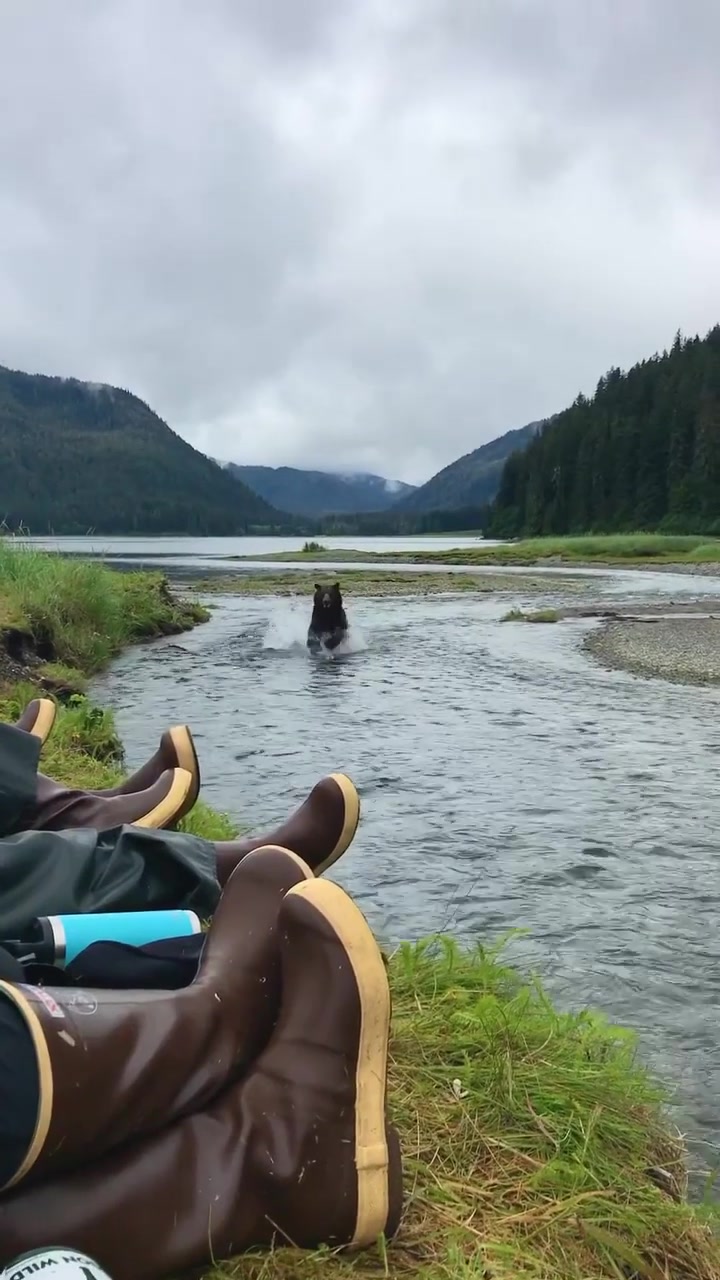
Brown bears are known for their size, strength, and adaptability, but few encounters capture their raw power more vividly than a bear navigating a river — a spectacle on display in this video from Alaska. As the bear contends with the current, the scene evokes a sense of quiet intensity, a vivid portrait of nature's balance and the creatures within it. The bear's movements in the river are evocative of the resilience and tenacity that characterize the species. But what makes this particular crossing so intruing? The bear's dynamic journey is a journey through the thick forests.
The Forest's River
The scene is set in a lush, forested environment that typifies the bear's natural habitat, with dense vegetation and towering trees lining the riverbanks. The camera captures the bear from a low angle, suggesting the videographer is standing in waders on the banks, providing a distinctly immersive view. As the bear moves through the water, its powerful limbs carve a path through the current, creating a rhythmic symphony of ripples and splashes. This natural choreography hints at the bear’s extraordinary agility and endurance. Up close, the bear pushes against the river with each step, its fur soaked and matted, a testament to the physical demands of this crossing. Each deliberate movement reveals the bear’s mastery over its surroundings, showcasing both the animal’s innate skill and the river’s relentless force.
How bears navigate the environment
Mammals like bears have a profound bond with water. Rivers are not just obstacles but part of their daily environment, teeming with food and full of sensory information. Water not only provides a rich source of life and sustenance but also a means to escape predators and complete other tasks. The bears are constantly moving through the water, either ensuring food and water for their survival, crossing to traverse spaces, or even cooling from the warmth of the forest.
The Rhythm of the River
The bear’s movement through the water has a rhythmic quality. Each pensive step echoes a deliberate pace, as if the bear is constantly weighing the terrain and the current. This deliberate rhythm contrasts with the swift flow of the river, highlighting the bear’s resilience and strategic approach to navigating its environment. Using their strength, bears tackle rushing currents, and adapt to their surroundings.
The Power of the Human Eye
This encounter emphasizes the power of human observation and documentation. The low-angle camera work and the quiet intensity of the scene bring the viewer close to the bear’s experience, making it a rare, intimate glimpse into the wild. The videographer’s patience and skill in capturing this moment underscore the crucial role of humans in documenting and understanding the natural world. The video’s cinematic quality invokes the majesty of the scene but also the fragile connection between humans and the bears.
The Role of the River
Rivers play a crucial role in the life of these bears. These waterways are rich with food and nutrients. The river serves as a highway for the bears in the forest, navigating them to new areas and food resources and acting as a natural barrier to predators. As bears depend on fish for sustenance, especially during the fall, the river provides them with sustenance necessary for survival. Besides sustenance, rivers are also a buffer from predators. They not only provide a crucial life resource, but they are highways to other bountiful areas.
The Unpredictability
The bear’s crossing highlights the unpredictable nature of wildlife encounters. Each bear’s journey in the river is unique, shaped by the river’s current, the bear’s instincts, and the forest’s complex ecosystem. This unpredictability is what makes wildlife observation both thrilling and challenging.
River Meets Road
Approaching river crossings requires a blend of patience, respect, and knowledge. Viewers who are keen to capture bears on camera should consider the following: Bringing gear suitable for wildlife photography — cameras, binoculars, etc. — is critical. Understanding the environment and the habits of these bears ensures that a videographer has a good understanding of what to expect.
- Waders: Essential for getting close to the action without disturbing the natural environment.
- Camera gear: Specialized cameras and equipment will ensure you capture the beauty of the moment and avoid poor quality.
- Safety First: Always ensure you maintain a safe distance from the bears, both in the water and on the banks.
The Forest's Artistry
On a simple level, this video is a vivid reminder of the beauty and complexity of the natural world. The bear’s river crossing is not just a physical journey. It is a moment in nature's intricate dance, where strength, endurance, and the raw beauty of the wilderness intersect. The bear’s journey through the river, its deep connection to the forest, and the quiet intensity of the scene create a story that can resonate with anyone who appreciates the natural world and the majesty of these bears.
Watch the Reel
Questions readers ask
What kind of river is the bear navigating in this video?
The river the bear is navigating is a part of the lush, forested environment in Alaska, specifically in the heart of the state. The river is characterized by its swift current and dense vegetation along the banks, which adds to the challenge and beauty of the bear's journey.
How does the bear's interaction with the river highlight its adaptability?
The bear's interaction with the river showcases its adaptability through its deliberate and rhythmic movements. Despite the river's strong current, the bear uses its powerful limbs to carve a path, demonstrating both its physical strength and strategic approach to navigating its environment.
Why is the low-angle camera work significant in capturing this bear encounter?
The low-angle camera work is significant because it provides an immersive and close-up view of the bear's experience, making the viewer feel as if they are right there with the bear. This technique not only captures the majesty of the scene but also highlights the delicate connection between humans and the natural world, emphasizing the importance of human observation and documentation.
How do rivers serve as more than just obstacles for bears?
Rivers serve as a crucial part of a bear's daily environment, providing a rich source of life and sustenance. They offer food, act as highways for navigating the forest, and even serve as a means to escape predators or cool off from the forest's warmth. The river's role in the bear's life is multifaceted and essential for their survival.
What does the bear's movement in the river reveal about its resilience and tenacity?
The bear's movement in the river reveals its resilience and tenacity through each deliberate step, showcasing its mastery over the surroundings. The bear's ability to push against the current and maintain a rhythmic pace highlights both the animal's innate skill and the river's relentless force, making this a vivid portrait of nature's balance and the creatures within it.
How does the river contribute to the bear's survival in the wilderness?
The river contributes to the bear's survival by providing a rich source of food and nutrients, acting as a natural barrier to other predators, and serving as a means of transportation. The river's role in the bear's life is multifaceted, offering both sustenance and protection, and allowing the bears to traverse spaces with ease.
What kind of tasks might the bears be accomplishing by navigating the river?
By navigating the river, bears might be accomplishing various tasks such as ensuring food and water for their survival, crossing to traverse spaces, or even cooling off from the warmth of the forest. The river serves as a vital part of their daily environment, aiding in their survival and well-being.
Related deep dives
Similar reads based on topic and creator.


Recent articles
Fresh deep dives from the latest Reels we unpacked.



Comments
Be the first to comment.