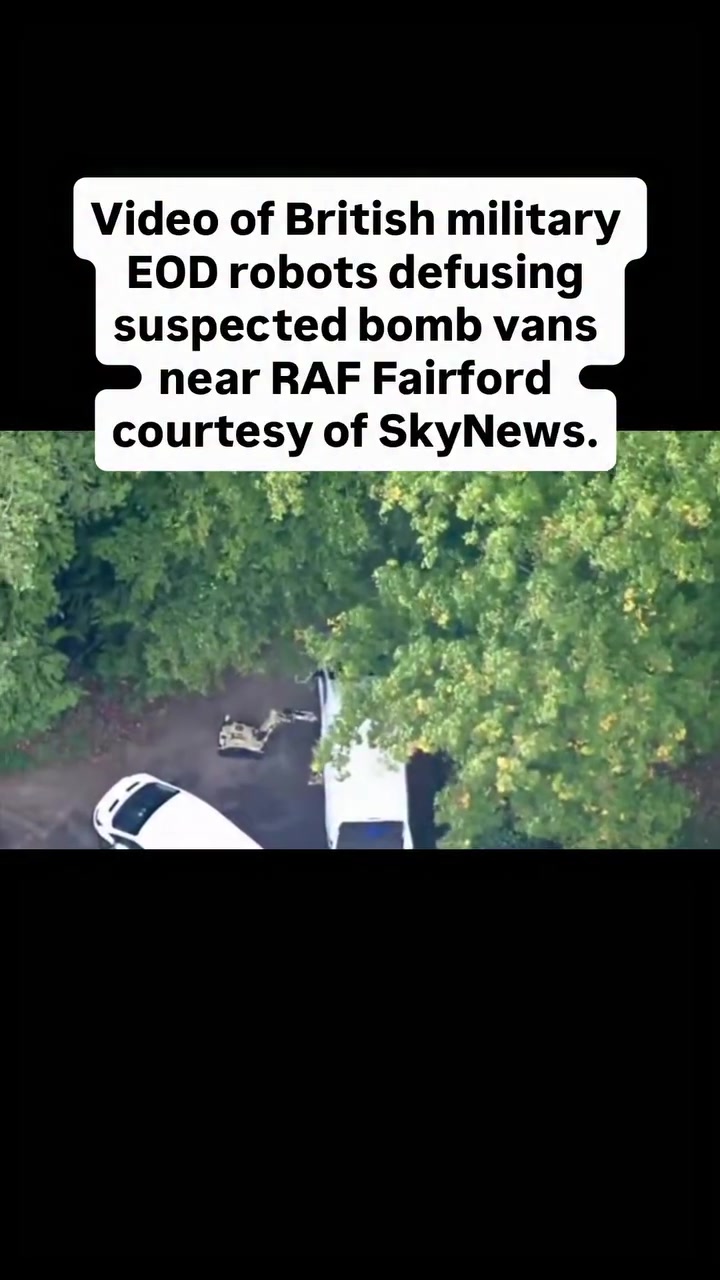
Near RAF Fairford, British military robots are taking on a dangerous task: defusing suspected bomb vans. The EOD, or Explosive Ordnance Disposal, robots are designed to neutralize threats remotely, ensuring human safety.
A robot in the battlefield
The robots, built for explosive ordnance disposal, are specialized machines designed to handle hazardous tasks in dangerous environments. Their primary function is to assess, contain, and neutralize explosive threats, eliminating the need for human personnel to operate in high-risk zones. In this video, the robots are seen maneuvering around potential bombs inside suspected vans. These robots are equipped with sensors to detect explosives, cameras to provide a visual assessment of the scene, and tools to disable the bombs. The British military EOD robots are outfitted with advanced technology, including remote-control capabilities and mechanical arms designed for precision tasks. The robots are engineered to operate in various terrains, from urban settings to areas like RAF Fairford, where the scene is marked by lush greenery. Their robotic arms and other specialized tools make them capable of handling delicate tasks, like removing and disarming explosives accurately. This precision and versatility are what make EOD robots an essential part of modern military operations.
The evolution of bomb disposal tactics
The use of EOD robots represents a significant shift in bomb disposal tactics, driven by the need to protect personnel from the escalating risks of improvised explosive devices. Traditional methods of bomb disposal involved human operators directly engaging with explosives, a high-risk task fraught with danger. This shift to using robots is part of a broader trend in military technology. Advances in robotics and artificial intelligence are transforming the battlefield, enhancing safety and operational efficiency. The incorporation of EOD robots reflects a growing emphasis on automation in hazardous tasks, a trend underscored by the constant increase in explosive threats.
Precision in the field
The British EOD robots have been specifically crafted for precision. The robots navigate the terrain autonomously, guided by remote control. Some robots can execute intricate maneuvers, such as lifting and stabilizing, ensuring that any potential threats are neutralized without causing further hazards. Why are EOD robots important? EOD robots increase the ability of military units to respond to threats quickly and effectively. Without the robots, human operators would have to assess the bomb vans themselves, putting their lives at risk, and potentially leading to additional hazards during the process. The robots reduce the risk of encountering a secondary explosive or potentially triggering a device.
The lessons from the Rangers
EOD robots are inspired by the legendary 28th Rangers, the British military's Explosive Ordnance Search and Disposal Team. The 28th Rangers have risked their lives to defuse bombs since 1993, paving the way for remote-controlled robots. When explosive threats are detected, the Rangers respond by both remotely and non-remotely disabling explosives. Rangers conduct surveys of the area and perform assessments in non-remote scenarios. Their effectiveness underscores the need for a transition to robotics, as bomb threats are increasing but fewer experts are available to handle them.
Old tactics and new tech
Rangers skilled in explosive ordnance disposal (EOD) have acted as the primary defense against these threats, working tirelessly to clear regions of explosives. Yet the legacy of explosive threats in these key areas is high. The transition from Rangers to robots isn’t just about replacing human technicians with machines, though. It’s about leveraging technology to enhance safety and efficiency. The robots eliminate the need for human operators to risk their lives onsite, and they actually augment the capabilities of the Rangers.
How robots learn
Each time a robot can remove a bomb without causing harm, it learns and even adapts. The robots are constantly improving, going beyond the norm to help authorities detect, assess and even dispose of explosives. Thanks to these improvements, the scene of the suspected bombs at RAF Fairford is seamless and orderly. The design of the robots' bodies ensures they can navigate the terrain autonomously and guided by remote control.
Prioritizing life over ground cover
It's crucial to prioritize the safety of human personnel when dealing with explosive threats. This is especially important for EOD robots, designed to keep people safe. The robots ensure that personnel stay at a safe distance from explosive threats. This minimizes the risk of harm while assessing and neutralizing the potential danger, thanks to sophisticated technology that allows them to handle threats safely. When a bomb is suspected, the robots can range across the site, assessing the area and identifying potential threats. The exploration can reveal bombs buried in the ground or other areas. The robots' precision tools and remote-control capabilities can handle these threats without the need for EOD personnel to be present. The assessment alone can indicate the severity of the threat, allowing personnel to make informed decisions.
How do robots handle bombs?
The British military EOD robot operates on the ground after a suspected explosive is found. Using a modulated jet to destroy the explosive, the robot can safely eliminate a bomb without causing harm. The robots also use X-ray and GPS technologies to operate effectively. Using X-ray, the robots can peek inside objects and analyze them without having to blow them up. This is particularly important in such cases, as it ensures that a live bomb is not detonated.
Assembling the EOD robot
Most EOD robots are comprised of a chassis, robotic arms, sensors, and tools. The chassis is the base of the robot and contains the body. The robotic arms are another crucial component of EOD robots. These arms are equipped with sensors and tools, allowing the robots to grasp and manipulate objects. The sensors in the robotic arms detect explosives and other hazards, ensuring they are handled safely and efficiently. EOD Robots also have tools to make them perform their tasks. These tools include thermo-imaging cameras, which detect heat signatures and help in identifying potential threats. X-ray technology is used to see inside objects, helping to identify possible explosives. Modulated jets are employed for destroying explosives safely. Wheel assemblies for various terrains allow the robot to travel over different surfaces.
Watch the Reel
Questions readers ask
What specific tasks can these EOD robots perform when defusing bombs in vans?
The EOD robots are equipped with sensors to detect explosives, cameras to provide a visual assessment, and tools to disable the bombs. They can maneuver around potential bombs, lift and stabilize objects, and execute precise tasks like removing and disarming explosives, all while being remotely controlled.
How do these robots enhance safety for military personnel?
By handling hazardous tasks in dangerous environments, EOD robots eliminate the need for human personnel to operate in high-risk zones. This reduces the risk of encountering a secondary explosive or triggering a device, thereby increasing the ability of military units to respond to threats quickly and effectively.
What kind of technology is used in these EOD robots?
The British military EOD robots are outfitted with advanced technology, including remote-control capabilities and mechanical arms designed for precision tasks. They are engineered to operate in various terrains and can navigate autonomously, guided by remote control.
How have bomb disposal tactics evolved with the introduction of EOD robots?
Traditional methods of bomb disposal involved human operators directly engaging with explosives, a high-risk task. The shift to using EOD robots is part of a broader trend in military technology, enhancing safety and operational efficiency by automating hazardous tasks in response to the escalating risks of improvised explosive devices.
What is the significance of the 28th Rangers in the development of EOD robots?
The EOD robots are inspired by the 28th Rangers, the British military's Explosive Ordnance Search and Disposal Team. The Rangers have risked their lives to defuse bombs since 1993, paving the way for remote-controlled robots by demonstrating the need for remote-controlled bomb disposal.
What are the key advantages of using EOD robots in modern military operations?
EOD robots provide precision and versatility in handling delicate tasks, reducing the risk to human personnel. They can navigate various terrains, execute intricate maneuvers, and neutralize explosive threats, making them an essential part of modern military operations.
Related deep dives
Similar reads based on topic and creator.

Recent articles
Fresh deep dives from the latest Reels we unpacked.




Comments
Be the first to comment.