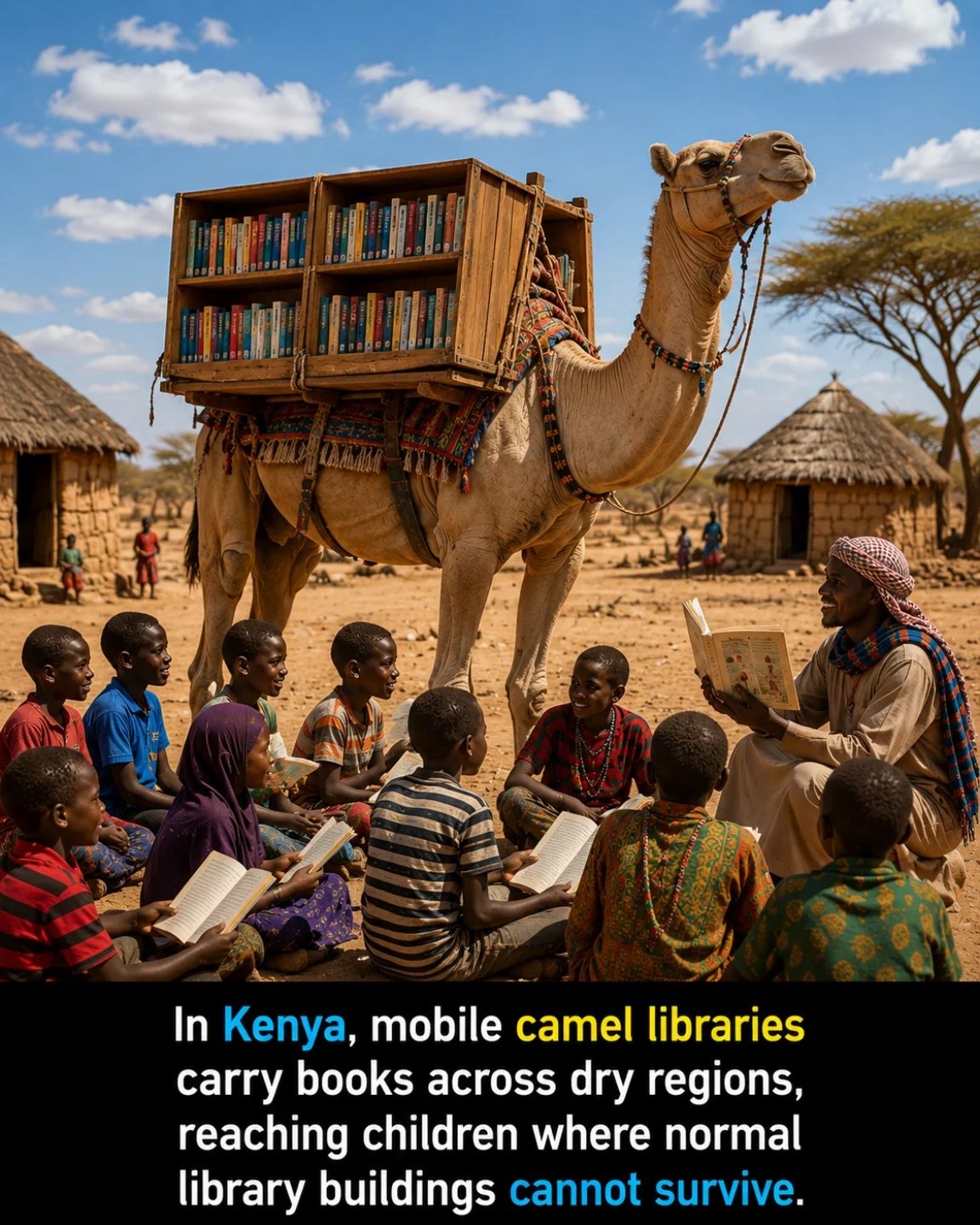
Mobile Camel Libraries in Kenya
Mobile camel libraries in Kenya are an innovative solution to bring education and literacy to remote, dry regions where traditional library buildings are not feasible. These unique libraries-on-camels traverse the harsh, arid landscapes, delivering books and educational resources directly to children who might otherwise be left behind.
Why They Matter
In many parts of Kenya, particularly in rural and arid regions, access to education and literacy resources is severely limited. Traditional library buildings often cannot survive in these harsh environments due to a lack of infrastructure, resources, and logistical support. Mobile camel libraries address these challenges by leveraging the hardy and resilient nature of camels, which are well-adapted to navigate the dry terrain.
The Concept Behind Mobile Camel Libraries
Mobile camel libraries are essentially wooden structures filled with books, strapped to the backs of camels. These structures are designed to be sturdy and lightweight, ensuring that the camels can carry them over long distances without difficulty. The libraries are brought to communities, where children gather to read books and listen to stories read aloud by educators or volunteers. This initiative not only provides access to educational materials but also fosters a love for reading and learning in these remote communities.
How It Works
The process involves several key steps:
-
Selection of Books: The books in the mobile libraries are carefully selected to cater to the educational needs and interests of the children. They cover a wide range of subjects, from basic literacy to more advanced topics, ensuring that there is something for everyone.
-
Training of Camel Drivers: The camels are driven by locals who are familiar with the terrain and the communities. These drivers ensure that the libraries reach the intended destinations safely and on schedule.
-
Community Engagement: When the mobile libraries arrive in a community, children and adults alike gather to read and listen to stories. This engagement not only provides access to books but also creates a sense of community and shared learning.
-
Sustainability: The initiative is designed to be sustainable, relying on local resources and community involvement. This ensures that it can continue to provide access to educational materials over the long term.
The Importance of This Initiative
Mobile camel libraries play a crucial role in bridging the gap in education and literacy for children in remote areas. By bringing books and educational resources directly to these communities, they ensure that children in these regions have the same opportunities to learn and grow as those in more accessible areas.
This initiative is particularly important in Kenya, where access to education is a critical issue. According to the Kenya National Bureau of Statistics, literacy rates in rural areas are significantly lower than in urban areas. Mobile camel libraries aim to address this disparity by providing access to educational resources where they are most needed.
The Benefits for Children
The benefits of mobile camel libraries for children in these remote regions are manifold:
- Access to Educational Materials: Children gain access to a wide range of books and educational materials that they might not have otherwise.
- Lifelong Learning: By fostering a love for reading and learning, these libraries help to instill a lifelong passion for education.
- Community Building: The initiative brings communities together, creating a shared sense of purpose and a common goal of improving literacy and education.
Practical Tips for Supporting Mobile Camel Libraries
If you're interested in supporting mobile camel libraries or similar initiatives, here are a few practical tips:
Donating Books
One of the most direct ways to support mobile camel libraries is by donating books. If you have children's books or educational materials that are in good condition, consider donating them to organizations that run these libraries. This ensures that the libraries have a steady supply of books to distribute.
Volunteering Your Time
Volunteering your time to help with the logistics or to read to the children can also make a significant difference. Your time and expertise can help ensure that the initiative runs smoothly and that the children have a positive and enriching experience.
Advocacy and Awareness
Spreading awareness about the initiative and advocating for its support can also help. By sharing information about mobile camel libraries and the positive impact they have on communities, you can encourage more people to support the cause.
Important Takeaways
Mobile camel libraries in Kenya are a testament to the power of innovation and community engagement in addressing educational challenges. By leveraging the resilience of camels and the hardiness of local communities, these mobile libraries bring essential educational resources directly to children in remote regions, helping to break the cycle of illiteracy and promoting lifelong learning.
Conclusion
Mobile camel libraries in Kenya serve as an inspiring model for how creative solutions can address pressing educational challenges. By bringing books and educational resources to remote communities, these libraries provide children with the tools they need to learn and grow. Whether through donations, volunteering, or advocacy, there are many ways to support this initiative and help to create a brighter future for the next generation.
Watch the Reel
Questions readers ask
What are mobile camel libraries and where are they used?
Mobile camel libraries are innovative initiatives in Kenya where books and learning materials are transported on camels to reach children in remote, dry regions. These libraries are particularly active in rural and arid areas where traditional library buildings are not sustainable.
How do mobile camel libraries help children in remote areas?
Mobile camel libraries bring books and learning resources directly to children in remote villages, fostering a love for reading and learning. This helps bridge the gap created by limited access to traditional libraries and educational resources.
Why are camels used for these mobile libraries?
Camels are used because they are well-adapted to the harsh, arid landscapes of Kenya. Their resilience and ability to traverse difficult terrains make them ideal for delivering books to children in areas where traditional transportation methods are challenging or impractical.
What types of resources do mobile camel libraries provide?
These libraries provide a variety of books and learning materials tailored to the interests and needs of children in remote areas. The resources cover a wide range of topics to inspire curiosity and support learning.
How do mobile camel libraries impact literacy in Kenya?
Mobile camel libraries play a crucial role in promoting literacy by making books and learning materials accessible to children in isolated communities. By fostering a love for reading, these initiatives help improve literacy rates and support the intellectual growth of young minds.
Related deep dives
Similar reads based on topic and creator.


Recent articles
Fresh deep dives from the latest Reels we unpacked.




Comments
Be the first to comment.