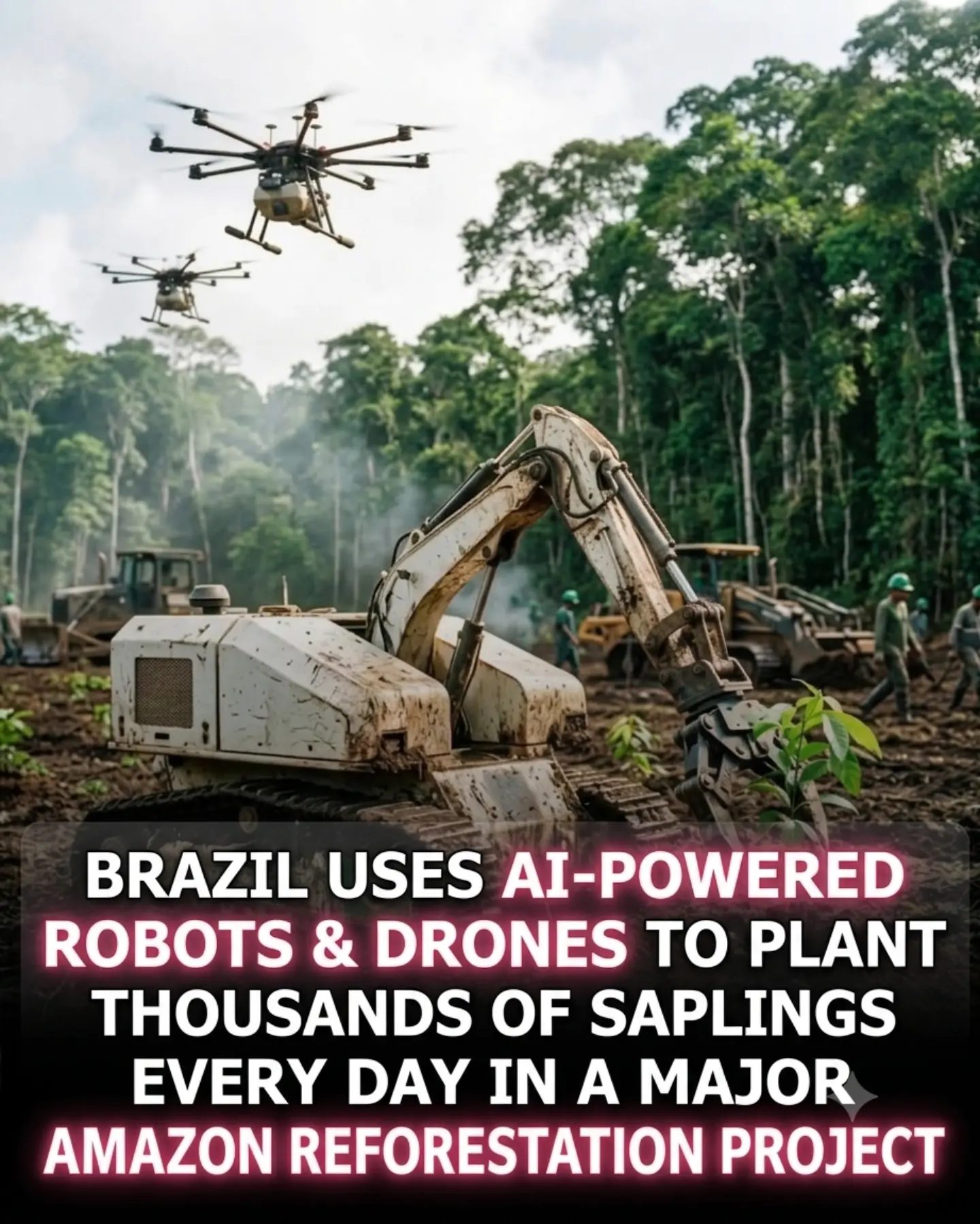
Reforestation with Robots and Drones
Reforestation efforts in Brazil are taking a high-tech turn with the integration of AI-powered robots and drones. This innovative approach aims to revitalize the Amazon rainforest by planting thousands of saplings efficiently and effectively. The project combines advanced technology with heavy machinery, including excavators, to tackle large-scale reforestation challenges.
Why This Matters
The Amazon rainforest, often referred to as the "lungs of the Earth," plays a crucial role in regulating the global climate. Deforestation has significantly impacted this ecosystem, leading to biodiversity loss and increased carbon emissions. Traditional reforestation methods, while effective, are often labour-intensive and time-consuming. By leveraging AI-powered robots and drones, Brazil is not only accelerating the reforestation process but also ensuring that the planted saplings have a higher survival rate.
Main Discussion
The Role of AI-Powered Robots
AI-powered robots are at the forefront of this reforestation initiative. These robots are equipped with advanced sensors and algorithms that allow them to navigate through dense forest areas with precision. Their primary function is to plant saplings in the most optimal locations, ensuring that each sapling has the best chance of survival.
Drones: The Eyes in the Sky
Drones play a vital role in surveying the forest areas that need reforestation. They capture detailed aerial imagery, which is then analyzed using AI to identify suitable locations for planting. This data is crucial for the robots, as it helps them determine the best spots to plant saplings. Additionally, drones can monitor the growth of the planted trees, providing real-time updates on their health and progress.
Heavy Machinery: The Backbone of Reforestation
Heavy machinery, including excavators, is essential for preparing the land for reforestation. These machines clear obstacles and level the ground, creating an ideal environment for the saplings to take root and grow. The excavators work in tandem with the robots and drones, ensuring that the reforestation process is both efficient and effective.
Practical Tips
Choosing the Right Technology
When embarking on a large-scale reforestation project, it's essential to select the right technology. AI-powered robots and drones offer numerous advantages, but they require a significant investment. It's crucial to assess your budget and resources before making a decision.
Sourcing Saplings
The success of a reforestation project depends on the quality of the saplings. Ensure that you source saplings from reputable nurseries to maximize their survival rate. Additionally, consider the species of trees that are native to the region, as they are better adapted to the local climate and soil conditions.
Monitoring Progress
Regular monitoring is key to the success of any reforestation project. Drones can be used to survey the planted areas periodically, providing valuable data on the growth and health of the saplings. This information can help you make informed decisions and adjust your strategies as needed.
Important Takeaways
- Technology Integration: The use of AI-powered robots and drones in reforestation offers a more efficient and effective way to plant and monitor saplings.
- Heavy Machinery: Excavators and other heavy machinery are essential for preparing the land for reforestation.
- Sapling Quality: The success of the project depends on the quality and species of the saplings.
- Regular Monitoring: Continuous monitoring using drones ensures the health and growth of the planted saplings.
Conclusion
The integration of AI-powered robots and drones in Brazil's reforestation efforts showcases a promising future for environmental conservation. This high-tech approach not only accelerates the reforestation process but also ensures that the planted saplings have a higher survival rate. By leveraging advanced technology and heavy machinery, Brazil is setting a new standard for environmental stewardship, paving the way for similar initiatives around the world.
Watch the Reel
Questions readers ask
How do drones assist in the reforestation process in Brazil?
Drones in Brazil's reforestation projects are used for two main purposes. Firstly, they plant saplings in hard-to-reach areas. Secondly, they monitor the growth and health of these saplings. This process ensures that the reforestation efforts are both efficient and effective. By utilizing drones, reforestation teams can cover more ground and plant more trees than traditional methods.
What role do AI-powered robots play in Brazil's reforestation efforts?
AI-powered robots are instrumental in planting saplings with precision and care. This advanced technology ensures that the saplings are planted in optimal conditions, leading to higher survival rates. Additionally, robotics work in tandem with drones and heavy machinery to tackle large-scale reforestation challenges.
What are the benefits of high-tech reforestation in the Amazon rainforest?
High-tech reforestation in the Amazon rainforest offers several benefits. It accelerates the revitalization of the ecosystem, combats the impacts of deforestation, and helps in regaining the region’s biodiversity. This high-tech approach also ensures higher sapling survival rates, as compared to traditional methods by planting them in optimal conditions.
How do heavy machinery and AI-powered robots combine in reforestation?
Heavy machinery, such as excavators, prepares the land for planting by removing obstacles and creating suitable planting sites. AI-powered robots then take over, planting the saplings with precision and care. This collaborative approach ensures that large-scale reforestation projects are completed efficiently and effectively.
Why is reforestation in the Amazon rainforest important?
Reforestation in the Amazon rainforest is important because it helps to restore a vital ecosystem. The Amazon rainforest, known as the 'lungs of the Earth,' plays a crucial role in regulating the global climate. By reforesting the Amazon, we can combat deforestation, reduce carbon emissions, and preserve biodiversity.
What kinds of issues does reforestation in Brazil address?
Reforestation in Brazil addresses several key issues. It aims to combat deforestation, which has led to significant biodiversity loss. Additionally, reforestation helps to reduce carbon emissions, mitigate climate change, and revitalize the Amazon rainforest. By planting thousands of saplings, Brazil is working to restore this crucial ecosystem and its benefits.
What challenges does Brazil face in large-scale reforestation efforts, and how are they tackled?
Brazil faces challenges like vast areas needing reforestation, difficult terrain, and the need for high sapling survival rates. To tackle these, Brazil uses a combination of AI-powered robots, drones, and heavy machinery. This high-tech approach ensures efficient planting and monitoring, accelerating the revitalization of the Amazon rainforest.
Related deep dives
Similar reads based on topic and creator.




Recent articles
Fresh deep dives from the latest Reels we unpacked.




Comments
Be the first to comment.