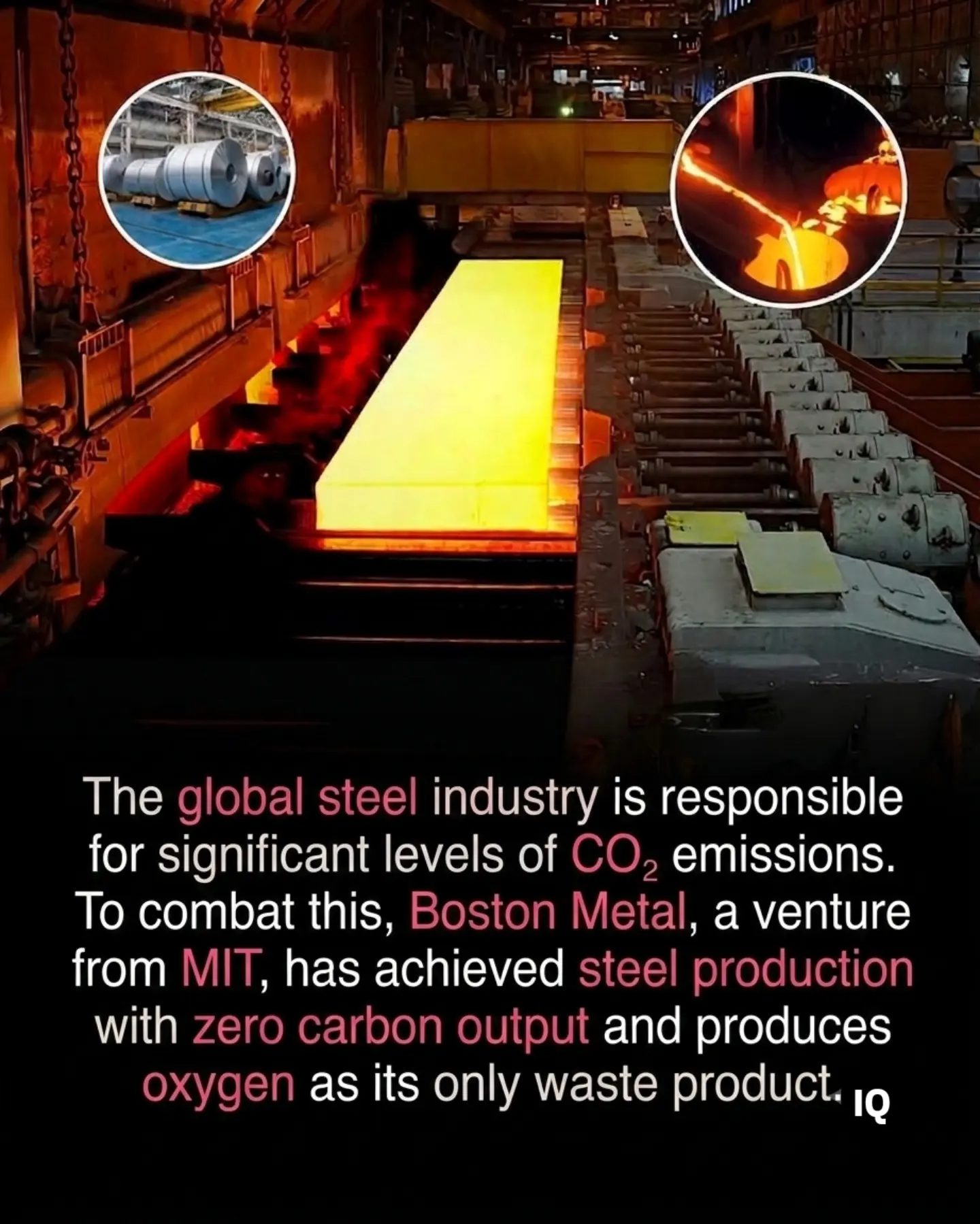
Steel Production Innovation
The global steel industry is a significant source of environmental pollution, primarily due to its massive carbon dioxide (CO2) emissions. Traditional steel manufacturing processes contribute substantially to greenhouse gases, making the sector a critical focus for sustainability efforts. This is where innovations like those developed by Boston Metal come into play.
Why This Matters
The environmental impact of steel production is immense. The industry accounts for about 8% of global CO2 emissions, making it a major contributor to climate change. Reducing these emissions is crucial for achieving sustainability goals and mitigating the effects of climate change. Innovations that can produce steel with zero carbon output are therefore highly significant. These advances not only help reduce environmental pollution but also pave the way for a more sustainable future in heavy manufacturing.
The Boston Metal Innovation
Boston Metal, a venture spun out of the Massachusetts Institute of Technology (MIT), has developed a groundbreaking approach to steel production. Their innovative method achieves zero carbon output, completely eliminating the associated greenhouse gases. Instead of releasing harmful pollutants, this revolutionary process yields clean oxygen as its only waste product.
The Zero-Carbon Process
The traditional method of steel production involves the use of coal and coke, which release significant amounts of CO2. In contrast, Boston Metal's process uses electric arc furnaces powered by renewable energy sources. This change in energy source is a key factor in achieving zero carbon emissions. The process also employs advanced metallurgical techniques that further reduce the environmental footprint.
One of the most remarkable aspects of this innovation is the production of oxygen as a byproduct. This not only eliminates the need for harmful waste management but also provides a valuable resource that can be used in other industrial processes. The oxygen produced can be captured and utilized in various applications, from medical to industrial, adding to the overall efficiency and sustainability of the process.
Sustaining the Future
The implications of Boston Metal's innovation extend beyond environmental benefits. By significantly reducing the cost and complexity associated with waste management, the process can lead to more cost-effective and efficient steel production. This, in turn, can make steel manufacturing more economically viable, especially in regions where environmental regulations are stringent.
The use of renewable energy sources in the production process aligns with global efforts to transition to a low-carbon economy. This shift is not only beneficial for the environment but also for the long-term sustainability of the industry. As more companies adopt similar zero-carbon methods, the steel industry can play a crucial role in achieving global climate goals.
Global Impact
The adoption of zero-carbon steel production methods like those developed by Boston Metal can have a profound global impact. As one of the largest industries in the world, steel production has a significant influence on the economy and environment. Transitioning to more sustainable methods can set a precedent for other heavy manufacturing sectors, encouraging them to adopt similar eco-friendly practices.
Practical Tips
For steel producers looking to adopt more sustainable practices, several practical steps can be taken:
- Invest in Renewable Energy: Transitioning to renewable energy sources for powering steel production facilities can significantly reduce carbon emissions.
- Adopt Advanced Metallurgical Techniques: Employing innovative metallurgical methods can improve the efficiency and sustainability of steel production.
- Explore Zero-Carbon Technologies: Research and invest in technologies that produce zero carbon output, such as those developed by Boston Metal.
- Collaborate with Research Institutions: Partnering with institutions like MIT can provide access to cutting-edge research and development in sustainable steel production.
- Implement Waste Management Solutions: Develop strategies for capturing and utilizing byproducts like oxygen, reducing the need for waste management and adding value to the production process.
Important Takeaways
- The global steel industry is a major contributor to CO2 emissions, making it a critical area for environmental interventions.
- Boston Metal has developed a zero-carbon steel production method that produces oxygen as its only waste product, significantly reducing the environmental impact.
- Innovations in steel production can have a profound global impact, setting a precedent for other heavy manufacturing sectors.
- Adopting sustainable practices in steel production can lead to economic benefits, including cost reduction and increased efficiency.
- Transitioning to renewable energy sources and advanced metallurgical techniques is essential for achieving zero carbon output in steel production.
Conclusion
The steel industry's shift towards sustainable practices is essential for mitigating climate change and achieving global environmental goals. Innovations like those developed by Boston Metal offer a promising path forward, demonstrating that it is possible to produce steel with zero carbon output. By adopting similar methods, the industry can reduce its environmental footprint and contribute to a more sustainable future.
Watch the Reel
Questions readers ask
What is zero-carbon steel and why is it important?
Zero-carbon steel is produced without emitting greenhouse gases, unlike traditional steel manufacturing methods. It is important because it helps reduce the environmental impact of the steel industry, which is a major contributor to global CO2 emissions. By adopting zero-carbon steel, industries can significantly lower their carbon footprint and contribute to sustainability goals.
How does Boston Metal's process differ from traditional steel manufacturing?
Boston Metal uses innovative techniques that utilize renewable energy to produce steel. Traditional methods rely on fossil fuels, which release significant amounts of greenhouse gases. By using renewable energy, Boston Metal’s process helps eliminate the emissions associated with conventional steel production.
What role does renewable energy play in zero-emission steel production?
Renewable energy is crucial for zero-emission steel production as it provides a clean and sustainable power source. By using energy from wind, solar, or hydro sources, the overall carbon footprint of steel manufacturing can be drastically reduced. This shift towards clean energy is essential for achieving emission-free steel production.
What are the environmental benefits of sustainable steel manufacturing?
Sustainable steel manufacturing, such as the process used by Boston Metal, reduces greenhouse gas emissions significantly. This not only helps mitigate climate change but also promotes a cleaner environment. Additionally, it contributes to a more sustainable future for the heavy industry sector. It minimizes the environmental impact of steel production which affects air quality and resource conservation.
How does Boston Metal’s innovation contribute to carbon reduction in the steel industry?
Boston Metal's innovation focuses on producing zero-carbon steel, which directly reduces the industry's carbon emissions. By eliminating harmful greenhouse gases typically associated with steel manufacturing, Boston Metal’s approach helps lower the overall carbon footprint of the steel industry, making it a key player in sustainable metal production.
What is green steel technology and how does it work?
Green steel technology refers to steel production methods that greatly reduce or eliminate greenhouse gas emissions. Boston Metal's technology is an example of this, using renewable energy sources to power the production process. This technology works by replacing traditional fossil fuel-based methods with cleaner, more sustainable solutions, resulting in emission-free steel production.
What does zero-waste steel manufacturing mean?
Zero-waste steel manufacturing aims to minimize waste and maximize resource efficiency in the steel production process. It involves innovative processes that not only produce zero-carbon steel but also ensure that by-products and waste materials are recycled or repurposed effectively. This approach supports a more sustainable and environmentally friendly steel industry.
Related deep dives
Similar reads based on topic and creator.




Recent articles
Fresh deep dives from the latest Reels we unpacked.




Comments
Be the first to comment.