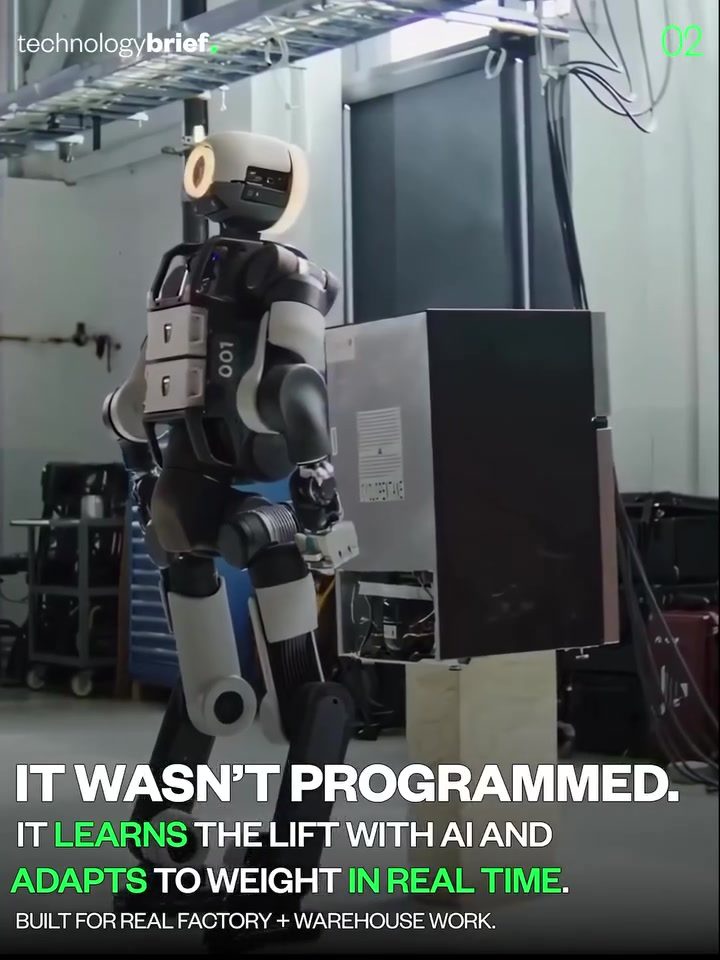
AI-Powered Robots Revolutionize Industrial Work
AI-powered robots are revolutionizing the industrial sector, particularly in factories and warehouses. These advanced machines are designed to handle complex tasks with precision and adaptability, making them ideal for real-world work environments. Unlike traditional robots, which are often programmed for specific tasks, AI-powered robots can learn and adapt in real-time, making them far more versatile.
Why This Matters
The shift towards AI-powered robots in industrial settings is driven by the need for increased efficiency, safety, and adaptability. Traditional robots are typically designed for repetitive tasks and require precise programming. In contrast, AI-powered robots can learn from their environment and adapt to new situations, making them more suitable for the dynamic and often unpredictable nature of industrial work.
The Capabilities of AI-Powered Robots
Real-Time Learning and Adaptation
One of the key advantages of AI-powered robots is their ability to learn and adapt in real-time. For instance, these robots can adjust to the weight of an object they are lifting, ensuring that they handle it safely and efficiently. This capability is particularly important in warehouse and factory settings, where the nature of the tasks can vary significantly.
Whole-Body Control
AI-powered robots are equipped with whole-body control, which means they use their entire frame to manage balance, force, and awkward loads. This is a significant departure from traditional robots, which often rely on specific parts of their body for tasks. With whole-body control, robots can handle a wider range of tasks with greater precision and stability, making them more effective in industrial settings.
Reinforcement Learning
Reinforcement learning is a key component of AI-powered robots. This type of learning allows robots to improve their performance over time by receiving feedback on their actions. For example, a robot lifting a mini-fridge can learn from its mistakes and improve its technique, making it more efficient and reliable.
Practical Tips for Implementing AI-Powered Robots
Assess Your Needs
Before implementing AI-powered robots, it's crucial to assess your specific needs. Identify the tasks that require the most precision and adaptability, and determine how AI-powered robots can enhance these processes. Consider factors such as the size and weight of the objects being handled, the variability of the tasks, and the need for real-time adjustments.
Training and Maintenance
Proper training and maintenance are essential for the effective use of AI-powered robots. Ensure that your team is well-trained in operating and maintaining these advanced machines. Regular maintenance checks can help prevent downtime and ensure that the robots continue to perform optimally.
Important Takeaways
The rise of AI-powered robots in industrial settings represents a significant advancement in technology. These robots offer real-time learning and adaptation, whole-body control, and reinforcement learning, making them ideal for complex and dynamic work environments. By assessing your needs, investing in proper training, and ensuring regular maintenance, you can harness the power of AI-powered robots to enhance your industrial operations.
Conclusion
The future of industrial work is here, and it's powered by AI. AI-powered robots are transforming factories and warehouses, making them more efficient, safe, and adaptable. As these technologies continue to evolve, they will play an increasingly important role in a wide range of industries, from manufacturing to logistics and beyond. Embrace the power of AI-powered robots and take your industrial operations to the next level.
Watch the Reel
Questions readers ask
What makes Boston Dynamics' Atlas different from traditional industrial robots?
Atlas stands out due to its AI-driven capabilities. Unlike traditional robots, Atlas can learn and adapt in real-time, allowing it to handle a variety of tasks with precision and versatility. This makes it particularly well-suited for dynamic environments like warehouses and factories.
How does real-time learning benefit industrial operations?
Real-time learning enables Atlas to adapt to new situations and tasks on the fly, increasing operational efficiency. This means it can optimize its performance continuously, reducing downtime and the need for manual reprogramming.
What is whole-body control in the context of the Atlas robot?
Whole-body control refers to the Atlas robot's ability to use its entire body to perform tasks, rather than being limited to specific joints or movements. This allows for more natural and efficient movements, enhancing its precision and adaptability in complex industrial settings.
Can the Atlas robot improve safety in industrial settings?
Yes, the Atlas robot's advanced sensors and real-time learning capabilities enable it to navigate and operate in dynamic environments safely. By adapting to its surroundings and avoiding obstacles, it can help prevent accidents and reduce the risk of damage to equipment or injuries to human workers.
What types of tasks can the Atlas robot perform in a warehouse or factory?
The Atlas robot can handle a wide range of tasks, from lifting and moving heavy objects to performing complex assembly tasks. Its adaptability means it can be used for various applications, making it a versatile asset in industrial settings.
How does the Atlas robot adapt to new situations in industrial environments?
The Atlas robot uses advanced AI algorithms to learn from its environment and adapt to new situations. This includes recognizing changes in task requirements, adjusting movements to avoid obstacles, and optimizing performance based on real-time feedback.
Related deep dives
Similar reads based on topic and creator.




Recent articles
Fresh deep dives from the latest Reels we unpacked.




Comments
Be the first to comment.