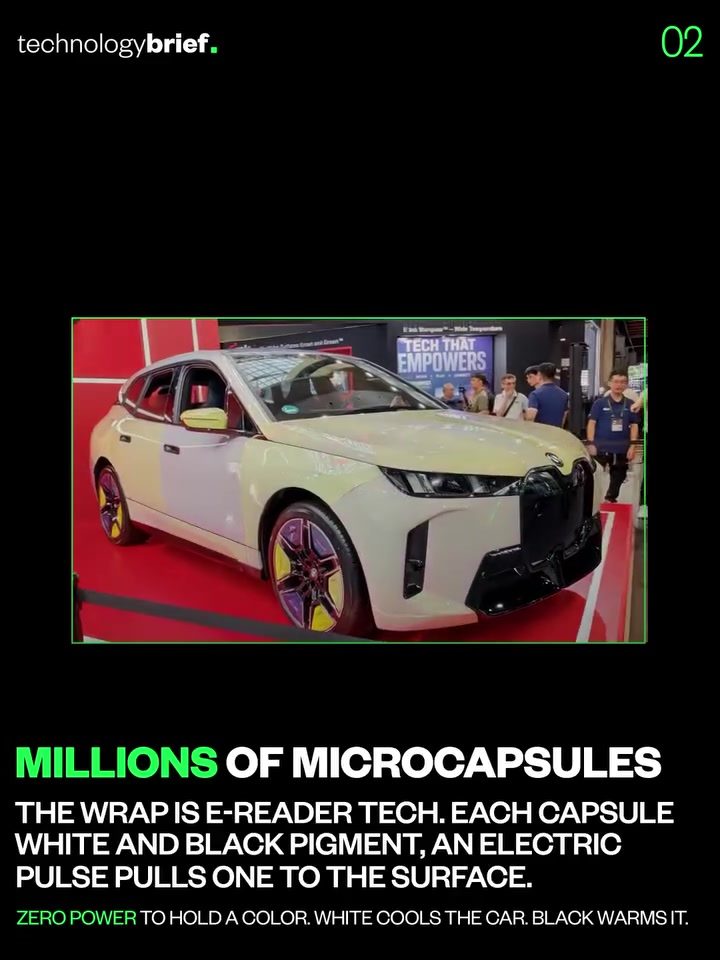
BMW's iX Flow and the Future of Color-Changing Cars
BMW's iX Flow is a revolutionary concept car that blends cutting-edge technology with practical design. This innovative vehicle features a unique color-changing paint job, made possible through E Ink-style body panels. These panels can switch between white, black, and gray, providing both aesthetic and functional benefits.
Why This Matters
The iX Flow is more than just a novelty; it represents a significant step forward in automotive technology. By leveraging e-reader technology, BMW has created a car that can adapt to its environment in real-time. This adaptability is not only visually striking but also serves a practical purpose, especially for electric vehicles (EVs).
Environmental Adaptation
One of the standout features of the iX Flow is its ability to change color based on temperature. When the car is in a hot environment, a lighter color can reflect heat, keeping the interior cooler and reducing the need for air conditioning. Conversely, in colder climates, a darker color can absorb more warmth, helping to maintain a comfortable temperature without overtaxing the car's heating system.
This dynamic color-changing capability can significantly impact the efficiency of EVs. Climate control systems in electric cars often consume a substantial amount of battery power, reducing the overall range. By optimizing the car's color to reflect or absorb heat more efficiently, the iX Flow can help conserve battery life, making it a more practical choice for drivers in various climates.
Main Discussion
The Technology Behind the Magic
The color-changing technology in the iX Flow is made possible through millions of microcapsules embedded in the car's paint. These microcapsules utilize a technology similar to that found in e-readers, where an electric pulse pulls either the white or black pigment to the surface. This process requires no external power to hold a color, making it highly energy-efficient.
The microcapsules are filled with white and black pigments. When an electric pulse is applied, the pigments are pulled to the surface, changing the color of the car. This mechanism is not only energy-efficient but also durable, as the microcapsules can withstand the rigors of normal road conditions.
Practical and Aesthetic Benefits
The practical benefits of the iX Flow's color-changing technology are clear. By adjusting the color of the car to reflect or absorb heat, drivers can maintain a comfortable interior temperature with less reliance on the car's climate control systems. This can lead to significant energy savings, especially for EVs.
However, the aesthetic benefits should not be overlooked. The iX Flow allows drivers to change the look of their car without the need for repainting. This level of customization can appeal to car enthusiasts who enjoy personalizing their vehicles. It also opens up new possibilities for car design, allowing for dynamic, ever-changing aesthetics that were previously impossible.
The Future of Programmable Cars
The iX Flow is part of a broader trend in automotive technology where cars are becoming more like rolling computers. As cars become more connected and autonomous, the potential for programmable exteriors opens up exciting new possibilities. Imagine a car that can change color to match the environment, or even display animations or messages on its surface.
BMW's concept raises intriguing questions about what happens when the outside of a car becomes programmable. This level of customization and adaptability could revolutionize the way we think about car design, making the driving experience more enjoyable and personalized.
Practical Tips
While the iX Flow is still a concept car, there are practical considerations to keep in mind if this technology were to become mainstream. These include cost, durability, and the potential for repairs. Here are some tips for potential future owners:
Maintenance and Durability
Given that the iX Flow's color-changing technology relies on millions of microcapsules, it's essential to consider how this could affect the car's durability. While BMW claims that the technology is robust and can withstand normal road conditions, it remains to be seen how it will hold up over time. Regular maintenance and care will be crucial to ensure longevity.
Cost Considerations
As a concept car, the iX Flow is likely to come with a hefty price tag. While the cost for a production model is unknown, it's safe to assume that early adopters may face higher prices. Additionally, the cost of maintaining and repairing such advanced technology could be significant. Potential buyers should be prepared for these expenses.
Real-World Applications
Before this technology becomes widely available, it's essential to consider its real-world applications. While the concept is exciting, it's crucial to assess whether it can withstand the rigors of daily driving. Factors such as weather conditions, road debris, and general wear and tear could impact the technology's effectiveness.
Important Takeaways
The iX Flow represents a significant leap forward in automotive technology. Its color-changing capabilities, driven by millions of microcapsules, offer both aesthetic and practical benefits. For EVs, this technology can help improve energy efficiency by optimizing temperature control. As cars become more like rolling computers, the potential for programmable exteriors opens up exciting new possibilities for personalization and functionality.
Conclusion
BMW's iX Flow is a groundbreaking concept that pushes the boundaries of what is possible in automotive design. By leveraging e-reader technology to create a color-changing exterior, BMW is asking what happens when the outside of a car becomes programmable. The iX Flow offers a glimpse into a future where cars can adapt to their environment, providing both practical and aesthetic benefits. While there are still questions to be answered about cost, durability, and real-world applications, the concept is undeniably intriguing and holds promise for the future of automotive technology.
Watch the Reel
Questions readers ask
How does the BMW iX Flow's color-changing technology work?
The BMW iX Flow uses E Ink-style body panels that can change color based on temperature changes. This technology allows the car to switch between black, white, and gray, which not only enhances its appearance but also helps regulate the car's internal temperature.
What are the benefits of the color-changing feature in the BMW iX Flow?
The color-changing feature in the BMW iX Flow helps to optimize the car's temperature. Black absorbs heat, while white reflects it. Therefore, the car can adapt to different weather conditions, improving efficiency and reducing the need for power-consuming heating or cooling systems.
How does the BMW iX Flow's color-changing tech improve electric vehicle efficiency?
By adapting to external temperatures, the BMW iX Flow can reduce the demand on the car's heating and cooling systems. This means less energy is used for thermal management, thereby extending the range and reducing the power consumption of the electric vehicle.
Can other BMW models use this color-changing technology?
Currently, this technology is featured in the concept car, the BMW iX Flow. While it's not yet available in other models, it's possible that BMW could integrate similar adaptive body panels into future production vehicles, such as the BMW iX3, as the technology develops.
What makes the BMW iX Flow a significant step forward in automotive technology?
The BMW iX Flow is notable for its use of e-reader technology in a vehicle, allowing for real-time adaptation to environmental changes. This is a pioneering step in automotive design, bridging the gap between aesthetic appeal and functional benefits, particularly for electric vehicles.
How does the BMW iX Flow's color-changing feature help in thermal regulation?
The color-changing panels help manage the car's internal temperature by adjusting to the external environment. For instance, in hot weather, the car can turn white to reflect heat, while in cold weather, it can turn black to absorb heat, reducing the need for artificial heating or cooling.
What inspired BMW to create the iX Flow concept car?
BMW's aim with the iX Flow concept car is to explore innovative ways to enhance efficiency and sustainability in electric vehicles. By integrating color-changing technology, BMW is pushing the boundaries of what's possible in automotive design and functionality, particularly in thermal management and power consumption.
Recent articles
Fresh deep dives from the latest Reels we unpacked.




Comments
Be the first to comment.