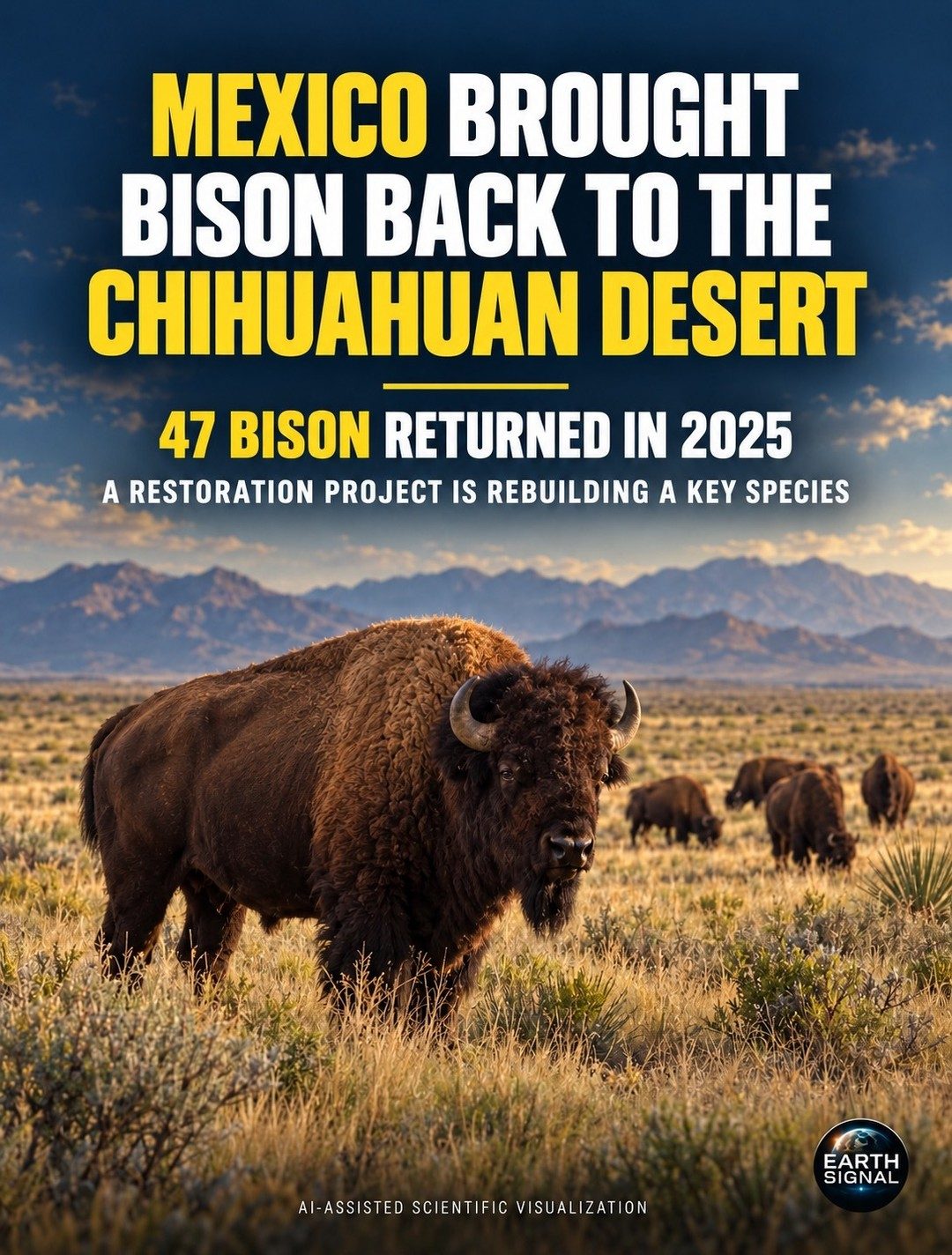
The Return of America’s Giant
Once extinct in the wild in Mexico, the bison is making a comeback. Forty-seven bison were reintroduced to the Chihuahuan Desert in 2025. The story of the bison's return is not only an ecologically significant event but also a demonstration of how dedicated conservation efforts can breathe life into ecosystems. The Chihuahuan Desert is the largest desert in North America. The complexities of the region’s ecology need careful management. The bison, a keystone species, plays a central role in this delicate web. When these giant mammals once roamed the desert, they shaped the landscape through their grazing and foraging habits. The return of herds is key to restoring biodiversity, returning nutrients to the soil, and creating habitats for other species. Earth Signal’s project isn’t merely about restoring a species—they are rebuilding an entire ecosystem. In the vast desert landscape, bison graze, trample bushes, and kick up the dirt. These actions create micro-habitats, dig into water sources, and regenerate grasses. The project reclaims the dynamic balance of the Chihuahuan Desert.
The Desperation for Biodiversity
Bison were once widespread across North America, including the Chihuahuan Desert. In the late 19th century, unregulated hunting reduced bison numbers to near extinction. The restoration project highlights the importance of re-establishing biodiversity to ensure the health of the ecosystem. Earth Signal's approach could serve as a template for future restoration projects. The project set a reintroduction plan rather than randomly releasing animals. This controlled approach considered factors such as the availability of water, vegetation types, and the presence of predators. The reintroduction process began with a small number of animals, allowing them to adjust to their new environment. Over time, the project has focused on maintaining the low-density population.
The Role of Scienctific Visualization
To communicate the project's significance, Earth Signal utilizes AI-assisted scientific visualization. This approach vividly shows the impact of the restoration project on the landscape. The visualizations help illustrate the shift in desert ecology. AI-enhanced visuals acutely capture the animal's movements, vegetation changes, and soil conditions. The visuals also serve an educational purpose, making complex ecological changes accessible and understandable. By breaking down intricate processes, Earth Signal hopes to raise awareness and garner support for continued conservation efforts. The AI-scientific visualization makes it possible to understand the subtle transformations of the desert climate through a single glimpse.
Watch the Reel
Related deep dives
Similar reads based on topic and creator.
Recent articles
Fresh deep dives from the latest Reels we unpacked.

Comments
Be the first to comment.