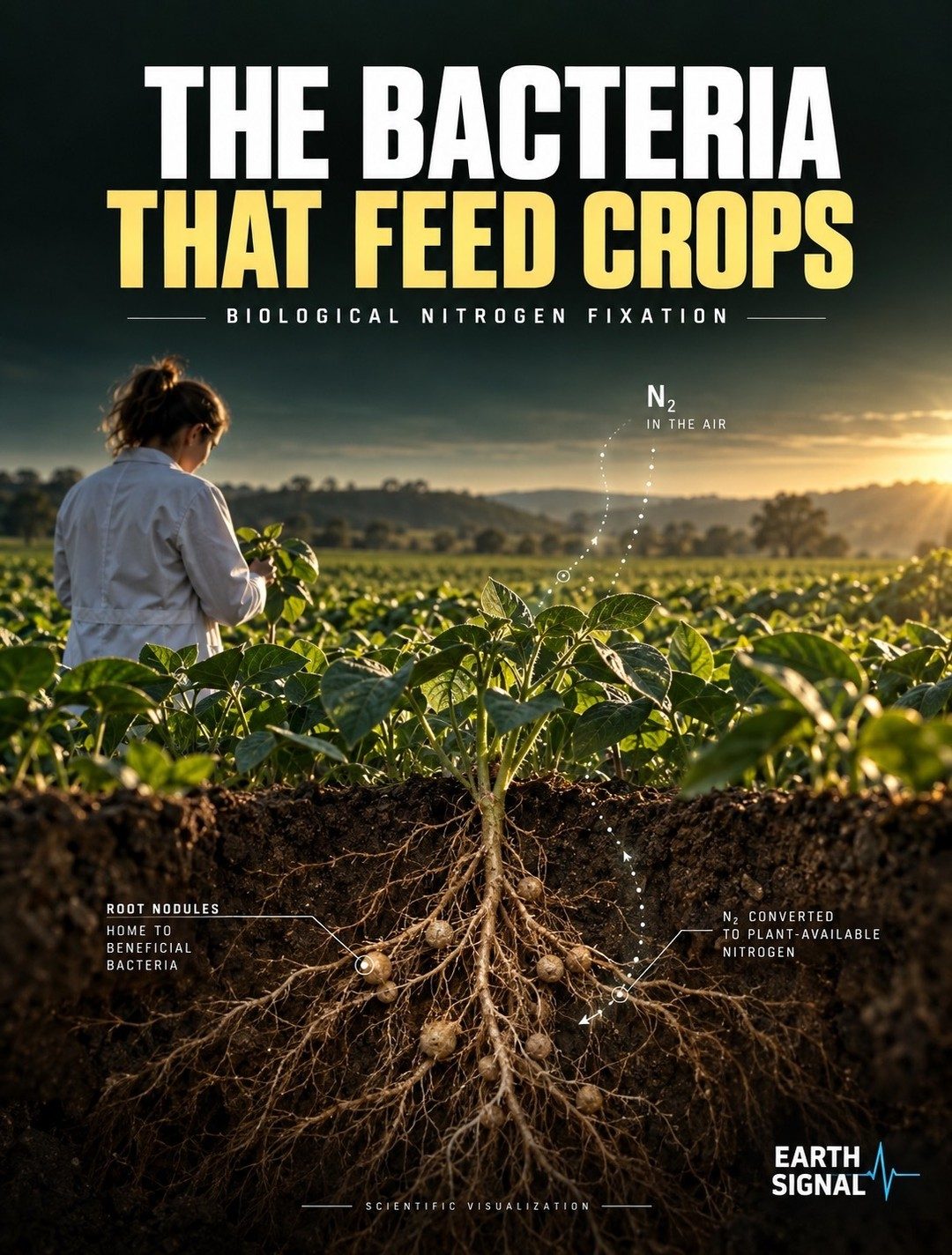
Braziian Microbiologist Mariangela Hungria
Brazil's Mariangela Hungria, a dedicated microbiologist, has spent over 40 years unravelling the mysteries of a natural process called biological nitrogen fixation. Her work is essential for sustainable agriculture. Biological nitrogen fixation occurs when bacteria in root nodules convert atmospheric nitrogen into a form that plants can use. So far, her research has been applied to over 40 million hectares of Brazilian soybean fields, empowering farmers to rely less on synthetic fertilizers. Hungria's agricultural breakthroughs is rooted in the complex relationship between plants and soil bacteria. While nitrogen is ubiquitous in the atmosphere, it exists in a form that most plants cannot use. Beneficial bacteria in the soil, however, have the unique ability to convert atmospheric nitrogen (N2) into a plant-available form. This natural process is vital for plant growth. Hungria's work has significantly reduced Brazil's dependence on expensive, environmentally detrimental synthetic fertilizers. Her research has enabled Brazilian farmers to harness the power of beneficial bacteria. She focuses on the root nodules, which act as "homes" for these beneficial bacteria. This is why Earth Signal has depicted ROOT NODULES clearly while explaining the process.
Saving soil and thrift
Scientists hope that Brazil's microbiologist Mariangela Hungria's groundbreaking work will allow plants to access nitrogen more efficiently, making them less dependent on synthetic fertilizers. Plants rely on nitrogen for fundamental processes, such as photosynthesis and protein synthesis, and nitrogen deficiency can severely stunt their growth. However, providing plants with excess nitrogen can lead to run-off, which pollutes both soil and water. Thus, a delicate balance must be maintained, which is why Hungria's work is invaluable. The benefits of Hungria's work extend far beyond the fields she directly impacts. Soil health is a critical issue for modern agriculture. Healthy soil is vital for nutrient-dense crops, which support human health and animal nutrition. The health of the soil can be severely impacted by excessive fertilizers. By reducing the need for them, Hungria's work is a boon for farmers as well, as it can lower the cost of fertilizer inputs. Mariangela Hungria's dedication has not gone unnoticed. In 2025, she received the World Food Prize for her significant contributions to sustainable agriculture. Her work has set a precedent for future researchers and highlighted the importance of biological nitrogen fixation.
Watch the Reel
Related deep dives
Similar reads based on topic and creator.



Recent articles
Fresh deep dives from the latest Reels we unpacked.



Comments
Be the first to comment.