Novel Battery Technology: The Future of Power
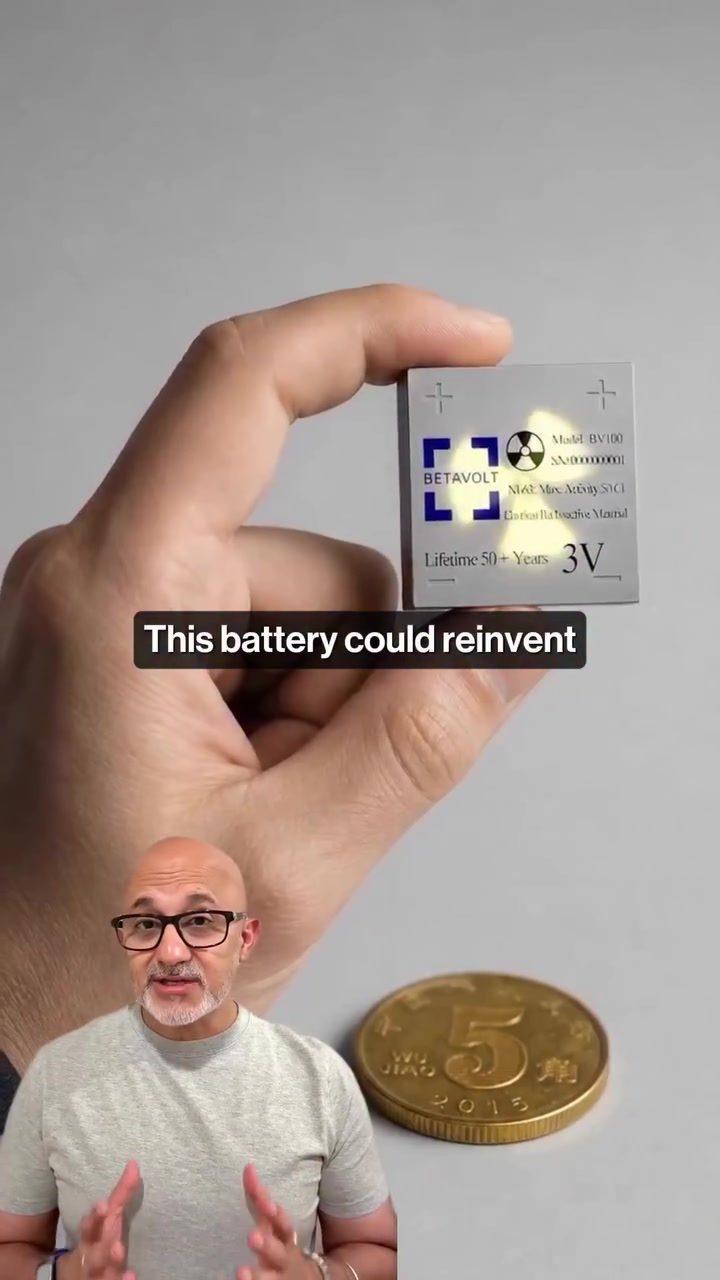
BETAVOLT's novel battery technology offers a groundbreaking shift in how we power devices. Unlike traditional batteries that store electricity, BETAVOLT batteries generate electricity through the continuous decay of Nickel-63, a radioactive material. This innovative approach allows these batteries to operate for decades without the need for recharging. The BETAVOLT model BV100, showcased in the video, is a small, rectangular battery boasting a lifetime of 50+ years and a power output of 3V.
Context: Why This Matters
The battery technology landscape has remained relatively static over the past three decades. Most batteries, including the lithium-ion batteries commonly used in smartphones and other high-power devices, operate by storing electrical energy and then releasing it. This conventional approach has its limitations, primarily the need for recharging and the eventual depletion of stored energy. The search for a reliable, long-lasting power source, especially for devices in remote or hard-to-access locations, has been ongoing. Traditional lithium batteries, while widely used, have their limitations, particularly in terms of longevity and the need for periodic recharging.
Main Discussion
The Science Behind BETAVOLT Batteries
BETAVOLT batteries leverage the natural decay of Nickel-63 to generate a steady stream of electricity. Nickel-63 is a radioactive isotope with a relatively long half-life, making it an ideal candidate for this purpose. The decay process of Nickel-63 produces electrons, which are then harnessed to create an electrical current. This continuous energy generation allows BETAVOLT batteries to operate without recharging, making them an excellent solution for long-term, low-power applications.
The key components of a BETAVOLT BV100 battery include the radioactive Nickel-63 source, an electrolytic cell to convert the electrons into a usable current, and a power management system to regulate the output. The continuous production of electrons ensures a steady, reliable power supply, unlike conventional batteries that rely on stored energy.
Applications and Use Cases
The primary use cases for BETAVOLT batteries are in devices that require long-term, low-power operation. These include:
-
Medical Devices: Implantable medical devices, such as pacemakers and neural stimulators, can benefit significantly from the extended lifetime of BETAVOLT batteries. These devices often need a reliable power source to ensure continuous operation, and the long-term reliability of BETAVOLT batteries addresses this need effectively.
-
Satellites and Spacecraft: Space missions require power sources that can operate for extended periods without the possibility of recharging. BETAVOLT batteries, with their ability to generate power continuously, are an attractive option for powering satellites, probes, and other spacecraft.
-
Deep Sea Equipment: Underwater exploration and monitoring equipment often need a power source that can operate autonomously for long periods. BETAVOLT batteries are designed for low-power applications, making them a suitable choice for underwater sensors, cameras, and other devices.
-
Remote AI Sensors: AI sensors deployed in remote locations, such as environmental monitoring stations, need a reliable power source. BETAVOLT batteries can provide the long-term power necessary for these devices to function continuously, ensuring reliable data collection.
Future Prospects
While the current BETAVOLT batteries, like the BV100 model, are not designed to power high-energy devices like smartphones, they represent a significant step forward in power technology. The potential for this technology to revolutionize various industries is immense. As the technology matures, further advancements in power management and energy conversion could lead to the development of BETAVOLT batteries capable of powering a wider range of devices.
Comparison with Conventional Batteries
Unlike conventional batteries, which require periodically recharging, BETAVOLT batteries offer a continuous power supply. This makes them ideal for applications where regular maintenance is impractical or impossible. For example, satellites orbiting in space or deep-sea equipment at the bottom of the ocean cannot be easily accessed for recharging. In these scenarios, the continuous power generation of BETAVOLT batteries provides a significant advantage.
Additionally, traditional batteries have a limited lifespan, typically measured in cycles of charging and discharging. Even the most advanced lithium-ion batteries start to degrade after a few hundred charge cycles, reducing their capacity over time. BETAVOLT batteries, on the other hand, provide a stable power output for decades, making them a more sustainable choice for long-term applications.
Practical Tips for Implementing BETAVOLT Batteries
When considering the use of BETAVOLT batteries, it is essential to understand their strengths and limitations. Here are some practical tips for implementing these batteries in your applications:
-
Evaluate Power Requirements: Ensure that the power needs of your device are within the capabilities of the BETAVOLT battery you choose. Currently, BETAVOLT batteries are designed for low-power applications, so they may not be suitable for high-energy devices.
-
Consider Application Environment: BETAVOLT batteries are ideal for remote or hard-to-access locations where regular maintenance is impractical. They are particularly well-suited for devices that need to operate autonomously for extended periods.
-
Plan for Integration: Integrating BETAVOLT batteries into your devices may require some customization, especially in terms of power management systems. Work with experts in power engineering to ensure seamless integration and optimal performance.
Important Takeaways
BETAVOLT's novel battery technology represents a significant advancement in power generation. By leveraging the continuous decay of Nickel-63, BETAVOLT batteries offer a long-term, reliable power solution for low-power applications. While they are not currently designed to replace high-power smartphone batteries, their potential to revolutionize various industries, from medical devices to space exploration, is undeniable. As the technology evolves, we can expect to see even more innovative applications and improvements in power management and energy conversion.
Conclusion
The future of power is here, and it looks different from what we have known for the past three decades. BETAVOLT's innovative approach to power generation, based on the continuous decay of Nickel-63, offers a new paradigm in battery technology. As we continue to explore the potential of this groundbreaking technology, we can look forward to a world where power is not just stored and released but continuously generated, providing a reliable and sustainable energy solution for a wide range of applications.
Watch the Reel
Questions readers ask
How does BETAVOLT's battery technology differ from traditional batteries?
BETAVOLT's batteries generate electricity through the continuous radioactive decay of Nickel-63, unlike traditional batteries that store electrical energy. This allows BETAVOLT batteries to provide power for decades without the need for recharging, unlike conventional electrodes that lose power over time.
What are the advantages of using Nickel-63 in power generation?
Nickel-63's continuous radioactive decay produces a steady supply of power, with BETAVOLT batteries offering a lifetime of decades. This makes Nickel-63 an excellent choice for powering devices in remote or hard-to-access locations, where replacing or recharging batteries is difficult or impossible.
What types of devices can benefit from BETAVOLT's long-lasting batteries?
BETAVOLT's batteries are ideal for devices that require continuous power for extended periods, such as satellites, remote sensors, and equipment in inaccessible locations. These batteries can provide reliable power for decades.
Can BETAVOLT's batteries replace lithium-ion batteries in smartphones?
While BETAVOLT's batteries offer a revolutionary power solution, they are not designed to replace lithium-ion batteries in smartphones. BETAVOLT's power sources are aimed at devices that need to operate for decades without maintenance or recharging, while lithium-ion batteries are optimized for high-power and frequent recharging.
How does the BV100 model differ from other BETAVOLT battery models?
The BV100 is a specific model of BETAVOLT's batteries, boasting a lifetime of over 50 years and a power output of 3V. Other BETAVOLT models may have different lifespans and power outputs, but all are powered by the continuous decay of Nickel-63.
What makes BETAVOLT's batteries ideal for powering sensors in remote areas?
BETAVOLT's batteries are perfect for powering sensors in remote areas because they can operate for decades without recharging. This eliminates frequent maintenance or replacement, ensuring continuous power supply and data collection, even in hard-to-reach locations.
Are BETAVOLT's batteries safe to use in everyday devices?
BETAVOLT's batteries are designed with safety in mind, using a safe, stable isotope of Nickel-63. However, due to their unique power generation method and long lifespan, they are currently optimized for specific applications, such as remote sensors or satellites, rather than everyday devices.
Related deep dives
Similar reads based on topic and creator.




Recent articles
Fresh deep dives from the latest Reels we unpacked.




Comments
Be the first to comment.