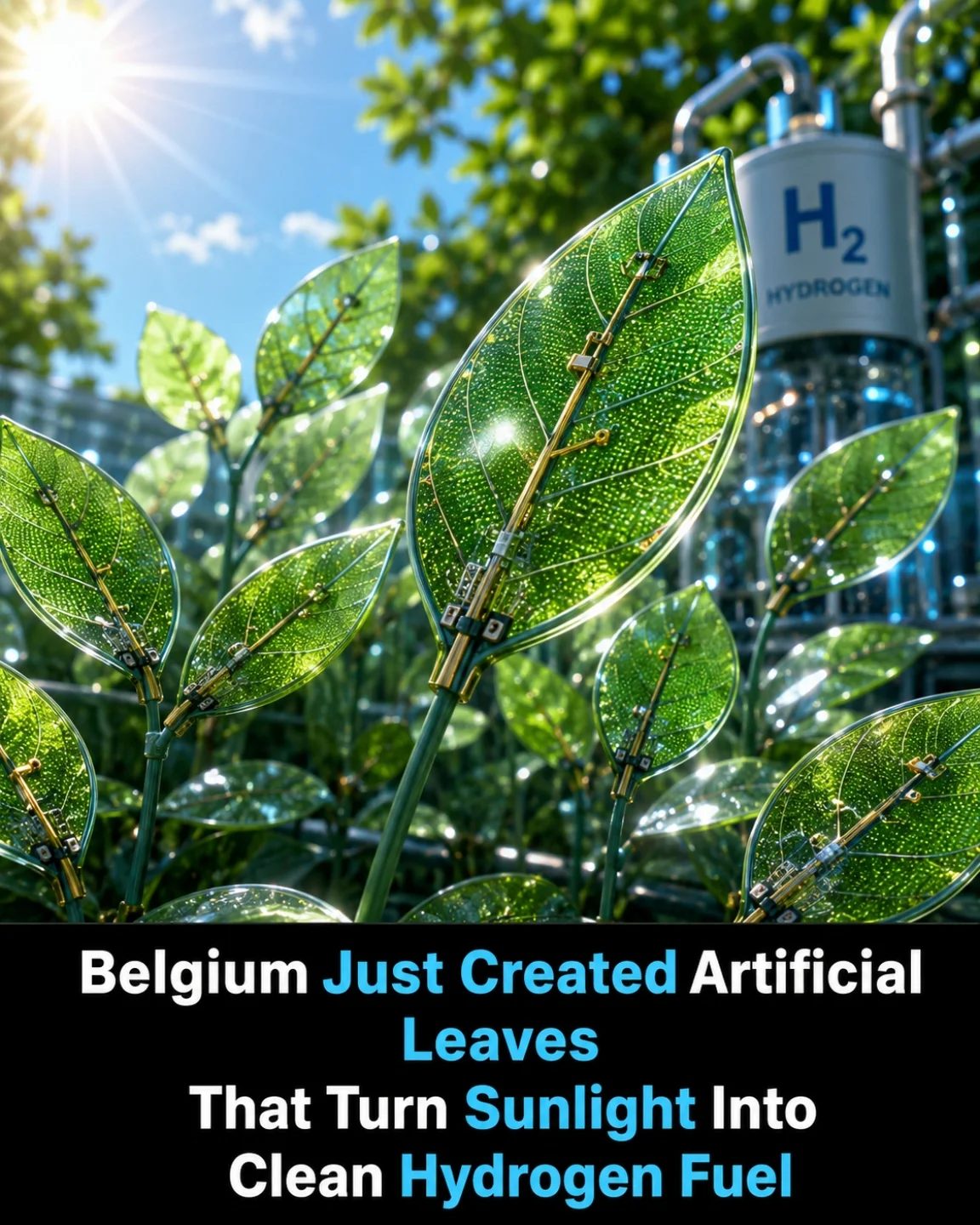
Artificial Leaves for Hydrogen Fuel
Artificial leaves are at the forefront of a technological revolution aimed at producing clean hydrogen fuel. This innovation, showcased in a lush, green setting, highlights the potential to harness the power of sunlight to generate sustainable energy, much like natural leaves do through photosynthesis.
Context / Why this matters
In the quest for sustainable energy, hydrogen fuel has emerged as a promising solution. It is clean, efficient, and can be used in a variety of applications, from powering vehicles to heating homes. The challenge lies in producing hydrogen in a way that is both environmentally friendly and economically viable. Artificial leaves offer a groundbreaking approach by using sunlight to split water into hydrogen and oxygen, mimicking the natural process of photosynthesis.
Belgium has made significant strides in this technology, developing artificial leaves that convert sunlight into clean hydrogen fuel. This achievement underscores the country's commitment to innovation and sustainability, positioning it as a leader in the field of renewable energy.
Main discussion
The Science Behind Artificial Leaves
Artificial leaves are designed to mimic the natural process of photosynthesis, where plants convert sunlight into energy. In the case of artificial leaves, the process involves using sunlight to split water molecules into hydrogen and oxygen. This is achieved through a combination of advanced materials and catalytic processes.
The leaves are typically made from semiconductor materials that absorb sunlight and generate electrons. These electrons are then used to drive a chemical reaction that splits water into hydrogen and oxygen. The hydrogen produced can be collected and used as a fuel, while the oxygen is released into the air.
The Role of Belgium in Hydrogen Fuel Technology
Belgium has been at the forefront of developing artificial leaves for hydrogen fuel production. Researchers in the country have been working on optimizing the materials and processes involved in this technology to make it more efficient and cost-effective. Their efforts have yielded significant results, demonstrating the potential of artificial leaves as a viable source of clean energy.
Belgium's success in this area can be attributed to a combination of factors, including strong research and development capabilities, a supportive regulatory environment, and a commitment to sustainability. The country's achievements in hydrogen fuel technology serve as a model for other nations looking to transition to a more sustainable energy future.
The Environmental Benefits
One of the key advantages of artificial leaves is their potential to reduce carbon emissions. Traditional methods of hydrogen production, such as steam methane reforming, rely on fossil fuels and release significant amounts of greenhouse gases. In contrast, artificial leaves use sunlight as their primary energy source, making them a much cleaner and more sustainable option.
Additionally, artificial leaves can help to address the challenges of energy storage and distribution. Hydrogen produced from artificial leaves can be stored and transported easily, making it a versatile fuel source for a wide range of applications. This can help to create a more resilient and flexible energy system, better equipped to meet the demands of a growing population and a changing climate.
The Economic Potential
Beyond their environmental benefits, artificial leaves also offer significant economic potential. As the demand for clean energy continues to grow, so too will the demand for hydrogen fuel. Artificial leaves can help to meet this demand in a sustainable and cost-effective way, creating new opportunities for businesses and governments alike.
The production of artificial leaves requires a range of advanced materials and technologies, creating opportunities for innovation and job creation. Additionally, the development of a hydrogen infrastructure can stimulate economic growth and create new industries, further driving progress towards a sustainable energy future.
Practical tips
-
Invest in Research and Development: Governments and businesses should prioritize investment in research and development to advance the technology of artificial leaves. This will help to improve their efficiency, reduce costs, and make them more widely available.
-
Promote Collaboration: Collaboration between academia, industry, and government is essential for driving innovation in this field. By working together, stakeholders can share knowledge, resources, and expertise to accelerate progress.
-
Support Policy and Regulation: Developing supportive policies and regulations can help to create a favorable environment for the adoption of artificial leaves. This includes incentives for renewable energy production, investments in infrastructure, and standards for hydrogen fuel quality and safety.
Important takeaways
- Artificial leaves offer a groundbreaking solution for producing clean hydrogen fuel.
- Belgium's advancements in artificial leaf technology highlight the country's leadership in renewable energy.
- The process of converting sunlight into hydrogen fuel mimics natural photosynthesis.
- Artificial leaves have significant environmental and economic benefits, including reducing carbon emissions and driving innovation.
- Collaboration, investment in R&D, and supportive policies are crucial for advancing this technology.
Conclusion
Artificial leaves represent a significant advancement in the quest for sustainable energy. By harnessing the power of sunlight to produce clean hydrogen fuel, we can move closer to a future where energy is abundant, affordable, and environmentally friendly. The achievements of Belgium in this field serve as an inspiration and a roadmap for other nations looking to embrace this technology. As we continue to explore and develop artificial leaves, we can look forward to a world powered by clean, renewable energy.
Watch the Reel
Questions readers ask
What exactly are artificial leaves and how do they work?
Artificial leaves are advanced devices designed to mimic the process of natural photosynthesis. They use sunlight to split water into hydrogen and oxygen, creating clean hydrogen fuel that can be used to power vehicles and heat homes. This process is clean and efficient, making it a promising solution for sustainable energy production.
Why is Belgium a leader in artificial leaves technology?
Belgium has been at the forefront of developing and advancing artificial leaves technology. The country's cutting-edge research and innovation in this field have positioned it as a global leader. By harnessing sunlight to produce clean hydrogen fuel, Belgium is paving the way for a more sustainable and environmentally friendly future.
How does the conversion of sunlight into hydrogen fuel benefit the environment?
The conversion of sunlight into hydrogen fuel using artificial leaves is highly beneficial for the environment. This process produces clean energy without emitting harmful greenhouse gases, unlike traditional fossil fuel methods. By reducing reliance on non-renewable resources, artificial leaves contribute to a greener, more sustainable energy landscape.
What are the primary uses of hydrogen fuel produced by artificial leaves?
Hydrogen fuel produced by artificial leaves has a wide range of applications. It can be used to power electric vehicles, providing a clean alternative to traditional gasoline. Additionally, hydrogen fuel can be used for heating homes, industrial processes, and even in fuel cells to generate electricity, making it a versatile and sustainable energy source.
What makes artificial leaves a sustainable solution for renewable hydrogen energy?
Artificial leaves offer a sustainable solution for renewable hydrogen energy because they rely on sunlight, a readily available and abundant resource. By converting sunlight into hydrogen fuel, these devices produce clean energy without depleting natural resources or producing harmful emissions. This makes artificial leaves an attractive option for long-term, eco-friendly energy production.
How does the production of hydrogen using artificial leaves compare to traditional methods?
The production of hydrogen using artificial leaves is more environmentally friendly and sustainable compared to traditional methods. Traditional methods often involve the use of fossil fuels, which release harmful greenhouse gases. In contrast, artificial leaves produce hydrogen through a clean process that splits water into hydrogen and oxygen using sunlight. This results in a more eco-friendly and cost-effective approach to renewable hydrogen energy.
Related deep dives
Similar reads based on topic and creator.




Recent articles
Fresh deep dives from the latest Reels we unpacked.




Comments
Be the first to comment.