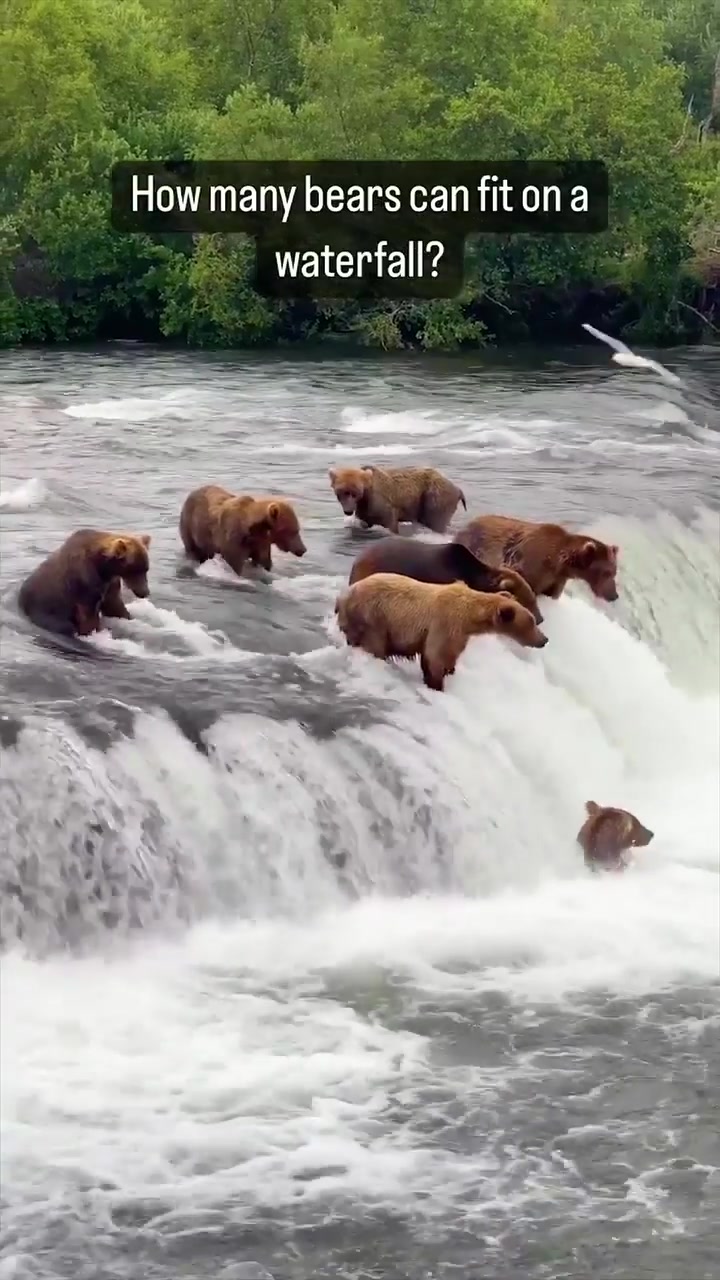
The scene unfolds in a rugged, forested landscape: brown bears descend a waterfall, their bodies silhouetted against the cascading water. The sight is not just an awe-inspiring spectacle but also a test of human curiosity. What can be observed in the footage, is how many bears can fit on a waterfall.
A wild waterfall respite
Brown bears exploring a waterfall is not an uncommon sight. Bears and waterfalls coexist in these ecosystems, creating a burst of furry activity. The sight of these huge, powerful animals balancing and leaping over waterfalls is breathtaking — perhaps because it seems out of their nature. The bears descending these waterfalls are a true spectacle of strength and agility. Bears are not particularly known for their swimming prowess. Usually, they have to move more stealthily. Thus focusing attention on them is a rarity. This sight may seem risky. In these scenarios, dangers could stem from the bears' own physicality, such as slipping or falling. The water itself could also pose hazards to these bears, such as drowning or being washed away by the current.
Connecting to the broader world of wildlife encounters
Bear sightings and natural wildlife encounters are a bad habit. Encounters like these are part of a broader narrative about human behavior in wildlife settings. People’s desire to get closer to powerful animals drives the curiosity — how many bears can fit on a waterfall. Wild animals instinctively retreat for safety. Bear sightings demand specific conservation efforts because these animals are often under threat in their habitats. From climate change to deforestation, humans are a constant threat to bear populations. The natural ecosystems that we often strive to get close to are disappearing. We ruin the places that animals and other life forms are dependent upon.
Where bears might play in nature
An unexpected meeting spot
The iconic bear at a waterfall is part of a key habitat for brown bears. Weakened from the melting permafrost and the decreasing glacial waters. The decreasing resources driving these bears into forested landscapes. The images of the bear’s bodies against the waterfall are an offspring of the interactions that people have with the environment.
The question of numbers
The video’s intriguing question, "How many bears can fit on a waterfall?", is left unanswered. It asks viewers to consider the sheer size and power of the bears. The answer to this question may be that a waterfall can accommodate a certain number of bears. The bears are moving individually. The bears are not crowding and thus not physically jostling each other. This makes navigating the layers of the waterfall simple.
The nature of waterfalls as bear habitats
Waterfalls, despite their rugged surfaces, offer bears a prime area for foraging and a source of hydration. While bears are excellent swimmers, the whitewater at the base of waterfalls can be treacherous. As the water transitions to ice, the risk to the bears also increases. Bears have a special size of feet. The pads on the bear feet are large and have a gripping surface. All of these features are necessary to grip the wet rock surfaces and hold the bear’s body weight.
Becoming a wildlife spectator
A keen interest in observing bears in their natural habitat can be a rewarding experience. Conducting research into bear behavior and conservation is important — both for the wonder of discovery, and to better protect the bears.
- Safety First: Begin by choosing a professional guide and a reputable wildlife tour operator, especially if you're traveling to areas with a high concentration of bears. Your guide can teach you the appropriate techniques for observing bears.
- Avoid Disturbing Wildlife: Remember, bears are not to be disturbed. Do not move closer to the bears than the allowable distance set by your guide. Try not to lose your focus on observing the bears. ** Know the Rules: Familiarize yourself with the local regulations and guidelines for wildlife viewing. Many national parks and protected areas have specific rules to ensure the safety of both visitors and wildlife. Respect the Environment: Follow Leave No Trace principles. This means packing out all trash, minimizing noise, and not feeding or approaching wildlife. This applies to waterfalls as well.
The difference between sight and experience
These sights remind us of the fragility of nature. There is more than we can understand about the animals and the environment. Wildlife conservation and public education are needed to stem the tide of destruction that humans can cause to nature. The time bears use to cross waterfalls humanely also paves the way for significant opportunities. The bears are showcasing the connection between humans and nature.
Watch the Reel
Questions readers ask
What makes the sight of bears at a waterfall so surprising?
The sight of bears at a waterfall is surprising because bears are not typically known for their swimming or climbing abilities, especially in such rugged and slippery environments. Additionally, bears are usually more stealthy and cautious, so seeing them in such an exposed and active setting is uncommon.
How do bears manage to navigate waterfalls safely?
Bears have large, gripping pads on their feet that help them maintain traction on wet and slippery surfaces. However, the water itself can pose dangers, such as strong currents or the risk of drowning, so bears must navigate carefully.
Are these waterfall encounters common or rare in the bears' natural habitats?
While not extremely rare, seeing bears at waterfalls is not a common sight. It is more likely to be seen in areas where the ecosystem is intact, and bears have access to their natural habitats. It’s a burst of furry activity.
What are the main dangers bears face when interacting with waterfalls?
The primary dangers include the risk of slipping or falling due to the waterfall's rugged surfaces, as well as the hazards posed by the water itself, such as strong currents or the risk of drowning. Additionally, as the water transitions to ice, the risk to the bears increases.
How does human behavior impact bear populations in these habitats?
Human behavior, such as climate change and deforestation, poses significant threats to bear populations. These activities often lead to habitat loss and resource scarcity, driving bears into more dangerous or unfamiliar territories. People’s desire to get closer to powerful animals drives the curiosity — how many bears can fit on a waterfall.
What conservation efforts are needed to protect bears in these habitats?
Conservation efforts should focus on preserving natural ecosystems, reducing human interference, and mitigating the impacts of climate change. This includes protecting forested landscapes and ensuring that bears have access to the resources they need to thrive.
How do the bears' large feet help them navigate waterfalls?
Bears' large feet have gripping pads that provide excellent traction on wet and slippery surfaces, allowing them to navigate waterfalls more safely. This adaptation is crucial for their ability to move through these environments without slipping or falling.
Related deep dives
Similar reads based on topic and creator.



Recent articles
Fresh deep dives from the latest Reels we unpacked.



Comments
Be the first to comment.