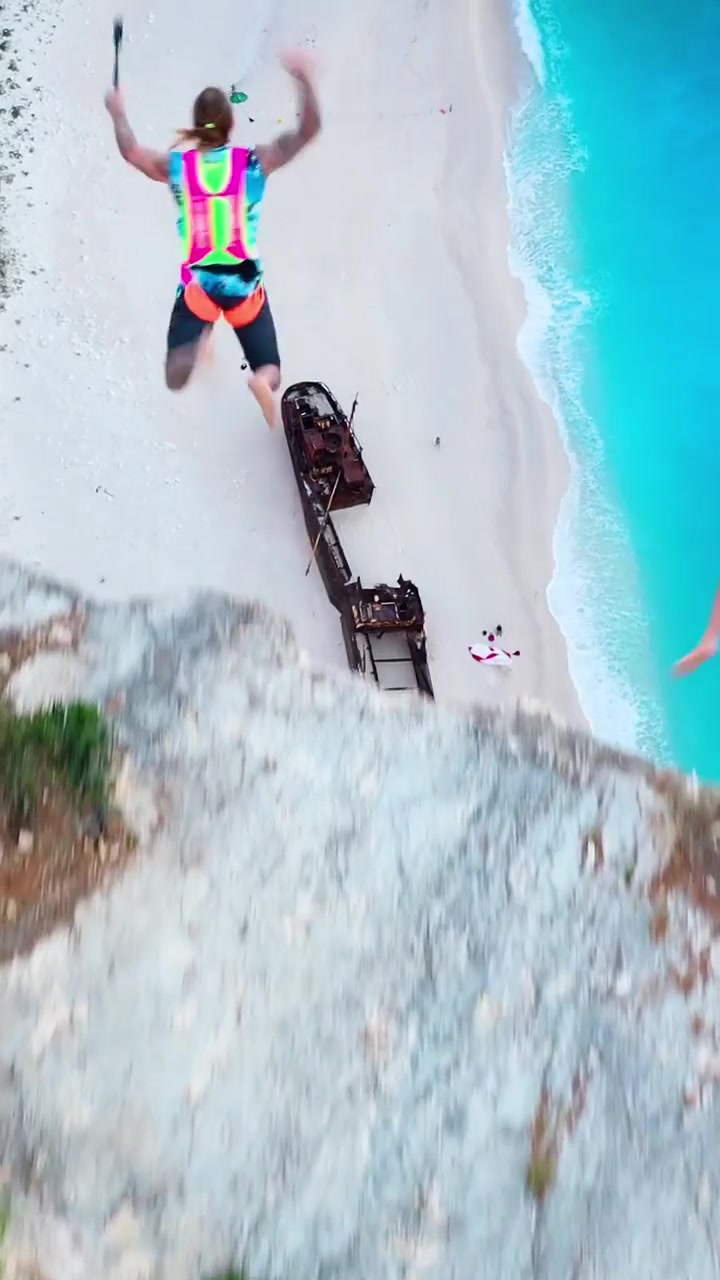
Take a moment to soar high above a tropical beach, high enough to see turquoise water and a stranded wreckage ship. Thousands of feet above, a small crowd has another focus: getting airborne with a piece of fabric and a little gravity. Paragliding is a free-form, open-air version of skiing — the difference being it's done yoked to a gently blowing wing of nylon and aluminum rods. It's an unassisted form of hang-gliding often considered safe and easy for beginners. The sport consists of running with a paraglider and lifting off from shore, a hill, or a cliff onto a warm thermal. Participating pilots take nothing more than a harness and a paraglider; a pair of inflatable wings, connected by lightweight aluminum poles. After hooking in, a light breeze allows for a gentle takeoff. "And where down we go, oh, oh, oh, oh," A pilot playfully sings, eager to give in to the pull of Earth and gravity. The paraglider rides the air currents and allows for light steering by pulling on a pair of handles attached to the harness and connected to a pair of control lines. Paragliding is a subset of the larger category of gliding. Gliding is defined as moving through the air without relying on power and using a wing to lift. Paragliding differs from other forms of gliding in a few ways. Unlike a hang glider, a paraglider cannot be used in windy conditions. Also, paragliders are bundled for portability and typically packed into a small bag. This sets paragliding apart from other gliding options. It can be done just about anywhere, and it is a particularly thrilling way to see a coastline, slope, or canyon from another angle. The ease of travel and setup has made paragliding more accessible to people who are curious and adventurous.
Paragliding and the Pursuit of Flight
The quest for flight is not new. People have been searching for ways to harness the wind to their will. Paragliding skirts the border between extreme sports and the general public's need to feel the sky in its purest form. Paragliding’s total lack of a motor makes it a joyful departure from mechanized flight. As an extreme sport, it is more accessible than its cousin, hang-gliding. It offers a taste of freedom and a rush of adrenaline like no other activity. The paraglider is a combination of fabric and aluminum rods. Since the paraglider does not feature a motor, the pilot relies on air currents and body weight to guide through the sky. Paragliding has been a longstanding sport and has grown in popularity with people of all ages and skill levels. There are no strict requirements for equipment and entry. Competitions like The Paragliding World Cup let pros showcase their prowess while also offering an exciting event for enthusiasts. This influx of fans and competitors makes paragliding a burgeoning sport on the horizon.
The Art of Control
The paraglider pilot maneuvers the paraglider by pulling on control lines. A suite of pulleys and other control mechanisms are attached to both sides of the frame. By pulling on one side or both, the pilot can change the wing's angle of attack. Paragliders use a harness to hold everything together, and they can use a steering system. A steering system allows the paraglider to travel in the desired direction without using the rudder. This enables the pilot to navigate the air currents more effectively. A lightweight, compact device is placed on the outside of the frame. This device is often used as a backup measure in case the main instrument fails. In absence of any mechanical means, the pilot must rely solely on their physical skill and intuitive adjustments to maintain control and navigate the journey.
Paraglider Varieties
There are different types of paragliders available. Novice paraglider pilots can choose between the following:
- EN-A-rated paragliders are perfect for beginners or leisure pilots. These gliders have a solid performance rating, low stall speed, and a wide speed range. They are the safest option for beginner pilots.
- EN-B-rated paragliders offer a little more performance and a narrower speed range, but are still good for beginners. These paragliders have a slightly faster flight speed and a bit more of an inflatable wing. They are suitable for moderate to advanced pilots.
- EN-C-rated paragliders offer even more performance, and they are designed to handle more experienced pilots. These paragliders have a higher flight speed and are more maneuverable. They are ideal for pilots who want to experience more performance and maneuverability.
- EN-D-rated paragliders are the top-of-the-line models. They are designed for experienced pilots who want the ultimate in performance. These paragliders have the highest flight speed and maneuverability. EXP is the highest certification level any paraglider can have.
Pulley Systems
Paragliders require a pulley system to keep weight balanced and maneuverable without pilfering control. The pilot remains in full control of the paraglider to ensure a safe and enjoyable flight. There are slight differences in the pulley system depending on the specific paraglider design. The pulley system is the primary component of the paraglider and is responsible for maintaining the overall balance and stability of the aircraft. It is used to adjust the angle of attack, which in turn affects the speed and altitude of the paraglider. If the pulley system is damaged or not functioning correctly, it can cause the paraglider to become unstable or even crash. A pilot should regularly inspect and maintain the pulley system. The harness is the most critical component of the pulley system. The pilot is connected to the harness, and the harness connects the pilot to the paraglider.
If you're ready to soar
Even if it seems like an extreme experience, it can be done by just about anyone. Ready for a head rush and a personal flight achievement that is being harnessed to the sky? Be sure to do the following:
- Commit to a specific flight school, some of the best are Cloudbase Mayan Paragliding in Costa Rica.
- Find the nearest hang gliding and paragliding association to you.
- Find a mentor: Search for a mentor with the right experience and certifications. It is crucial to have someone who is experienced and knowledgeable in the field and understands the necessary safety instructions.
- Prepare physically. Paragliding requires a certain level of physical fitness. An instructor can help prepare the body with specific exercises.
- Get a harness. A harness is a generic term for any device that secures a person to the ground. It is the component that holds a pilot safely to the paraglider.
- Build equipment gradually. Start with a beginner’s kit. A beginner kit will include the basics.
- Join a local club to find community and shared resources.
- Check for the required licenses and certifications. Some places require a certification or a license to fly a paraglider. Paragliding is undoubtedly an experience that has to be seen to be believed. It is an unforgettable experience that has inspired countless people to take to the skies and soar high above the clouds. Paragliding is an escape from everyday life and allows the user to immerse in nature and enjoy the sky in its purest form.
Watch the Reel
Questions readers ask
Is beach paragliding the same as hang-gliding?
Beach paragliding is similar to hang-gliding but there are some differences. Beach paragliding involves a paraglider, which is a lightweight, portable wing made of fabric and aluminum rods. It is more accessible and can be done in a variety of locations, including beaches. Hang-gliding, on the other hand, typically requires more specialized equipment and is often done from higher elevations like cliffs or mountains.
What kind of equipment do I need to start beach paragliding?
To start beach paragliding, you'll need a paraglider, which consists of a lightweight wing made of fabric and aluminum rods, and a harness. The paraglider is portable and can be packed into a small bag, making it easy to travel with. You'll also need a helmet and other safety gear.
How does a paraglider stay in the air?
A paraglider stays in the air by using air currents and the pilot's body weight to guide through the sky. The pilot maneuvers the paraglider by pulling on control lines, which change the wing's angle of attack and allow for steering. Unlike hang gliders, paragliders cannot be used in windy conditions and rely on gentle breezes for a smooth takeoff.
What are some of the safety concerns with beach paragliding?
Beach paragliding is generally considered safe and easy for beginners, but there are some safety concerns to be aware of. Paragliders should always check the weather conditions before flying, as windy conditions can make it difficult to control the paraglider. Additionally, pilots should always wear a helmet and other safety gear to protect themselves in case of a fall.
Are there competitions for paragliding?
Yes, there are competitions for paragliding, such as The Paragliding World Cup. These events showcase the skills of professional pilots and offer an exciting experience for enthusiasts. The sport has grown in popularity and attracts participants of all ages and skill levels.
Related deep dives
Similar reads based on topic and creator.



Recent articles
Fresh deep dives from the latest Reels we unpacked.




Comments
Be the first to comment.