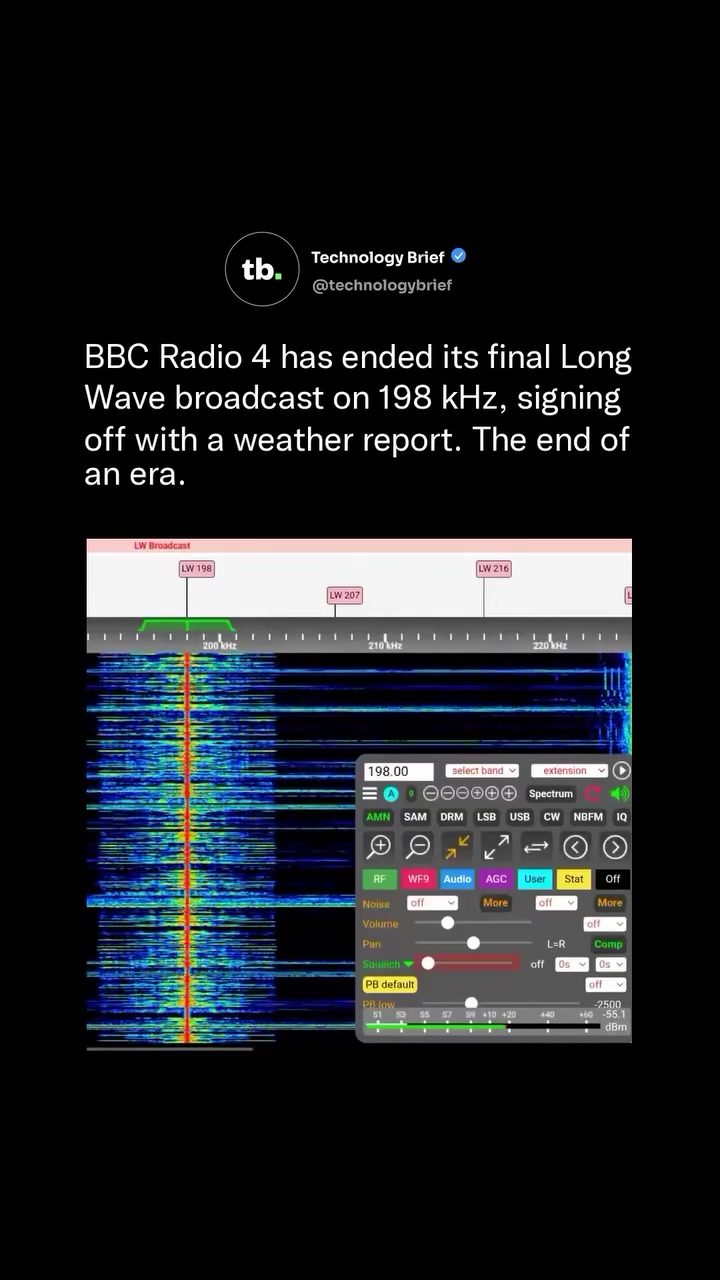
The End of an Era: BBC Radio 4 Long Wave Broadcast
On June 27, 2026, at midnight GMT, BBC Radio 4 concluded nearly a century of longwave broadcasting on the 198 kHz frequency. The final transmission was marked by the iconic Shipping Forecast, a brief farewell from the announcer, and a poignant musical interlude before the signal faded to static. This historic moment not only ended an era of longwave broadcasting but also reflected the broader transition in radio technology.
The History of Longwave Broadcasting
Longwave broadcasting has been a cornerstone of radio communication for nearly a century. The main source of the BBC Radio 4 longwave signal was the Droitwich transmitting station in Worcestershire, which was first commissioned in 1934. This iconic station, along with relay stations at Westerglenn and Burghead in Scotland, provided coverage across the entire United Kingdom. The low frequency of longwave signals allowed them to travel vast distances, reaching listeners at sea, in remote rural areas, and even as far away as southern Europe.
The Transition to Digital
The decision to shut down the longwave service was driven by the aging transmitter equipment and the high cost of replacing it. The BBC has encouraged listeners to transition to modern digital platforms to continue enjoying Radio 4. The longwave broadcast has been replaced by a variety of digital alternatives:
- DAB Digital Radio: Digital Audio Broadcasting (DAB) provides a clearer and more reliable signal compared to traditional analog broadcasting.
- FM Radio: Radio 4 is available on FM frequencies between 92–95 MHz and 103–105 MHz, offering a familiar analog experience with better signal quality.
- Smart Speakers: Listeners can easily access Radio 4 by simply saying, "Play Radio 4," to their smart speakers.
- BBC Sounds App: The app offers a comprehensive listening experience, including on-demand content and live streams.
- Digital Television: Radio 4 is also available through digital television services, including Freeview, making it accessible to a wide audience.
- Online Streaming: BBC Radio 4 can be accessed online via the BBC Sounds website, offering flexibility and convenience.
The Impact on Listeners
The end of longwave broadcasting marks a significant shift for listeners who have relied on the technology for decades. Longwave signals were particularly valuable for their ability to reach isolated and maritime areas, providing a lifeline of information and entertainment. However, with the advent of digital technology, the need for longwave broadcasting has diminished. The transition to digital platforms ensures that Radio 4 remains accessible and relevant in the modern era.
Practical Tips for Listeners
- Upgrade Your Receiver: If you still use a traditional analog radio, consider upgrading to a DAB digital radio. These devices offer better sound quality and more reliable reception.
- Explore Digital Platforms: Download the BBC Sounds app on your smartphone or tablet to enjoy Radio 4 on the go. The app provides a seamless listening experience with additional features like on-demand content.
- Smart Speaker Integration: Set up your smart speaker to play Radio 4 with simple voice commands. This is a convenient way to stay connected to your favorite programs without the need for a traditional radio.
- Digital Television: Ensure your television is set up for digital transmission. This allows you to access Radio 4 through your TV's digital tuner, providing an additional way to stay connected.
Important Takeaways
- End of an Era: The end of longwave broadcasting on 198 kHz marks the conclusion of a historic chapter in radio communication, one that has spanned nearly a century.
- New Digital Era: The transition to digital platforms ensures that Radio 4 remains accessible and relevant in the modern age, offering listeners a variety of ways to tune in.
- Listener Adaptation: Listeners who relied on longwave broadcasting will need to adapt to new technologies, but the benefits of digital platforms make this transition worthwhile.
Conclusion
The end of BBC Radio 4's longwave broadcast on 198 kHz is a poignant moment, signifying the end of an era and the beginning of a new digital age. While the transition may be bittersweet for longtime listeners, the shift to digital platforms ensures that Radio 4 will continue to thrive, offering a rich and diverse listening experience for years to come. As we bid farewell to the warmth and crackle of longwave signals, we look forward to the future of radio, where innovation and accessibility go hand in hand.
Watch the Reel
Questions readers ask
Why did BBC Radio 4 end its longwave broadcast?
BBC Radio 4 ended its longwave broadcast to transition to more modern, digital platforms. This shift reflects the evolving landscape of radio technology and the need to adapt to contemporary listening habits.
What was the significance of the 198 kHz frequency?
The 198 kHz frequency was the specific longwave channel used by BBC Radio 4 for its broadcasts. It was the frequency on which the final transmission aired at midnight GMT on June 27, 2026.
What was the role of the Droitwich transmitting station in BBC Radio 4's longwave broadcast?
The Droitwich transmitting station in Worcestershire was the main source of the BBC Radio 4 longwave signal. It was first commissioned in 1934 and played a crucial role in the historical legacy of longwave broadcasting.
What was the final broadcast from the BBC Radio 4 longwave?
The final broadcast included the iconic Shipping Forecast, a brief farewell from the announcer, and a poignant musical interlude. This marked the end of the longwave era for BBC Radio 4, culminating in a beep and the signal fading to static.
How did the end of the longwave broadcast affect listeners in the UK and Europe?
The end of the longwave broadcast meant that listeners in the UK and Europe who relied on this signal for their BBC Radio 4 programming needed to adapt to digital platforms. This change encouraged listeners to explore new ways of accessing their favorite content, including online streaming, mobile apps, and digital radios.
What does the future hold for BBC Radio 4 now that longwave broadcasting has ended?
With the end of longwave broadcasting, BBC Radio 4 is set to embrace a digital future. This includes expanding its online presence, enhancing mobile apps, and exploring new technologies to ensure that listeners can continue to enjoy its content in the most convenient and accessible ways.
What was the historical context of the BBC Radio 4 longwave broadcast?
The BBC Radio 4 longwave broadcast had a rich history that spanned nearly a century. It began with the establishment of the Droitwich transmitting station in 1934 and continued until June 27, 2026, marking a significant chapter in the evolution of radio communication.
Related deep dives
Similar reads based on topic and creator.




Recent articles
Fresh deep dives from the latest Reels we unpacked.




Comments
Be the first to comment.