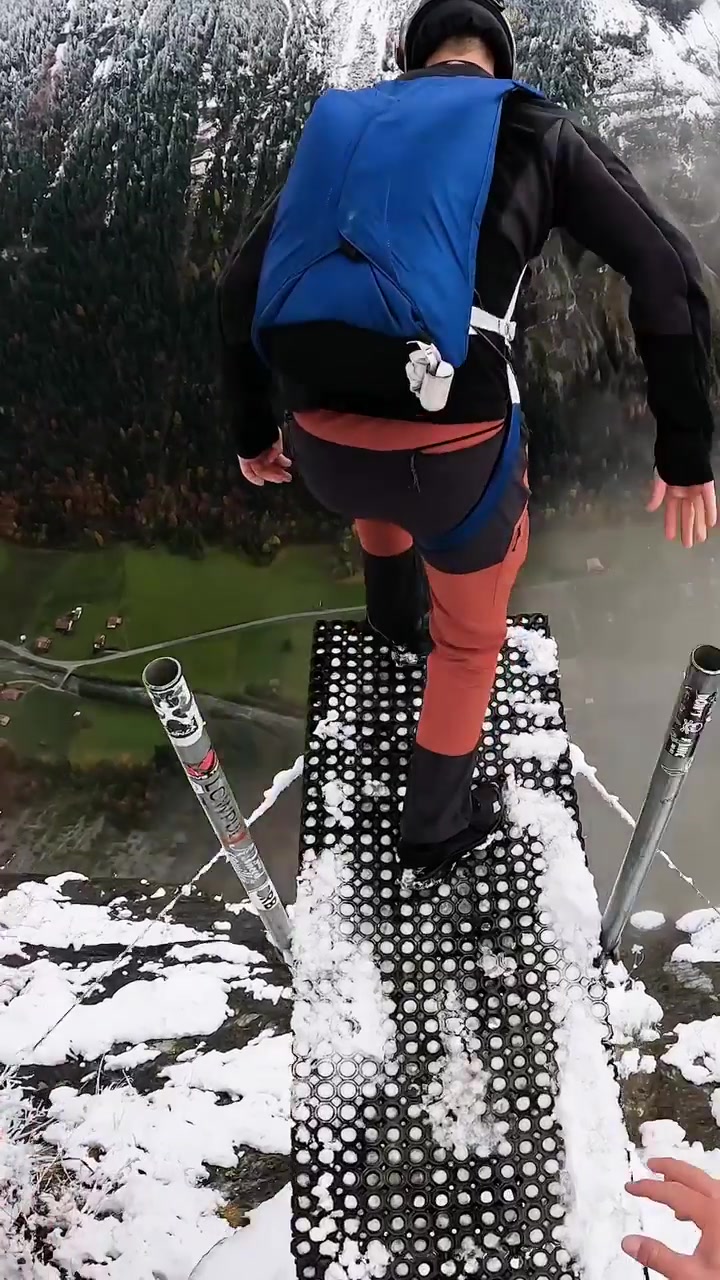
Base jumping is a heart-pounding extreme sport where athletes leap from fixed objects, using specialized equipment to control their rapid descent. The video captures a base jumper descending from a snowy cliff — a practice that demands precision and unwavering focus.
The Leap of Faith is an explanation of the sport and the equipment that makes it feasible
A hallmark of this sport is leaping from cliffs, buildings, bridges, or antennae and free falling for a short time before deploying a parachute to slow the descent to a safe landing. Participants use a harness for stability during the drop. Viewers of the video can see a jumper uses a long pole for controlled descent, and appreciates the scenic landscape including a river and surrounding forests. Many base jumps begin with a fall from a few hundred feet, the adrenaline rush lasts only seconds until the parachute opens. Skydivers often jump from 10,000 to 14,000 feet, providing time to stabilize and enjoy the ride. Being so close to the ground, base jumpers have no room for error. Just one mistake can be deadly. Base Jumpers must hit and deploy their parachute at exactly the right moment. Base Jumpers need a harness for stability, a parachute, and most recently developed equipment, a BASE harness. One of the fundamental differences between skydiving and base jumping is that a skydiver has a “freefall window” of several minutes, where they can maneuver while falling. In contrast, a base jumper only has a few seconds to get everything right before the ground (or cliff wall) is right on them. Skydivers also typically deploy their parachutes by gripping a handle and pulling. Base jumpers cannot have anything as risky as this hanging in their freefalling path.
Efficiency and Accessibility — Adapting Skills to Advance Accessibility
Base jumpers have evolved their skills to adapt to the constraints of their sport. The low altitude provides an adrenaline rush. Their short free-fall gives fewer opportunities to recover errors, resulting in a greater emphasis on precise parachute deployment. Base jumping equipment must be streamlined and lightweight, whereas the same parachutes would have been unworkable without the modern wing suits and harnesses. The popularity of base jumping has soared in recent years alongside the rise of other extreme sports such as free climbing, trail running, and surfing. In 2022, the New York Times wrote that a new generation of urban athletes had turned the city itself into a playground, noting that sometimes the base-jumping highlights of the week are the most popular videos on the web.
The equipment and the Fall
Parachute deployment is the critical event of a base jump. The jumper must deploy their parachute at the exact right moment for a safe landing. A BASE jump can take as little as 10 seconds from start to finish, so timing is crucial. Many BASE jumpers use a "cheeching" technique, where they hold their parachute deployment handle and deploy at the moment the cord is fully extended. If the deployment is too early, the jumper will experience a "line twist," and if it is too late, they will collide with the ground. The chute must be fully deployed before the jumper contacts the ground. The freefalling mode is one of the most dangerous parts of a base jump. The jumper must control their body position and movement to avoid collisions with cliffs, rock faces, and other obstacles. During freefall, the jumper may encounter several obstacles to navigate. These include trees, cliffs, and power lines. The jumper must be able to safely navigate these obstacles. BASE jumpers can use “flying” techniques to adjust their altitude and direction during freefall. They can also use their body position to create lift, allowing them to glide toward their target landing spot. The harness used for BASE jumping has evolved over the years. The BASE harness must be lightweight, streamlined, and able to withstand the stresses of the sport. The modern BASE harness is designed to provide optimal comfort and safety for the jumper. A modern BASE harness typically features a harness that is fitted to the jumper’s body using a seatbelt-style buckle. It also includes straps that go over the shoulders and connect to the front of the harness; these straps help to keep the jumper from falling out of the harness. The modern BASE harness also features a quick-release system that allows the jumper to quickly and easily unhook from the harness. This is especially useful in the event of an emergency, such as a malfunctioning parachute or an unexpected obstacle.
Constructing BASE Sombreros
The lightest materials and the most advanced technology are used to make BASE jumpers' equipment. The most common material used in BASE jumping helmets is carbon fiber. Carbon fiber is a strong, lightweight, and durable material that is perfect for BASE jumping. Carbon fiber is also used in the construction of the jumper's wingsuit, which helps to stabilize the jumper during freefall, enhances the lift, and reduces the risk of collisions and entrapment in the case of a malfunction. BASE jumping requires a significant amount of training and practice to master. Many base jumpers start by learning the basics of skydiving before moving on to BASE jumping. The jump itself is typically only a tiny part of the experience. BASE jumpers often spend just as much as it takes to hike to the jump site as they do on the jump itself.
The 2022 BASE Jumping Gold Rush
The sport of BASE jumping is a combination of two sports. The first is skydiving, and the second is free climbing. It is a combination of the freefalling aspect of skydiving and the vertical distance aspect of free climbing.
Get a handle on BASE Jumping
Before setting out:
- Grit: The sport of BASE jumping is an extreme sport. It sets itself apart from other extreme sports by the significant risks involved. Other extreme sports, such as skydiving and mountain climbing, are relatively safer.
- Experience: You should have some skydiving experience before attempting a BASE jump. Skydiving is the basis of BASE jumping, and many BASE jumpers start by learning the basics of skydiving before moving on to BASE jumping. This is because a BASE jump is a lot more dangerous than skydiving.
- Equipment: You will need a BASE Jump kit, which includes a wingsuit, parachute, and helmet. They can be expensive and cost anywhere from $1,000 to $5000 or more. This sport is extreme. ‘Jump’ into it with caution. If you are a new skydiver, then this sport is not for you. BASE jumpers will have many hours of free-fall skydiving experience, as well as a high-altitude jump certification from the United states Parachute Association.
Watch the Reel
Questions readers ask
What exactly is base jumping and how does it differ from skydiving?
Base jumping is an extreme sport where athletes leap from fixed objects like cliffs, buildings, or bridges, deploying a parachute after a short free fall. Unlike skydiving, which typically involves jumping from an aircraft at high altitudes and allowing for several minutes of free fall, base jumping is done at much lower altitudes, leaving only seconds to deploy the parachute and land safely. Base jumpers use specialized equipment like a BASE harness and a parachute, tailored for their sport.
What kind of equipment do base jumpers use and why is it different from skydiving gear?
Base jumpers use specialized equipment designed for low-altitude jumps. This includes a BASE harness for stability, a parachute, and often a wing suit. Unlike skydiving gear, base jumping equipment is streamlined and lightweight to accommodate the shorter free-fall time and the need for quick, precise movements. Skydivers have more time to stabilize and deploy their parachutes, so their gear can be more robust.
How do base jumpers time their parachute deployment so precisely?
Base jumpers must deploy their parachutes at the exact right moment to ensure a safe landing. They often use techniques like 'cheeching,' where they hold the deployment handle and release it when the cord is fully extended. Timing is crucial because the jump can take as little as 10 seconds from start to finish, leaving no room for error. If the deployment is too early or too late, it can result in a line twist or a collision with the ground.
Is base jumping more dangerous than skydiving?
Yes, base jumping is generally considered more dangerous than skydiving due to the shorter free-fall time and the proximity to the ground. Base jumpers have only seconds to deploy their parachutes and land safely, which means there is little margin for error. In contrast, skydivers have several minutes of free fall, allowing more time to stabilize and correct any issues before deploying their parachutes.
Related deep dives
Similar reads based on topic and creator.


Recent articles
Fresh deep dives from the latest Reels we unpacked.



Comments
Be the first to comment.