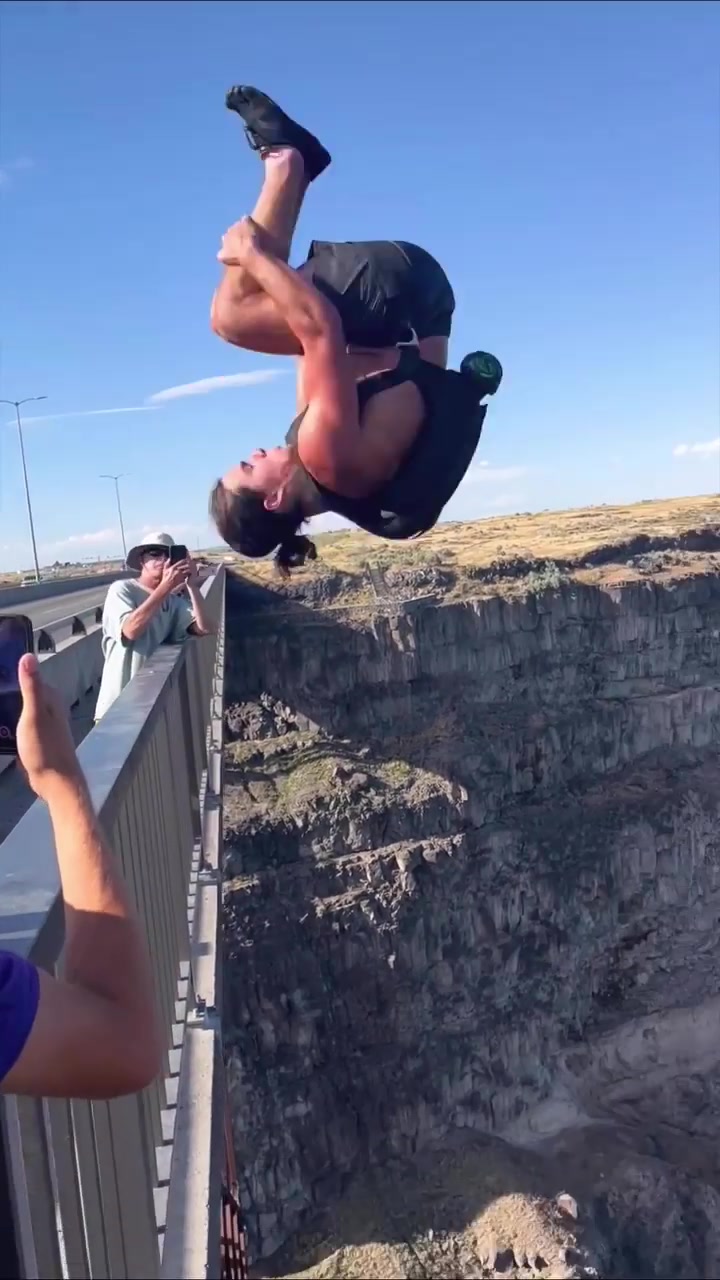
A person is leaping off a high bridge with a parachute. The adrenaline rush is palpable, underscored by the repeated phrase "Come and get your wig split". The phrase is not quite clear, but it connotes the thrilling, and we hope enjoyable, risk of this skysports. Free fall is fast, steady, and safe. But what makes this feat tick? And what's it like?
The Flight of the Brave
The jump shown is a base jump, short for Building, Antenna, Span, or Earth (cliff) — a thrilling extreme sport. Participants leap from fixed objects and deploy a parachute after a short delay. The rush from base jumping is intense, deriving from its extreme danger and short transition time. Any attempt at course correction is near-zero. This is not for the faint-hearted. In this case, the jumper leaps from a high bridge. But what about the parachute? Parachute designers include several features to ensure safety. A parachute's canopy acts like a giant cup, catching air and creating a manageable descent. The lines connecting the canopy to the harness have a system to connect and disconnect the chute from the jumper. The risers are the fabric tubes connecting the canopy to the harness. The harness itself is the system used to hook to the jumper. There is also an emergency parachute for a second try. The jumper's kit also includes an Automated Activation Device (AAD). This device serves as a last-resort safety mechanism. Many experienced jumpers wear a small wrist altimeter for monitoring altitude. Some models contain timers too. For example, the standard altimeter is not enough for a solo mission. A wrist altimeter is as essential as their wings. The descent rate is enough to be slowed down by multiple blunt forces hitting the chute. And the jumper might try a bit of acrobatic maneuvering. This thrill comes with serious risks. It is a full adrenaline rush all the way.
Base Jumping Thrills Redefining Daredevilry
Base jumping offers both beauty and extreme risk, but it is too elite for the mainstream. Jumpers often vie for the highest, most accessible, and otherwise inviting jumps. It's the perfect blend of extreme sports and minimalist travel. And for many, the thrill is not just flying close to the speed of sound. It’s the clarity of the mind after a high risk experience. Base jumping is a niche sport and requires a unique set of skills. Adrenaline junkies are known to take fun and thrill to the highest level. But unlike skydiving, where participants jump from an airplane, this sport involves jumping from fixed objects like bridges, cliffs, or tall buildings. The allure lies in the heightened danger and exhilaration of leaping from fixed points.
What It Takes to ‘Get Your Wig Split’
The Right Stuff
First, the equipment: Base jumpers need a specialized parachute designed for low-altitude jumps. These parachutes deploy quickly and reliably. The gear is not cheap. The parachute harness is essential, typically with an emergency parachute if the first fails. The opening of a parachute is crucial. Several complex components of the chute are precisely engineered. Every jumper cannot afford to make a mistake. From here, the jumper must plan. Careful planning is vital. Base jumpers must scout locations to ensure a safe landing zone and avoid obstacles. They also access weather conditions and wind speeds. Timing is crucial — jumping too early or too late can be fatal. The jumper must ensure they are fit to jump. Jumping too often, even when experienced, can result in injury.
How They Do It
The jump itself is a precise sequence. The jumper stands on a bridge, and starts falling. The aerodynamic air will fill the chute. The jumper has to hold onto the sides of the parachute lines. The jumper leans into the chute and keeps the canopy stable. Deployment of the parachute is essential in base jumping, as it signals the end of the freefall phase and the beginning of the controlled descent. The jumper must activate the parachute quickly to ensure a safe and controlled descent.
The Jump's Ebb and Flow
The experience is a rush. Base jumping is intense and short-lived. There is a freefall phase, quickly replaced by the gliding. The jump requires mental strength, including decision-making skills. The parachute opens and the jumper must navigate. This can be made up of several parts.
The Safe way to Get Your Wig Split
Jumping from an airplane can take a little training. But your jumper will have a little more altitude to do so. Experience and skill are essential for safe jumps. If not already done, then take lessons. Environmental knowledge is crucial. It goes beyond knowing that there are people below. There are things to avoid like power lines, trees, or landfills. You can fly over these obstacles in a normal skydiving jump, but you need to glide around them in base jumping. Start with a safe location, and a guided jump. Some of the most dangerous places to jump will require extreme caution. When you get into this sport, you learn some of the risks. Explore the world of base jumping, and share your experiences with the community. The thrill is based jumping. And you’d never have to beg for a parachute.
Watch the Reel
Questions readers ask
What kind of equipment is essential for a base jumper?
Essential equipment for a base jumper includes a specialized parachute designed for low-altitude jumps, a harness, and an emergency parachute. The parachute has a canopy that catches air, risers that connect the canopy to the harness, and an Automated Activation Device (AAD) for emergency deployments. Additionally, a wrist altimeter is crucial for monitoring altitude and ensuring a safe landing. Other necessary gear includes a helmet, jumpsuit, and gloves to protect the jumper during the jump.
Related deep dives
Similar reads based on topic and creator.




Recent articles
Fresh deep dives from the latest Reels we unpacked.




Comments
Be the first to comment.