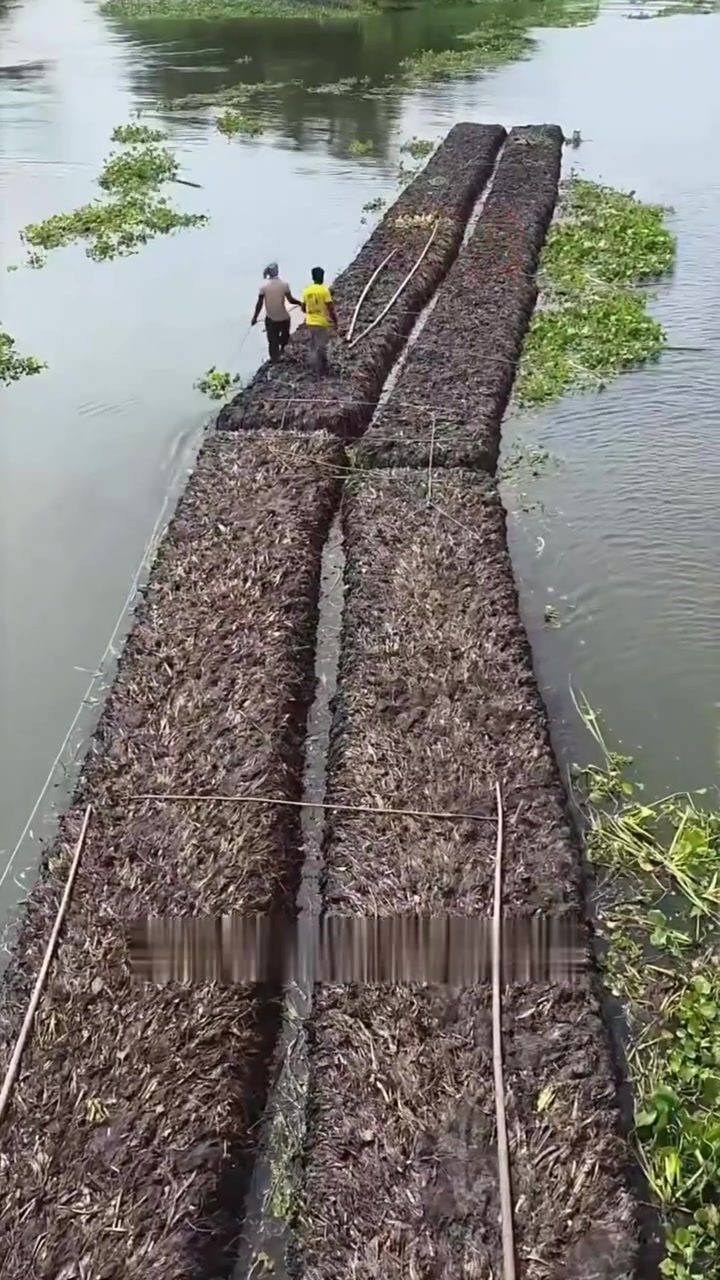
The World's Most Incredible Floating Garden
Floating gardens are not a new concept, but the unique method practiced by farmers in Bangladesh is one of the world's most ingenious farming methods. These farmers have adapted their techniques to navigate the challenges of a region frequently inundated with water, creating a sustainable and innovative way to grow food.
Context / Why this matters
Bangladesh faces significant challenges due to its geography and climate. The country is prone to extensive flooding during the rainy season, which often submerges traditional farmland. This environmental challenge necessitates innovative solutions. The floating garden technique is a direct response to this problem, allowing farmers to continue cultivating crops even when land is underwater.
Building a Floating Garden
Materials and Construction
Floating garden beds are constructed from layers of water hyacinths and other aquatic plants. These plants are tightly woven together to form thick, buoyant platforms. The process is labor-intensive but results in sturdy, floating structures that can support vegetable seedlings.
Planting and Growth
Once the platform is stable, farmers spread decomposed plant matter on top, creating a nutrient-rich layer for transplanting vegetable seedlings. The floating beds serve a dual purpose: they provide a stable growing medium and, as they slowly break down, release essential nutrients like nitrogen, phosphorus, and potassium. This natural decomposition process feeds the crops, eliminating the need for additional fertilizer.
Sustainability and Benefits
Organic Fertilization
One of the most remarkable aspects of this farming technique is its sustainability. As the floating beds decompose, they release nutrients that act as organic fertilizer. This process ensures that the vegetables continue to grow strong and healthy, all while floating on the water. The absence of additional fertilizers not only makes the method cost-effective but also environmentally friendly.
Adaptability
The floating garden technique is a testament to the adaptability of farmers in the face of environmental challenges. By utilizing the available resources and adapting traditional farming methods, these farmers ensure that food production continues despite the seasonal flooding.
Maintenance and Transportation
Maintaining and transporting these floating gardens require a unique approach. Farmers use long poles to move the floating platforms across the water. This method, while simple, is highly effective and showcases the ingenuity of the farmers. Additionally, boats are used for transportation and maintenance, ensuring that the gardens remain productive.
Practical Tips
Choosing the Right Plants
When constructing a floating garden, selecting the right aquatic plants is crucial. Water hyacinths and other buoyant plants are ideal for creating the floating platforms. These plants are not only readily available but also decompose naturally, providing essential nutrients for the crops.
Ensuring Stability
Ensuring the stability of the floating platform is key to the success of the garden. Tightly weave the aquatic plants to form a thick, buoyant layer. This will provide a stable base for the seedling transplants and ensure the platform can support the weight of the crops as they grow.
Nutrient Management
Managing the nutrient release from the decomposing plant matter is essential. Decomposed plant matter should be evenly spread across the platform to ensure that all plants receive adequate nutrients. This natural fertilization process eliminates the need for additional fertilizers, making the method both cost-effective and eco-friendly.
Important takeaways
Floating gardens in Bangladesh are a remarkable example of sustainable and innovative farming. They provide a practical solution to the challenges of seasonal flooding, ensuring continuous food production. The technique's reliance on natural processes and readily available resources makes it an eco-friendly and cost-effective method.
Conclusion
The ingenuity of Bangladeshi farmers in creating and maintaining floating gardens is a testament to human adaptability. This method not only addresses the challenges of seasonal flooding but also showcases a sustainable and innovative approach to agriculture. By utilizing natural processes and available resources, these farmers ensure that food production continues, even in the face of environmental challenges.
Watch the Reel
Questions readers ask
What are floating gardens and how do they help Bangladesh farmers?
Floating gardens are platforms made from aquatic plants that farmers in Bangladesh use to grow crops. These gardens allow farmers to continue cultivating vegetables and other crops even when traditional farmland is submerged during flooding. This method enables year-round farming in flood-prone areas.
What materials are used to create these floating gardens?
Floating gardens in Bangladesh are typically made from locally available aquatic plants such as water hyacinth and water spinach. These plants are intertwined to form a strong, buoyant mat that can support the growth of various crops.
How do Bangladesh farmers adapt to frequent flooding with these platforms?
By using floating gardens, Bangladesh farmers can adapt to frequent flooding by growing crops on water surfaces. These platforms move with the water level, ensuring that crops remain above water and continue to grow even when the surrounding land is submerged.
What types of crops can be grown on floating gardens?
Floating gardens in Bangladesh are versatile and can support a variety of crops, including vegetables like beans, spinach, and bitter gourd. These gardens provide a stable surface for planting and harvesting, mimicking the conditions of traditional farmland.
Are there other benefits to using floating gardens besides flood adaptability?
Yes, floating gardens also help in water purification by absorbing nutrients and pollutants from the water. Additionally, they provide habitats for fish and other aquatic life, promoting biodiversity in the region.
How do floating gardens in Bangladesh contribute to sustainable agriculture?
Floating gardens in Bangladesh contribute to sustainable agriculture by ensuring continuous crop production despite frequent flooding. They also reduce the need for chemical fertilizers and pesticides, as the aquatic plants naturally enrich the soil, leading to healthier crops and a more sustainable farming ecosystem.
Recent articles
Fresh deep dives from the latest Reels we unpacked.




Comments
Be the first to comment.