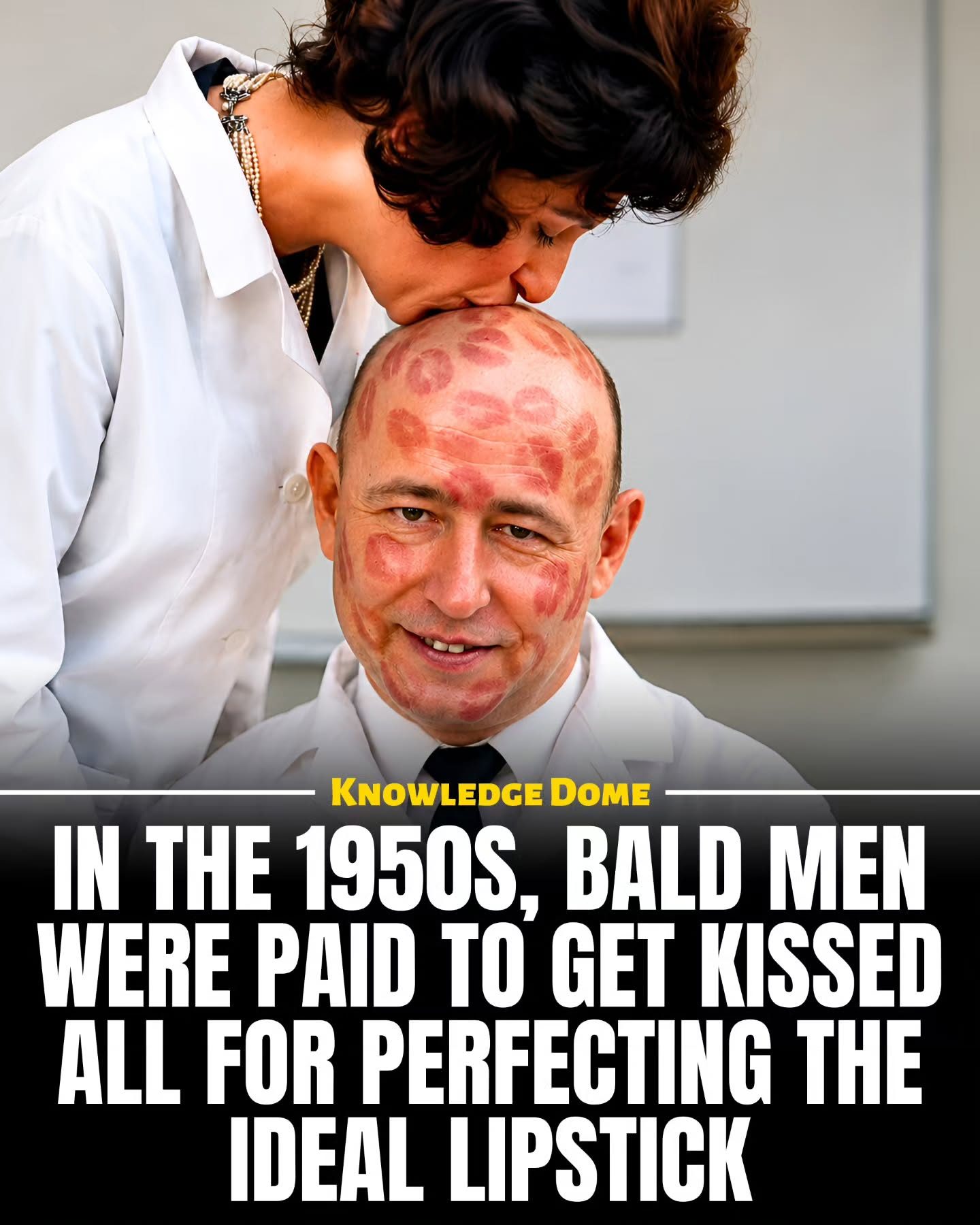
Bald Men as Lipstick Testers: A Unique Chapter in Cosmetic History
In the 1950s, the quest for the perfect lipstick led some cosmetic companies to employ an unusual method of testing: Bald men were hired to be kissed by female lab workers. This practice provided a direct and efficient way to evaluate how well lipsticks looked and lasted on the skin. The smooth, clear surface of a bald head made it easier to see lipstick marks, allowing scientists to assess color, texture, and durability.
Why This Matters
Understanding the history of cosmetic testing offers insights into the evolution of product development and the standards of the time. It also highlights the innovative, albeit unconventional, methods used to create products that meet consumer expectations. These tests were a critical step in developing lipsticks that looked vibrant and stayed in place for longer periods, setting the stage for modern cosmetics.
The Science Behind the Method
The Role of Bald Heads
Bald heads provided an ideal surface for lipstick testing. The smooth, hairless skin made it easy to observe how lipstick applied and how well it adhered. Scientists could clearly see the color intensity, texture, and any signs of smudging or fading. This direct approach allowed for precise evaluations that would be difficult to replicate on other surfaces.
Assessing Lipstick Performance
The primary focus of these tests was to ensure that lipsticks performed as desired. Scientists evaluated several key factors:
- Color: How vibrant and true the color appeared on the skin.
- Texture: How smooth and even the application was.
- Durability: How well the lipstick stayed in place without smudging or fading.
- Lip Gloss and Wax: How effectively the gloss or wax held up under various conditions.
These assessments were crucial in refining formulas to create lipsticks that looked better and lasted longer.
The Testing Process
Direct Application and Observation
Female lab workers would apply lipstick to the bald men's faces and scalps, then kiss the areas to simulate real-world conditions. This method provided a direct way to observe how the lipstick behaved under pressure. Scientists noted the initial appearance, any changes over time, and the overall staying power.
Comparative Analysis
By testing multiple lipstick formulations side by side, companies could compare their performance. This comparative analysis helped in identifying the best-performing formulas and making necessary adjustments. The goal was to develop lipsticks that not only looked good but also met the practical needs of consumers.
Practical Tips for Understanding Cosmetic Testing
Evaluating Lipstick Quality
When evaluating lipstick quality, consider the following factors:
- Color Payoff: How well the color shows up on the lips.
- Textures: Smoothness and ease of application.
- Longevity: How long the lipstick stays in place without fading or smudging.
- Transfer Resistance: How well the lipstick resists transferring to surfaces like cups or clothing.
Historical Context in Modern Testing
While direct kissing tests are no longer used, modern cosmetic companies continue to innovate in their testing methods. Today, they employ advanced technologies and laboratory equipment to ensure that products meet the highest standards of quality and performance. Understanding historical methods can provide a deeper appreciation for the rigorous standards of modern cosmetic development.
Important Takeaways
- Innovative Testing: The use of bald men as lipstick testers was an innovative, if unusual, method of ensuring product quality.
- Direct Observation: The smooth surface of a bald head provided clear and direct observations of lipstick performance.
- Evolution of Standards: These tests laid the groundwork for modern cosmetic standards, focusing on color, texture, and durability.
- Consumer Expectations: The goal was to create lipsticks that met and exceeded consumer expectations for performance and appearance.
Conclusion
The practice of using bald men as lipstick testers in the 1950s offers a fascinating glimpse into the history of cosmetic product development. This unconventional method provided valuable insights into lipstick performance, helping companies create products that looked better and lasted longer. While the methods have evolved, the core principles of direct observation and rigorous testing remain fundamental to the cosmetic industry today. Understanding this historical chapter enriches our appreciation of the science and innovation behind modern cosmetics.
Watch the Reel
Questions readers ask
Why did cosmetic companies use bald men to test lipstick in the 1950s?
Cosmetic companies used bald men to test lipstick due to the smooth, clear surface of their scalps. This allowed for better visibility of the lipstick marks, making it easier to evaluate the product's performance, such as adhesion, color retention, and staying power.
How were lipsticks tested on bald men?
Female lab workers applied lipstick to the bald men and then evaluated how well the lipstick adhered, lasted, and held its color. The process involved direct observation of the lipstick marks on the smooth surfaces of the men's scalps.
What were the benefits of using bald men for lipstick testing?
The benefits included a clear and unobstructed surface to observe the lipstick, and it allowed for a direct and efficient way to assess the durability and retention of the lipstick.
Who applied the lipstick during these tests?
Female lab workers were responsible for applying the lipstick to the bald men during these tests. The women would then evaluate the performance of the lipstick.
What aspects of lipstick performance were evaluated using this method?
The lipstick tests on bald men focused on several key aspects, including how well the lipstick adhered to the skin, its staying power, and its ability to retain color over time.
Why is this method considered unconventional?
Using bald men to test lipstick is considered unconventional because it deviates from typical cosmetic testing methods, which are usually conducted on agreed-upon surfaces, like skin, paper, or fabric.
What can we learn from this method of testing?
This method provides insights into the ingenuity and unconventional approaches used in the 1950s beauty industry to develop products that met consumer expectations, and the unique challenges and creative solutions of the time.
Related deep dives
Similar reads based on topic and creator.


Recent articles
Fresh deep dives from the latest Reels we unpacked.




Comments
Be the first to comment.