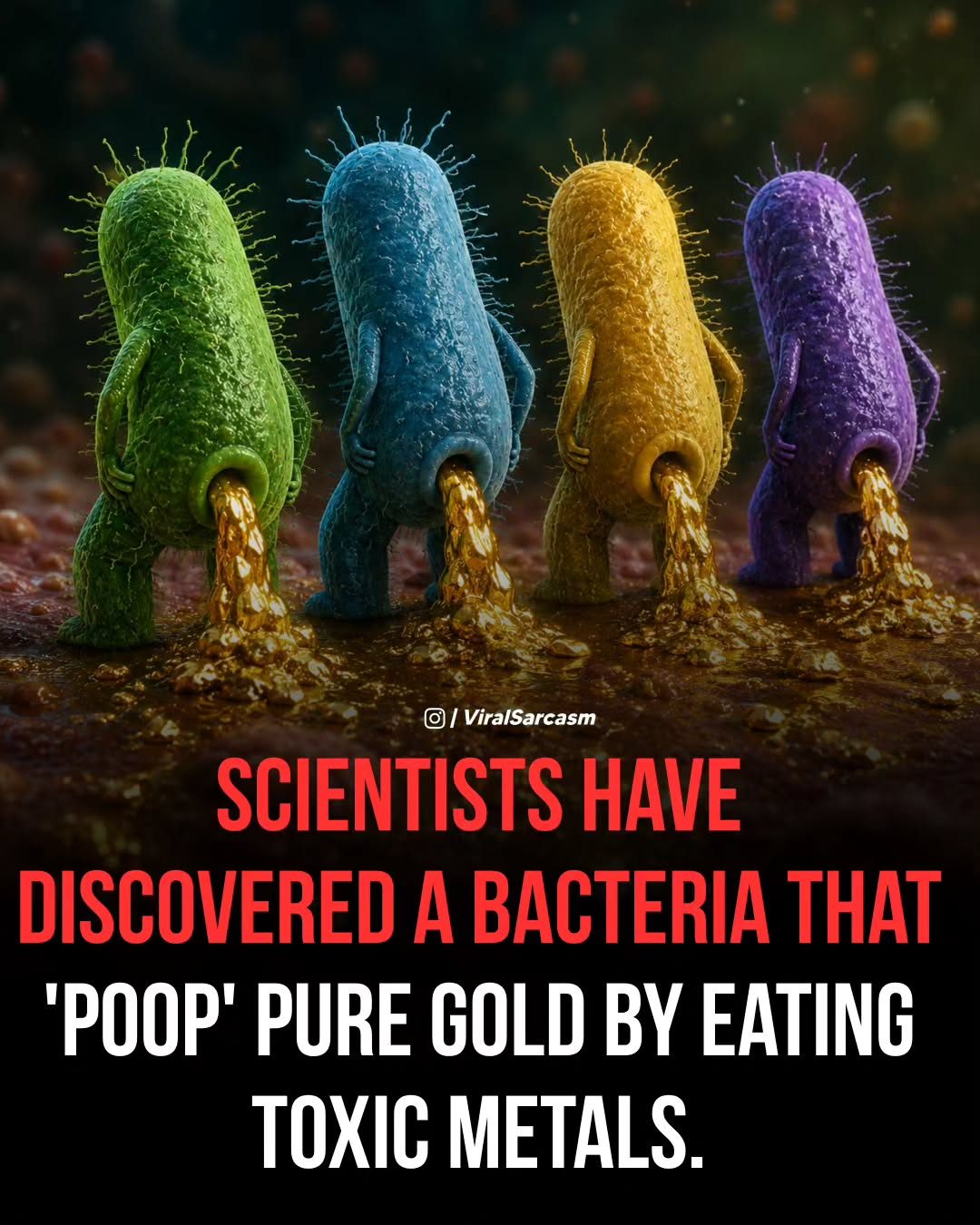
The Science Behind Bacteria and Gold
Humorous claims about bacteria that "poop" pure gold by consuming toxic metals might seem far-fetched, but they actually have a basis in science. Behind the satirical headline lies a fascinating story about the bacterium Cupriavidus metallidurans and its unusual ability to interact with gold.
Why This Matters
The idea of bacteria converting toxic metal waste into gold might sound like a fairy tale, but it's rooted in genuine scientific research. This discovery has significant implications for environmental remediation and the mining industry, offering a potential pathway to more sustainable and less harmful methods of gold extraction.
The Bacterium and Its Enzyme
The bacterium in question, Cupriavidus metallidurans, is a microbe that has adapted to thrive in environments saturated with heavy metals like copper and gold. Researchers from Martin Luther University and the Technical University of Munich have studied this bacterium extensively.
When exposed to gold compounds, the bacterium employs an enzyme called Cop. This enzyme does not just detoxify the gold; it converts it into solid, inert gold particles. This transformation is a defense mechanism that helps the bacteria survive in harsh environments. Over time, these microscopic gold particles can accumulate and clump together, forming gold nuggets.
The Role in Nature's Recycling System
Scientists believe that this microbial mechanism plays a crucial role in nature's recycling system. It helps convert dissolved gold compounds in soil and water into solid gold, contributing to the natural gold cycle. This process could also have applications in industrial settings, offering a more environmentally friendly way to recover gold from low-grade ore.
Potential Industrial Applications
The discovery of this bacterium's unique ability has sparked interest in the mining industry. Traditional methods of gold extraction often involve the use of toxic chemicals like cyanide. The enzyme Cop, however, provides a biological alternative that could make the process safer and more sustainable. By harnessing the power of this bacterium, it might be possible to extract gold without the harmful environmental impacts associated with conventional mining techniques.
Practical Tips for Understanding the Process
While the idea of using bacteria to produce gold is intriguing, it's important to separate fact from fiction. Here are some practical tips to help understand the process:
- Understand the Mechanism: The key to the process is the enzyme Cop, which detoxifies and converts gold compounds.
- Appreciate the Natural Cycle: This bacterium plays a role in nature's recycling system, converting dissolved gold into solid particles.
- Consider Industrial Applications: The potential for sustainable gold extraction is significant, but it's still in the research phase.
Important Takeaways
The discovery of Cupriavidus metallidurans' ability to turn toxic metal waste into gold highlights the remarkable adaptability of microorganisms. This bacterium's unique defense mechanism not only helps it survive in harsh environments but also contributes to the natural gold cycle. Moreover, the potential for industrial applications is vast, offering a more sustainable and environmentally friendly approach to gold extraction.
Conclusion
While the humorous claim about bacteria "pooping" gold might sound like a joke, it's grounded in a real scientific discovery. The bacterium Cupriavidus metallidurans and its enzyme Cop offer a fascinating glimpse into nature's complex processes and the potential for innovative, sustainable solutions in the mining industry.
Watch the Reel
Questions readers ask
Which specific bacterium is capable of converting toxic metals into gold?
The bacterium responsible for this unique ability is Cupriavidus metallidurans. This microbe has the extraordinary capacity to interact with and transform certain metals, including toxic ones, into gold.
How does the process of bacteria turning metals into gold work?
Cupriavidus metallidurans possesses specific enzymes that facilitate the transformation of toxic metals into gold. The bacterium's unique biochemical processes enable it to convert these metals through a series of reactions, ultimately producing gold.
What are the potential benefits of using bacteria for gold extraction?
Utilizing bacteria like Cupriavidus metallidurans for gold extraction offers several advantages. It provides a more sustainable and environmentally friendly method compared to traditional mining techniques, reducing the environmental impact and promoting cleaner mining practices.
Can this bacterial process be applied to other metals besides gold?
While the primary focus has been on gold, the enzymes and processes involved in metal transformation by Cupriavidus metallidurans could potentially be applied to other metals. Further research is needed to explore the full range of metals that can be transformed using this method.
How does this discovery impact environmental remediation efforts?
The discovery of bacteria that can convert toxic metals into gold has significant implications for environmental remediation. It offers a novel approach to cleaning up toxic metal waste by transforming harmful substances into a valuable resource, thereby reducing environmental pollution.
What makes this method of gold extraction more sustainable?
This method of gold extraction is considered more sustainable because it minimizes the environmental footprint associated with traditional mining. By using bacteria to convert toxic metals into gold, the process avoids the need for harsh chemicals and energy-intensive methods, making it a greener alternative.
Are there any practical applications of this discovery in the mining industry?
Yes, this discovery has the potential to revolutionize the mining industry by offering a cleaner and more efficient way to extract gold. By leveraging the natural abilities of Cupriavidus metallidurans, mining companies can adopt more environmentally friendly practices, reducing their impact on the environment and promoting sustainable mining techniques.
Related deep dives
Similar reads based on topic and creator.



Recent articles
Fresh deep dives from the latest Reels we unpacked.




Comments
Be the first to comment.