Baby Sea Turtles, Alone and Undaunted
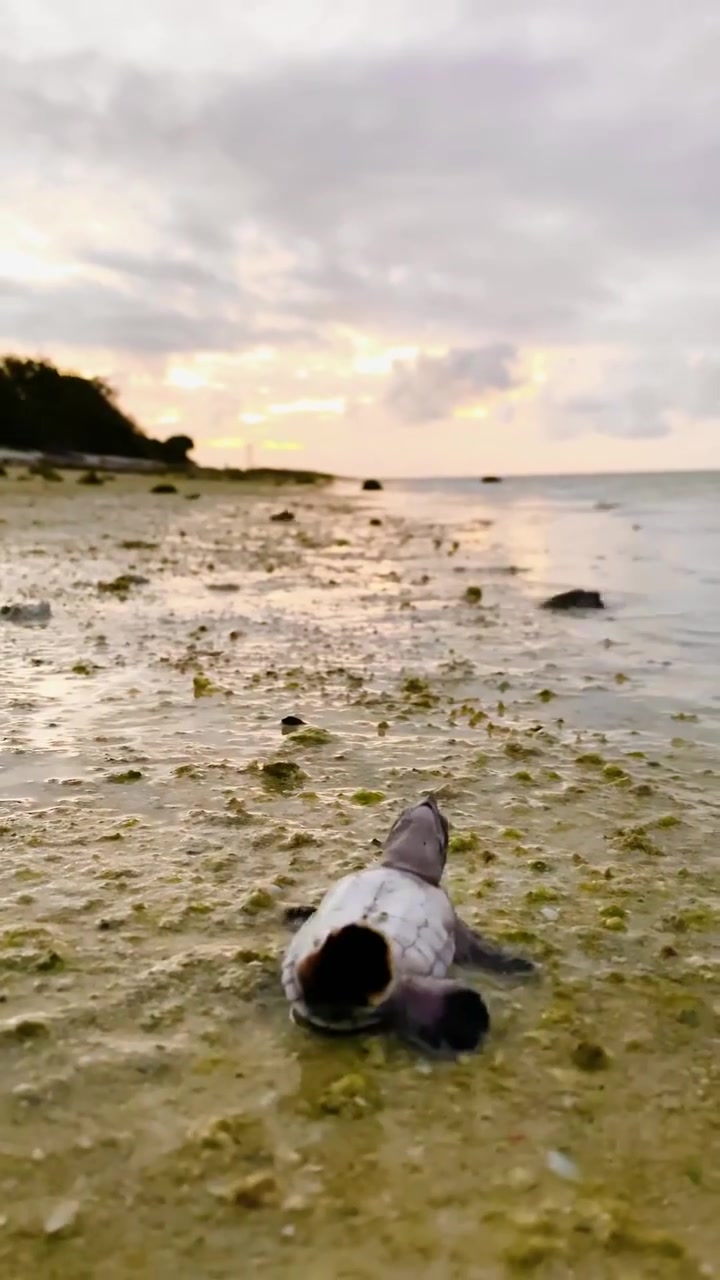
A baby sea turtle, tiny and resilient, makes its first trek across the sand. Heron Island, Australia, is its home for now: on this beach, Green and Loggerhead turtles are abundant from October to March. A cloudy sunset illuminates this brave little creature’s trek across seaweed-covered sand and rocks. For a baby sea turtle, the first swim of its life is no easy feat: from the beach into the sea, they join the ocean’s abundant wildness alone. This baby turtle in the video is anything but delicate, though. Its determination sets a powerful tone worthy of a rockstar, or as one commenter noted, embodying the spirit of Katniss Everdeen.
The Nest-to-Sea Trek
The journey that baby sea turtles take often determines their survival. When they hatch, they leave the safety of their burrow and venture across the sand towards the sea. During this time, many factors can impact their survival: predation, physical barriers, and environmental conditions are just a few. This trek is a baby turtle’s first critical step into the sea. The distance can be a challenge, especially for smaller turtles. Baby sea turtles are born with an inbuilt developmental drive to get to the sea water: their whole bodies are oriented towards the ocean. When the eggs hatch on the beaches of Heron Island, the little turtles use the low, lighter sky to navigate. The turtles migrate towards the ocean to avoid dehydration and stiffness, and they're driven to swim out. There is no parental protection in the ocean. The creatures must fight the currents and resist fatigue. Turtles will fail if they are tired or dehydrated before making the swim. They need to conserve energy for the journey and stay hydrated during this period, which enables them to make it to the sea and out to another place to safely live.
The Unique Challenges of the Baby Sea Turtle’s Journey
The wall of the turtle’s journey begins. Baby sea turtles face numerous unique challenges. These small creatures must traverse a long stretch of sand with all kinds of obstacles in their paths, from small rocks to seaweed that can get tangled around them. In the video, the baby sea turtle struggles to navigate its natural obstacles like the layers of sand and rocks that create barriers in between the beach and the sea. These barriers are what make the journey longer, not only in distance but in effort. This journey, which might just take a few minutes to traverse is fraught with danger: other animals and the very elements themselves pose a serious threat to the baby turtles. According to the visual details, there is an abundance of seaweed on the beach. This makes the journey more difficult because the baby turtle has to navigate this slippery terrain or risk getting stuck. The baby turtle is also weak; it will fail if it cannot find the strength to swim. There is also the unseen danger of dehydration. The baby turtles are in danger of drying out if they don't reach the sea. Baby sea turtles are born with a small amount of yolk in their bodies to help them in this first journey. If they cannot reach the water, they dry out, exhaust energy and perish.
The Danger of Disorientation
A key point of danger is the challenge of maintaining a straight path to the sea. A baby sea turtle can become disoriented. Several factors contribute to disorientation, but artificial lights from beach activities are of particular concern. The lights confuse the turtles, drawing them away from the sea and into the city or resort, exposing them to even more hazards like dogs, cats, and humans. If a baby turtle becomes disoriented, it can wander inland instead of towards the sea. This can increase the chances of becoming lost or injured.
Nature’s Rules
Baby sea turtles have inherited their strong instincts towards survival over millions of years of evolution. They have hard shells to protect themselves, strong swimmers as they navigate the ocean, and the knowledge to recognize their enemies. The baby sea turtle is a particularly strong swimmer; their flippers must be strong enough to navigate the waves and reach the safety of the deep water, where the larger sea creatures begin to hunt them. The baby sea turtles must also keep a keen lookout for predators. Several predators, including crabs and birds, lurk on the beaches, waiting to attack the baby turtles. The baby sea turtles instinctively know that the ocean’s safety lies in deep water, which cannot be found near the beach, so they must climb their way to the next patch of sand and move to the water. Intense competition is also part of the baby sea turtle’s journey. While some baby sea turtles are cloaked with the knowledge to get to the sea, thousands of others must also overcome the same challenges. This competition helps the baby turtles get to the ocean faster.
The Increase in ‘Ghost Crabs’
An unexpected problem is the increase in the number of ghost crabs. Ghost crabs are nocturnal and hide in the sand during the day, which makes it difficult to know if the turtles will encounter them. Baby sea turtles require some luck to avoid the ghost crabs. They are not good swimmers, and the ghost crabs can easily devour them.
Follow A Baby Sea Turtle
This video is a reminder of the incredible lengths baby sea turtles will go to survive. Their sole objective is to get into the ocean in time, with the rest of their lives ahead of them. The few that survive go on to live long lives, with a life expectancy of more than 70 years. There are a few ways to ensure that baby sea turtles are safe. Turn off lights. Artificial lights can prevent baby turtles from navigating to the sea correctly. Use non-beach-friendly lighting. Beaches should be lit with turtled-friendly lighting that doesn’t draw the baby sea turtles away from the ocean. Encourage respect. Respect the creatures as wildlife and discourage people from touching them or interfering in their journey. Be vigilant. Be vigilant with the turtles to make sure that they get to the sea. Seeing baby turtles in the wild can be a wonderful experience but also a reminder to be careful.
From the Shoreline to the Ocean
The baby sea turtles must first navigate a few critical steps. First, you must find the baby sea turtles that are just about to hatch, they’re easy to spot as they are usually in the sand and quite vulnerable. Once they dig out of the sand, the coordination begins as they try to get to the sea. The baby turtle will take many steps as it moves from the sand to the sea, which is what we saw in the video. The journey doesn’t stop at the sea. The baby sea turtles must find the patch of seaweed where they will be safe. They continue to navigate, so they’re safe and not attacked by the other animals that might be present in the sea. The baby turtles must also learn to rest: they cannot swim to the other part of the sea all at once, and they cannot navigate the tides without knowing how to swim.
Watch the Reel
Questions readers ask
What kinds of turtles hatch on Heron Island, Australia?
Heron Island is home to Green and Loggerhead turtles. These species are abundant on the island's beaches from October to March, making it a significant nesting ground.
How do baby sea turtles navigate to the sea from their nests?
Baby sea turtles use the low, lighter sky as a navigational cue to find the ocean. This inbuilt drive helps them orient themselves towards the sea, where they must avoid dehydration and find the strength to swim.
What challenges do baby sea turtles face during their journey to the sea?
Baby sea turtles encounter various obstacles like rocks, seaweed, and predators during their journey. These challenges can exhaust them, leading to dehydration and, ultimately, death if they don't reach the sea in time.
Is there any parental protection for baby sea turtles during this journey?
No, baby sea turtles do not receive any parental protection during their journey to the sea. They must rely on their instincts and resilience to navigate the challenges and reach the ocean safely.
What happens if a baby sea turtle fails to reach the sea in time?
If a baby sea turtle fails to reach the sea, it risks dehydration and exhaustion, which can be fatal. They need to conserve energy and stay hydrated during their journey to ensure survival.
How long does the journey from the nest to the sea typically take for a baby sea turtle?
The journey from the nest to the sea can vary but is typically a few minutes long. However, the distance and effort required can be significant, especially for smaller turtles.
Related deep dives
Similar reads based on topic and creator.




Recent articles
Fresh deep dives from the latest Reels we unpacked.


Comments
Be the first to comment.