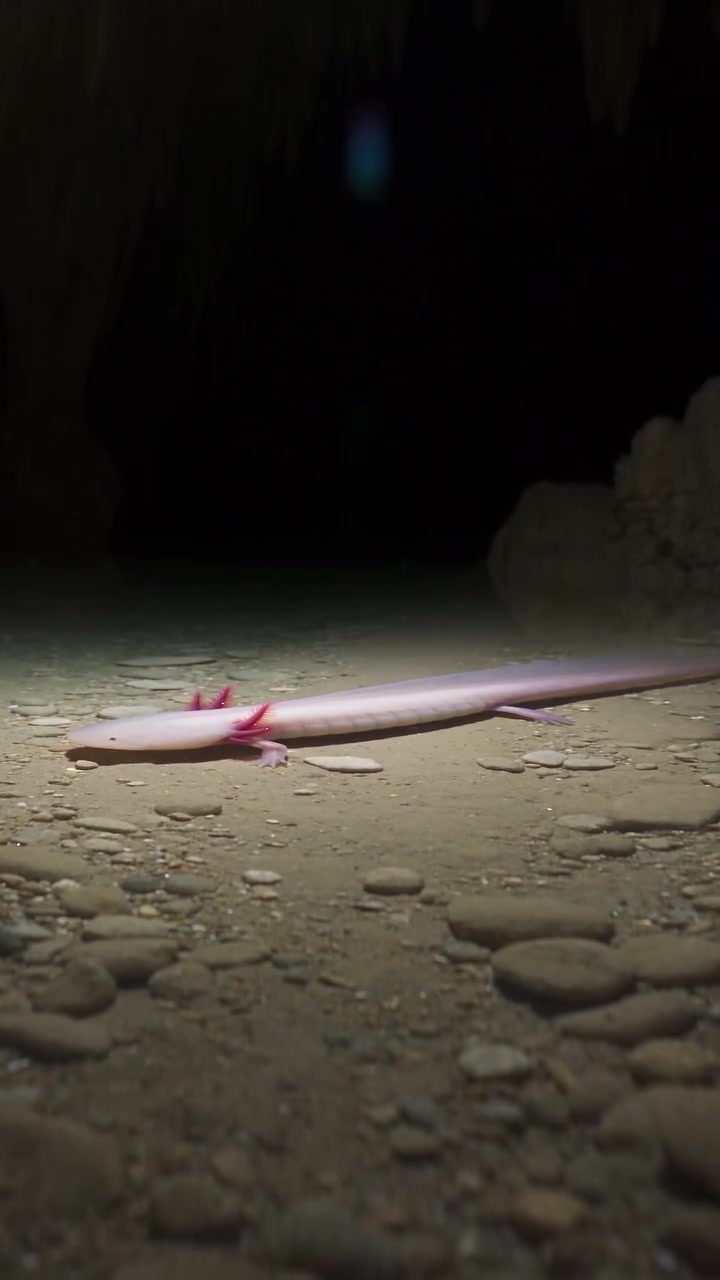
The Dragon-Like Salamander That Never Grew Up
Few animals have captured human imagination quite like the Axolotl. Mistaken for baby dragons, they have a life span that can reach a hundred years. Curious creatures that remain in larval form throughout their lives, they carry their gills with them wherever they go. Reaching sexual maturity slowly, they breed around once every 12 years and some will stay in the same spot for years. Axolotls have been the subjects of many pet owners who keep them in aquariums all over the world. This species is native to Slovenia's caves and is a rare sight.
How they work, they never grow
Axolotl, the larva for life
The Axolotls are salamanders which exhibit neoteny, a biological state where certain species retain juvenile characteristics throughout their lives. Due to their ability to regenerate lost body parts, they resemble the developing young of many salamander species. Axolotls are considered unique as they do not undergo metamorphosis or go through any major body changes and, therefore, retain their larval head, gills and tail.
The Amphibian that Defies Darkness
In Slovenia's caves, the Axolotls live in water that never sees sunlight. The dark environment has allowed them to adapt and move in a different way. Blind, it reads the world around it through faint electric fields, Earth’s magnetism, and the chemistry of the water. It perceives its habitat through touch and water currents.
A Slightly Lost Translator
The Axolotl rarely moves. The caves have not surprisingly, made them lazy as the caves are also filled with rock formations such as stalagmites and stalactites. To obtain food, they slowly position their mouth and wait to catch the food. This unique approach and lazy demeanor has led to them being misunderstood for centuries. Nicolas Vitonius Santetonius once said they were neotenic and also referred to as infant dragons, because of this deception.
The Life of An Axolotl
Living in extreme environments, the Axolotl is naturally resilient. These adaptations have allowed it to thrive in the deep underground environment of the caves. This makes it further unique, because of its highly specialized way of living. It hunts for food through scarcity and rare opportunistic feeding.
Midwinter Lovers
After more than a decade, The Axolotls breed eventually. Breeding season also sees reduced hatchings, keeping the population constant and controlled. In fact, in 2016, 21 Axolotls hatched in a cave aquarium. For this reason, they are also referred to as the dragon fish.
Meeting The Minds that Monitor Them
Conservation In The Heart of Europe
DeepPlanetTV, a Producer of this close-up video, has a YouTube Channel dedicated to educating people on different animals in the wild and their habitats. DeepPlanetTV promotes the need for greater conservation for natural caves in Slovenia. These caves are home to the unique Axolotls. The rarity of this animal calls for increased vigilance of their habitats. Organizations such as DeepPlanetTV collaborate with the Slovenian government to help conserve animals and preserve their habitats.
How to Observe Axolotls
With the right knowledge, observing Axolotls can be easy. With their slow lifestyle, there is always the opportunity to experience these rare creatures.
- Check out local aquariums around the world.
- DeepPlanetTV is a resource for understanding animals and their lifestyles.
- Conservationists, zoologists, and wildlife photographers are always observing and finding habitats for animals such as the Axolotl.
- Visual guides and maps help to locate these creatures in their natural habitats.
Watch the Reel
Questions readers ask
What does it mean that Axolotls exhibit neoteny?
Neoteny is a biological phenomenon where animals retain juvenile characteristics throughout their lives. Axolotls exhibit this by keeping their larval features, like gills and a tail, and never undergoing metamorphosis, which is why they are often mistaken for baby dragons.
How do Axolotls navigate and find food in complete darkness?
Axolotls have adapted to their dark environment by developing unique sensory abilities. They can sense faint electric fields, Earth’s magnetism, and changes in water chemistry. Additionally, they use touch and water currents to perceive their surroundings and locate food.
Why are Axolotls considered unique among salamanders?
Axolotls are unique because they do not undergo metamorphosis and retain their larval features, including gills, throughout their lives. This, combined with their exceptional regenerative capabilities and long lifespan, sets them apart from other salamander species.
How do Axolotls breed and what is their breeding cycle like?
Axolotls reach sexual maturity slowly and breed around once every 12 years. Their breeding season results in reduced hatchings, which helps maintain a controlled population. In 2016, for example, 21 Axolotls hatched in a cave aquarium, highlighting their slow and careful reproductive process.
What efforts are being made to conserve Axolotls and their habitats?
Organizations like DeepPlanetTV are dedicated to educating the public about Axolotls and promoting conservation efforts. They collaborate with the Slovenian government to protect the natural caves that serve as the Axolotls' habitats, ensuring the survival of these unique creatures.
Are Axolotls commonly kept as pets, and if so, what do pet owners need to know?
Axolotls are indeed kept as pets in aquariums worldwide. Prospective owners should be aware of their specific needs, such as a cool water environment and a diet that mimics their natural habitat. Additionally, their slow-moving nature and unique sensory adaptations make them a fascinating but delicate pet.
How do Axolotls' adaptations help them thrive in their cave environments?
Axolotls have adapted to their cave environments by developing unique sensory abilities, such as the ability to sense electric fields and water chemistry. Their slow-moving nature and opportunistic feeding habits also help them conserve energy and survive in the scarcity of their underground habitats.
Related deep dives
Similar reads based on topic and creator.




Recent articles
Fresh deep dives from the latest Reels we unpacked.
Comments
Be the first to comment.