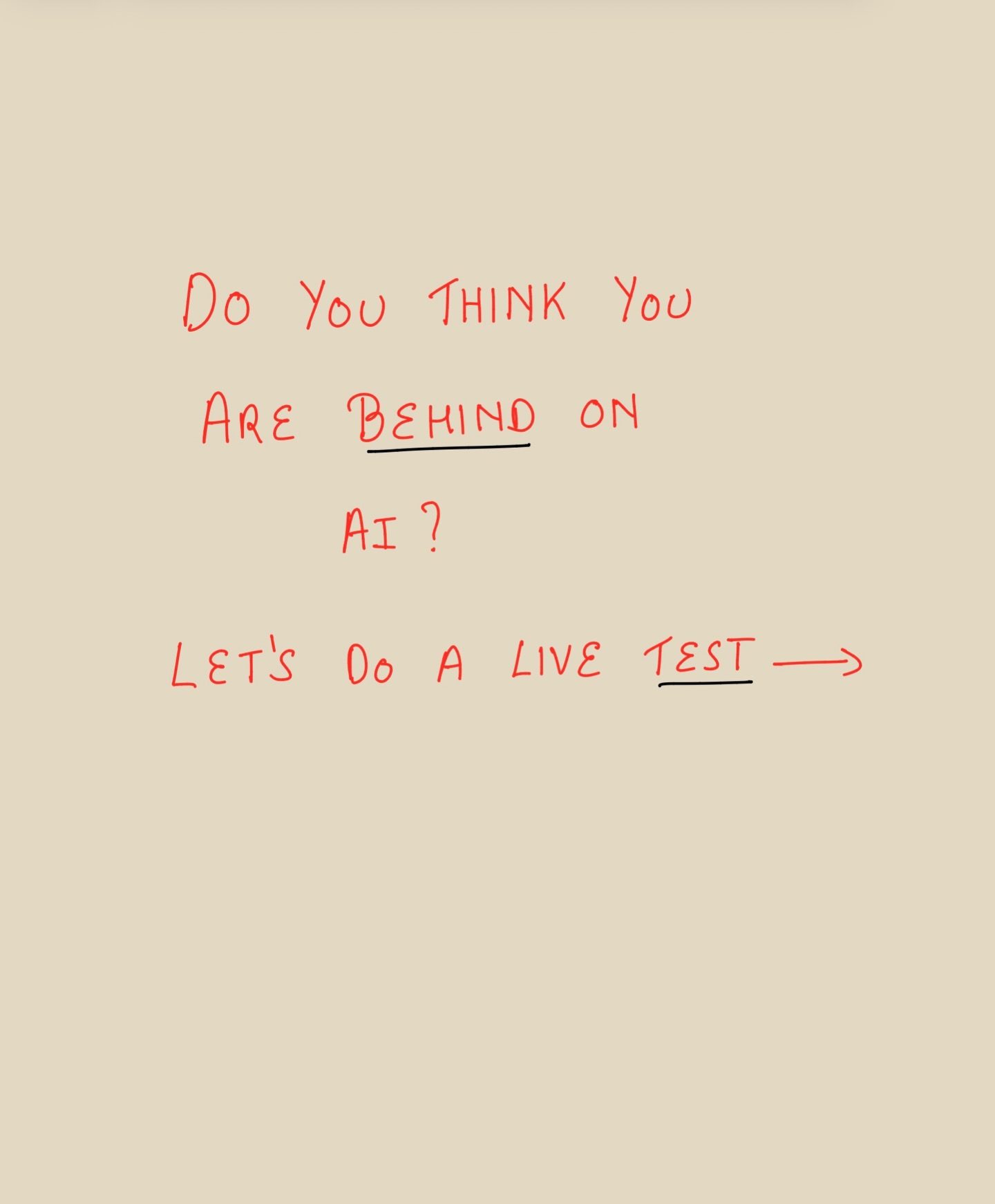
AI fluency is a critical aspect of staying competitive in today's rapidly evolving professional landscape. The concern of being left behind in AI, especially with the constant influx of new tools and expertise showcased by peers, is a prevalent one. However, it's essential to understand that AI fluency is highly niche-specific. A performance marketer, for instance, might be behind in different areas than a litigation lawyer or a freelance designer. The benchmarks for AI fluency are entirely dependent on one's professional domain.
Context / Why this matters
Feeling behind on AI can be overwhelming, especially when social media timelines are filled with people showcasing new AI tools and projects. The reality, however, is that AI is an expansive field, and it's impossible for anyone to be ahead or behind in the overall sense. The real question is: where do you stand within your specific niche? To gauge this, five key questions can serve as a brutally simple yet effective test.
Main discussion
The Five Question Fluency Test
-
Identifying AI Shifts: The first question is whether you can name three specific AI shifts happening in your niche right now. This isn't about generalities like "AI is changing everything." It's about pinpointing concrete shifts that are directly impacting your field.
-
Building with AI: Have you built anything with AI in the last 30 days? This could be a tool, a workflow, or any project that leverages AI in some way.
-
Teaching a Peer: Could you teach a peer one workflow that genuinely improves their work with AI? This question is about practical application and the ability to share knowledge effectively.
-
AI-Driven Decisions: Has AI shaped a real decision you made in the last 90 days? This could be a strategic move, a project pivot, or any significant decision influenced by AI insights.
-
Output Shift: Has your actual output materially shifted in the last 12 months due to AI? This could be in terms of quantity, quality, or efficiency of your work.
The Reality of AI Fluency
It's surprising to note that even many self-proclaimed "AI experts" might fail this test. Often, these experts have watched more demos than they've shipped. It's crucial not to measure yourself against the content volume of others but against your own progress over time. If you can do one thing in each of these tests for 30 days, you're already in the top 10% of your niche. Most people are doing zero of these. Just being in motion puts you ahead of almost everyone.
The Long Game
Reaching the top 1% in AI fluency comes from consistently shipping work that the market can see. It's about doing it repeatedly for months. The entry point, however, is just 30 days of doing. If you want to start, there are resources available. For example, a 25-action starter kit can provide specific actions, five for each test, all runnable inside 30 days.
Practical tips
To assess and improve your AI fluency, follow these practical steps:
-
Set Specific Goals: Break down your AI learning goals into specific, achievable tasks. This could be learning a new AI tool, completing a project, or teaching a peer.
-
Consistent Practice: Make a habit of practicing AI applications regularly. Consistency is key to staying ahead in the game.
-
Track Your Progress: Keep a log of your AI-related activities and decisions. This will help you see your progress over time and identify areas for improvement.
-
Stay Updated: Follow industry trends and new tools in your niche. Staying informed about the latest developments will help you stay ahead.
-
Teach Others: Sharing your knowledge with peers can reinforce your understanding and identify gaps in your knowledge.
Important takeaways
AI fluency is about practical application and consistent effort. It's not about knowing everything but about doing something consistently. The field is vast, and the benchmarks are niche-specific. By focusing on your own progress and continuously applying AI in your work, you can stay ahead in your field.
Conclusion
Remaining competitive in the AI landscape requires a proactive approach. By regularly assessing your AI fluency through practical questions and consistent practice, you can stay ahead in your niche. AI fluency is a journey, and the key to success is consistent effort and practical application.
Watch the Reel
Questions readers ask
What is AI fluency and why is it important in my career?
AI fluency refers to your level of understanding and ability to apply AI tools and concepts within your specific professional role. It's important because it helps you stay relevant and competitive in a job market where AI is becoming increasingly integrated. The better you understand AI, the more you can leverage it to enhance your work and drive meaningful results.
How can I assess my AI proficiency?
To assess your AI proficiency, start by asking yourself specific questions related to your niche. For example, consider how often you use AI tools, how comfortable you are with AI concepts, and how you stay updated in your field. Reflect on your confidence in discussing AI with peers and your ability to identify opportunities for AI applications in your work.
I feel behind on AI compared to my peers. How can I catch up?
Feeling behind is a common sentiment, but remember that AI proficiency is niche-specific. Identify the areas where you lag behind and focus on those. Engage with AI communities, follow industry experts, and dedicate time to learning AI tools relevant to your role. Gradually incorporating AI into your workflow will help you catch up effectively.
What are the key areas to focus on for improving my AI competency?
To improve your AI competency, focus on hands-on practice with AI tools relevant to your field. Understand how AI can solve specific problems in your niche. Stay updated with the latest trends and tools, and consider taking courses or tutorials tailored to your professional domain. Practical application and continuous learning are key to staying proficient.
How can I stay current with AI developments in my specific niche?
To stay current, regularly follow AI blogs, podcasts, and webinars in your specific niche. Join professional networks and online forums where AI discussions occur. Engage with AI-focused events and workshops tailored to your industry. This proactive approach will help you keep up with the latest advancements and trends, ensuring you remain competitive.
What are the benefits of assessing my AI skills regularly?
Regularly assessing your AI skills helps you identify areas for improvement and opportunities for growth. It allows you to set clear goals for enhancing your AI proficiency and ensures you are utilizing AI tools effectively in your work. Regular assessments can also boost your confidence and help you stay ahead of industry changes.
Related deep dives
Similar reads based on topic and creator.




Recent articles
Fresh deep dives from the latest Reels we unpacked.




Comments
Be the first to comment.