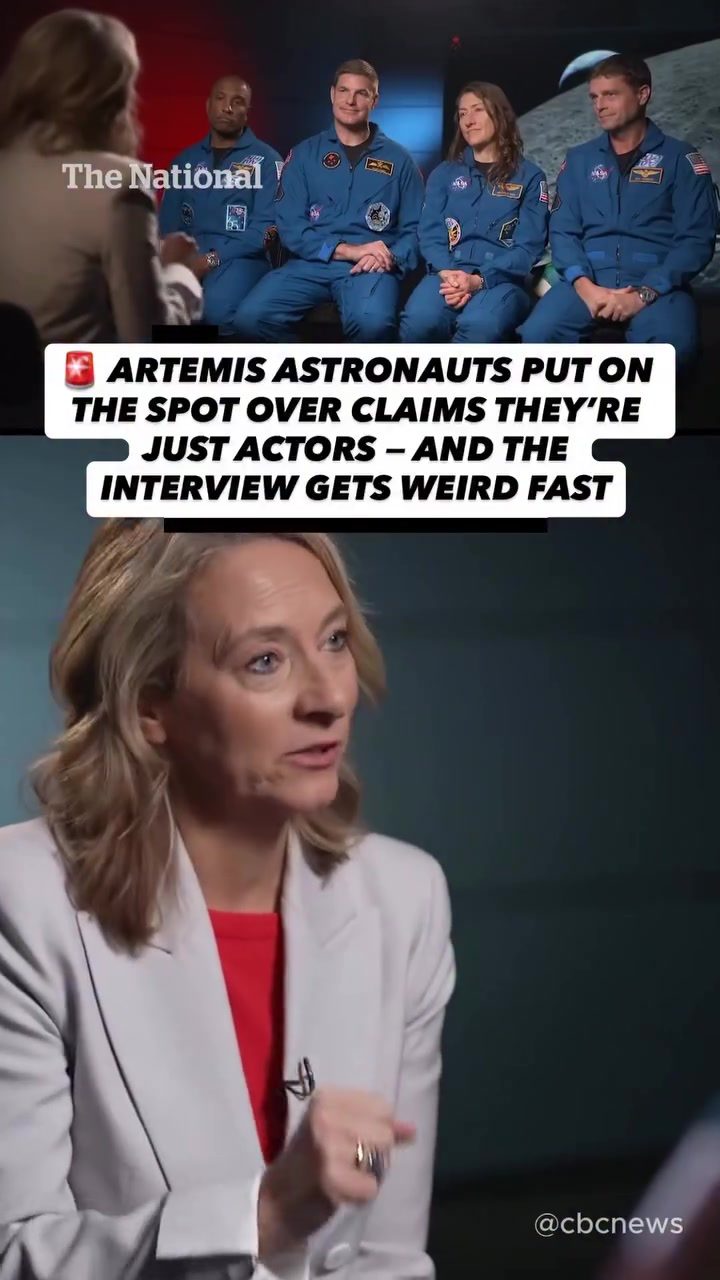
Artemis Astronauts Interview Controversy
The Artemis astronauts have been thrust into the spotlight for a contentious discussion, as a CBC interview with the Artemis II crew is going viral. The astronauts fielded questions about growing online theories claiming that space missions are fake and that astronauts are merely "actornauts." The interview has sparked intense debate, with viewers analyzing everything from the astronauts' hand movements to their demeanor and attire.
Why This Matters
The controversy surrounding the Artemis astronauts highlights a deeper issue about public perception and trust in space missions. The internet's reaction to the interview sheds light on the lingering skepticism and misinformation that circulates about space exploration. Understanding this dynamic can help bridge the gap between public opinion and the scientific community.
The Interview and Public Reaction
The Artemis II astronauts found themselves in an unexpected position when they were asked about claims that they are not genuine astronauts but rather actors. The interview took a turn when viewers began analyzing the astronauts' behavior, noting strange hand placements, awkward smiles, and nervous reactions. The fact that the crew was still in their NASA flight suits during the interview added to the perceived oddity.
Instead of dismissing these theories outright, the astronauts responded with a measured approach. They discussed the importance of critical thinking, the value of questioning what one sees, and the need to listen to skeptics rather than engage in arguments. This approach has led to a mix of reactions, with some viewers praising the astronauts for their composure and others feeling that the interview was overly rehearsed.
The Astronauts' Perspective
During the interview, the astronauts emphasized the importance of valuing and respecting people who ask questions, even if those questions stem from misconceptions. They noted that the skepticism reflects an unmet need for information and understanding. The astronauts expressed a desire to help fill this gap, even if they are unsure how to do so.
One astronaut shared a personal insight: "Sometimes, all I need to do is listen. I've actually had the best response from people when I didn't try to counter their arguments with statistics or personal experiences. They just wanted to be heard." This perspective underscores the importance of empathy and active listening in addressing public concerns and misinformation.
The Role of Critical Thinking
The astronauts' approach highlights the role of critical thinking in public discourse. By encouraging viewers to question what they see and think critically, the astronauts are fostering a more informed and engaged public. This approach can help combat misinformation and build trust in scientific endeavors.
Critical thinking is essential in navigating complex issues, and the astronauts' focus on it is a reminder of its importance in our daily lives. Encouraging people to question and analyze information can lead to more informed decisions and a greater understanding of the world around us.
The Importance of Listening
The astronauts' emphasis on listening rather than arguing is a key takeaway from the interview. By acknowledging that skepticism often stems from a need to be heard, the astronauts are promoting a more empathetic approach to public engagement. This approach can be applied in various contexts, from personal relationships to public policy, to foster better understanding and collaboration.
Listening is a powerful tool in building trust and understanding. By actively listening to others, we can address their concerns and build a more inclusive and informed community. This approach can be particularly effective in addressing misinformation and skepticism, as it acknowledges the underlying emotions and needs that often drive these sentiments.
Important Takeaways
The controversy surrounding the Artemis astronauts interview offers several important takeaways:
- Critical Thinking: Encourage critical thinking to foster a more informed public.
- Active Listening: Listen to skeptics and address their concerns with empathy.
- Public Engagement: Engage with the public in a respectful and open manner to build trust.
- Handling Scepticism: Acknowledge that skepticism often stems from a need to be heard and understood.
- Space Exploration: Address public concerns to build trust in space missions and scientific endeavors.
Conclusion
The Artemis astronauts interview controversy has sparked a valuable discussion about public perception, trust, and the importance of critical thinking. By emphasizing the value of listening and open dialogue, the astronauts have provided a model for addressing skepticism and misinformation. This approach can be applied in various contexts to foster greater understanding and collaboration, ultimately building a more informed and engaged public.
Watch the Reel
Questions readers ask
Why did the Artemis II astronauts decide to address online theories about space missions?
The Artemis II astronauts addressed these theories to directly engage with public skepticism and misinformation. By participating in the interview, they aimed to clarify the authenticity of space missions and counteract false claims, which have been spreading online.
What specific theories did the Artemis II astronauts face during the interview?
The astronauts were questioned about theories suggesting that space missions are staged and that astronauts are, in fact, actors rather than genuine space travelers. These claims have been circulating online, challenging the credibility of space exploration.
How did the public react to the interview where the Artemis II astronauts addressed these theories?
The public reaction to the interview was intense and divided. Many viewers scrutinized the astronauts' behavior, hand movements, and attire, leading to further debate and analysis. This underlines the deep-seated skepticism and trust issues surrounding space missions.
What challenges do space agencies face when bridging the gap between public opinion and scientific fact?
Space agencies face significant challenges in convincing the public of the authenticity of space missions, especially when misinformation and skepticism are prevalent. Addressing these issues requires clear communication, transparency, and often direct engagement with skeptical audiences to build trust.
How can the public better understand the authenticity of space missions?
To better understand the authenticity of space missions, the public can engage with credible sources of information, such as official space agency updates and verified scientific data. Additionally, attending public lectures, webinars, and events hosted by space agencies can provide direct insights into the processes and achievements of space exploration.
Related deep dives
Similar reads based on topic and creator.




Recent articles
Fresh deep dives from the latest Reels we unpacked.




Comments
Be the first to comment.