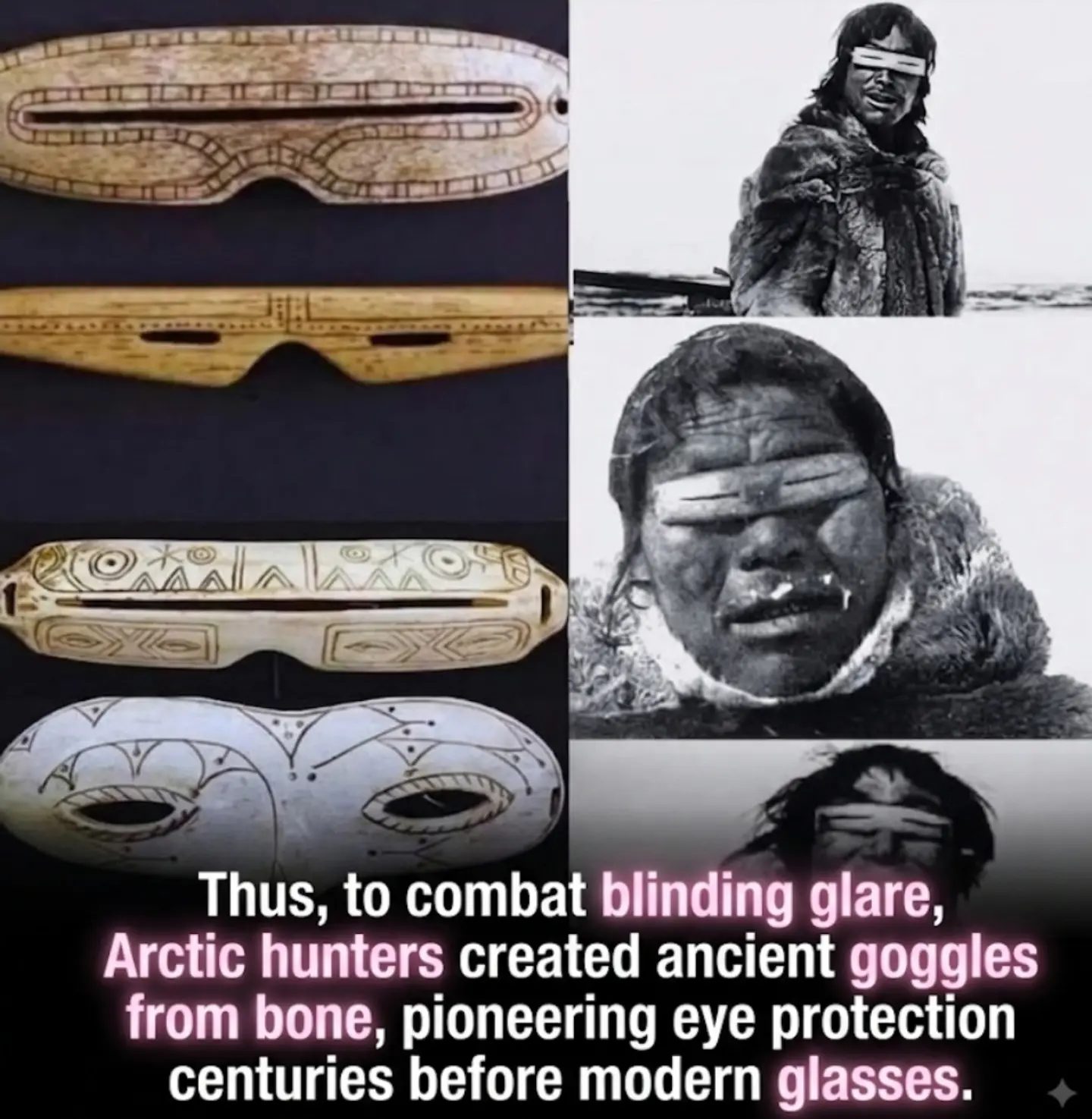
Ancient Eye Protection: The Ingenious Design of Inuit Snow Goggles
Traditional Inuit snow goggles are a remarkable example of ancient technology designed to protect the eyes in harsh arctic environments. These goggles, known as ilgaak in Inuktitut or nigaugek in Central Yup'ik, were crafted to combat the intense glare and ultraviolet (UV) radiation reflected off snow and ice. Understanding their design and function provides insight into the ingenuity of arctic peoples and their adaptations to extreme conditions.
Why This Matters
The harsh arctic environment poses significant challenges, particularly the risk of snow blindness. In the high Arctic, the sun is lower in the sky, and its UV rays are powerfully amplified when reflecting off white snow and ice. This can lead to a painful condition called photokeratitis, or "snow blindness," which is essentially sunburn on the retina and cornea, causing temporary or even permanent vision loss. Inuit snow goggles were invented to address this critical issue, showcasing their practical wisdom and technological prowess.
Main Discussion
Materials and Craftsmanship
Inuit people meticulously hand-carved these goggles from available materials like caribou antler, walrus ivory, driftwood, or even whalebone. The selection of materials was driven by their durability and availability in the arctic landscape. These goggles were not just functional; they were also a testament to the craftsmanship and resourcefulness of the Inuit people. The goggles were often designed without lenses and custom-carved to fit the face of the wearer, ensuring a perfect seal to block light from entering from the sides.
Design and Function
The design of Inuit snow goggles is both simple and effective. They feature narrow horizontal slits that dramatically restrict the amount of ultraviolet light reaching the eyes. These slits not only reduce glare but also sharpen vision, acting similar to a pinhole camera. This design makes it easier to spot game across the monochromatic landscape, enhancing the hunter's ability to navigate and survive in the harsh environment. The inside of the goggles was frequently blackened with soot to further absorb light, ensuring maximum eye protection.
Technological Adaptation
These goggles represent a highly advanced technological adaptation designed to survive in the extreme arctic environments of North America and Greenland. The Inuit people's understanding of the environment and their ingenious use of available resources allowed them to create a solution that was both practical and effective. The goggles were not just a tool for survival but also a testament to the technological advancements of early civilizations.
Practical Tips
Crafting Your Own Inuit-Style Goggles
While the original Inuit goggles were crafted from bone and other natural materials, you can create a modern version using materials readily available today. Here are some steps to guide you:
- Choose Your Materials: Select a sturdy material like plastic or wood for the frame. Ensure it is lightweight and durable.
- Design the Slits: Cut narrow horizontal slits in the frame to restrict the amount of light entering the eyes. These slits should be positioned to allow clear vision while minimizing glare.
- Custom Fit: Measure and adjust the frame to fit your face perfectly. This ensures that light does not enter from the sides, providing maximum protection.
- Blacken the Inside: Apply a non-toxic black material on the inside of the frame to absorb any stray light. This can be done using paint or a dark fabric.
- Test and Adjust: Wear the goggles in a bright, snowy environment to ensure they provide the desired level of protection and clarity. Make any necessary adjustments.
Modern Alternatives
Today, there are modern alternatives to traditional Inuit goggles, such as UV-protective sunglasses and snow goggles. These modern versions often incorporate advanced materials and technologies to provide even better protection and comfort. When choosing modern eyewear, look for features like UV protection, polarized lenses, and a comfortable fit. However, the traditional Inuit goggles offer a unique perspective on how natural materials and simple designs can be used to create effective protective gear.
Important Takeaways
- Historical Significance: Inuit snow goggles are a testament to the ingenuity and resourcefulness of the Inuit people, showcasing their understanding of their environment and the challenges it posed.
- Technological Adaptation: These goggles represent an early form of eye protection, designed to combat the harsh glare and UV radiation in the arctic.
- Design and Function: The narrow horizontal slits and custom-fit design of the goggles make them highly effective in reducing glare and enhancing vision.
- Craftsmanship: The goggles were meticulously hand-carved from available materials, demonstrating the craftsmanship and technological prowess of the Inuit people.
Conclusion
Inuit snow goggles are a fascinating example of ancient technology that has stood the test of time. Their design and function highlight the ingenuity of the Inuit people and their adaptability to the harsh arctic environment. While modern alternatives offer advanced features, the traditional Inuit goggles serve as a reminder of the effectiveness of simple, well-crafted designs. Understanding the history and design of these ancient goggles provides valuable insights into the technological advancements of early civilizations and the importance of eye protection in extreme environments.
Watch the Reel
Questions readers ask
What materials were traditionally used to make Inuit snow goggles?
Inuit snow goggles were typically crafted from local materials such as bone, wood, and sometimes antler, all of which were readily available in the arctic environment. These materials were chosen for their durability and ability to withstand the harsh conditions of the Arctic.
How do Inuit snow goggles protect against snow blindness?
Inuit snow goggles have narrow horizontal slits that significantly reduce the amount of UV light and glare entering the eyes. This design helps prevent snow blindness, a condition caused by prolonged exposure to intense reflected sunlight off snow and ice, which can be debilitating and painful.
What are the benefits of the traditional design of Inuit snow goggles?
The traditional design of Inuit snow goggles, with their narrow horizontal slits, not only protects the eyes from harmful UV rays and glare but also enhances vision in bright, snowy conditions. This allows hunters to navigate and track animals more effectively in the harsh arctic environment.
How did Inuit hunters make their snow goggles?
Inuit hunters made their snow goggles by carving slits into materials like bone or wood. The process involved intricate craftsmanship to ensure the slits were narrow enough to block harmful glare, but wide enough to allow for clear vision. This required a deep understanding of the materials and the environment.
What is the cultural significance of Inuit snow goggles?
Inuit snow goggles hold significant cultural importance as they reflect the ingenuity and adaptability of the Inuit people. These goggles are a testament to their ability to thrive in extreme conditions by utilizing available resources and innovative design, which has been passed down through generations.
How did the design of Inuit snow goggles help arctic hunters?
The design of Inuit snow goggles helped arctic hunters by enhancing their vision in bright, snowy conditions. The narrow slits reduced glare, allowing hunters to see clearly and track prey effectively, which is crucial for survival in the challenging arctic environment.
Related deep dives
Similar reads based on topic and creator.




Recent articles
Fresh deep dives from the latest Reels we unpacked.




Comments
Be the first to comment.