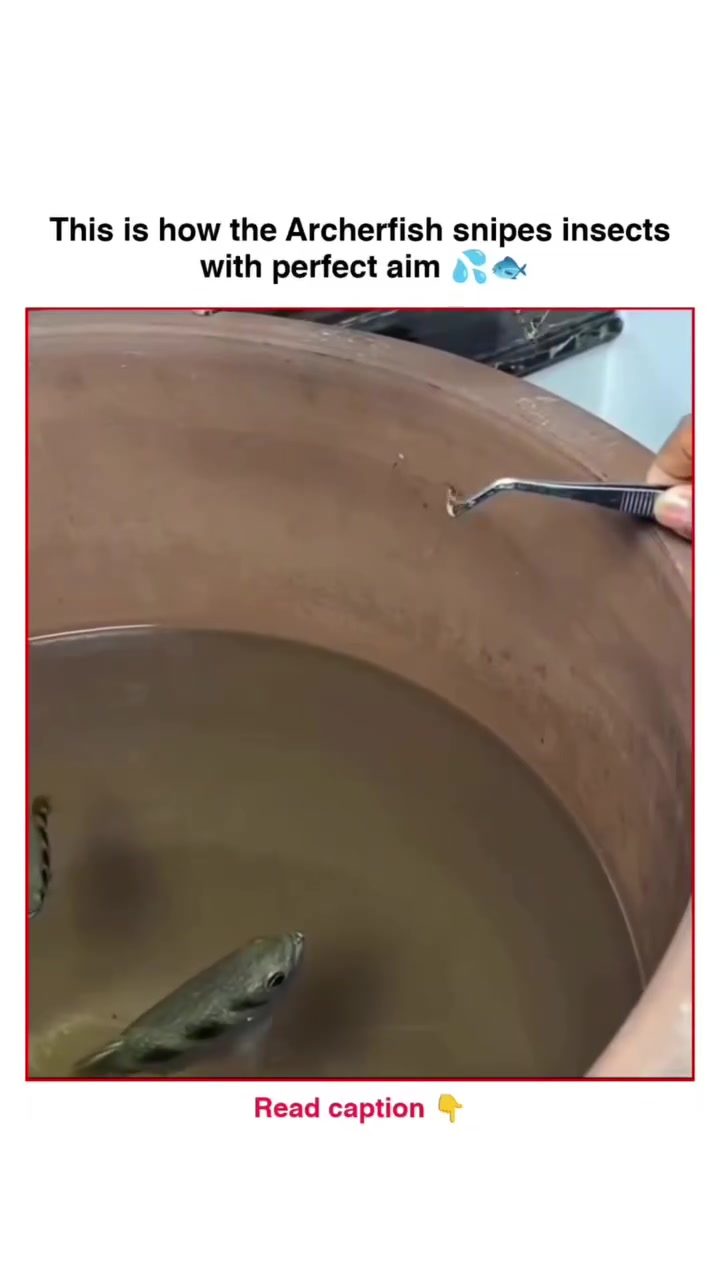
Archerfish: Masters of the Water Snipe
Archerfish are renowned for their extraordinary hunting technique, which involves shooting powerful jets of water to knock insects off branches and into the water. This unique method sets them apart from other fish and makes them a fascinating subject of study in the realm of animal behavior.
Context / Why this matters
The archerfish's hunting style is not just entertaining to watch; it also offers insights into the remarkable adaptations and learning abilities of these creatures. Understanding their behavior provides a window into the complex world of aquatic ecosystems and the strategies animals employ to survive and thrive in their environments.
Close-up: The Archerfish's Hunting Technique
Precise Aiming and Light Reflexion
One of the most striking aspects of the archerfish's hunting technique is its ability to compensate for light refraction. When shooting at prey above the water's surface, the fish must adjust its aim to account for the way light bends as it passes from air to water. This adaptation allows the archerfish to hit its targets with surprising accuracy, despite the optical distortions.
The archerfish achieves this by shooting a powerful jet of water from its mouth, using specialized muscles and a unique mechanism that forces water out in a precise stream. The fish can shoot water up to 2 meters, making it a formidable predator in its environment.
Water Sniper
The archerfish is a true water sniper. Its powerful, precise jets of water can reach up to 2 meters, making it an effective predator in its environment. Armed with this weapon, the archerfish carefully aims at insects perched on branches above the water’s surface. They adjust their aim to account for the refraction of light between air and water, ensuring accurate hits.
Learning Ability
Young archerfish demonstrate a remarkable ability to improve their aim with practice over time. This observation suggests that the fish's hunting skills are not entirely instinctual but also involve a significant degree of learning and adaptation. This learning ability is a testament to the archerfish's cognitive capabilities and its capacity to refine its hunting techniques over time.
Group Hunting
Archerfish hunting is not always a solitary activity. Sometimes, multiple fish will target the same prey, creating a dynamic and competitive hunting scenario. This group hunting behavior adds an extra layer of complexity to their interactions, as individual fish must compete with one another to secure a meal.
Habitat
Archerfish are primarily found in Southeast Asia and Australia, where they inhabit brackish and mangrove waters. These environments provide a rich source of insects, which the archerfish prey upon. The brackish waters, where fresh and saltwater mix, create a unique ecosystem that supports a diverse range of plant and animal life.
Practical Tips for Observing Archerfish
To truly appreciate the archerfish's hunting skills, consider the following tips for observing these remarkable creatures:
-
Visit their natural habitat: If possible, travel to Southeast Asia or Australia to observe archerfish in their natural environment. Mangrove and brackish waters are the best places to see them in action.
-
Set up a tank for observation: If you have access to a tank with archerfish, position insects above the surface to observe their hunting behavior. This can be done using tweezers to place insects at varying heights and distances.
-
Watch for group hunting: Pay attention to how archerfish behavior changes when multiple fish are involved. This can provide insights into their social dynamics and competitive strategies.
-
Note their learning abilities: Young archerfish gradually improve their aim, so take the time to observe how their accuracy changes over days or weeks. This will give you a sense of their cognitive abilities and adaptability.
Important Takeaways
- Adaptation and Innovation: The archerfish's unique hunting technique showcases the remarkable adaptations that animals develop to survive in their environments. They combine precision, learning, and adaptability to hunt effectively.
- Cognitive Capabilities: The ability of archerfish to learn and improve their hunting skills highlights the cognitive capabilities of these creatures. Their behavior suggests a level of intelligence that goes beyond simple instinct.
- Ecosystem Role: As predators, archerfish play a crucial role in their ecosystems by controlling insect populations. Their hunting behavior helps maintain the balance of these complex environments.
Conclusion
The archerfish's hunting technique is a testament to the ingenuity and adaptability of aquatic life. By shooting powerful jets of water to knock down insects, these fish demonstrate a level of precision and intelligence that is both fascinating and awe-inspiring. Observing their behavior provides valuable insights into the complexity of animal behavior and the strategies animals use to thrive in their environments.
Watch the Reel
Questions readers ask
How do archerfish use water to hunt insects?
Archerfish use their mouths to expel a powerful jet of water, which they aim precisely at insects perched above the water surface. Upon impact, the water droplet knocks the insect down into the water, where the archerfish can quickly consume it.
What makes the archerfish's hunting technique unique?
The archerfish's hunting technique is unique because it involves a complex process of aiming and shooting water jets to capture prey. This method is rarely seen in other fish species, making the archerfish a subject of interest in understanding aquatic predator-prey dynamics.
Can archerfish be kept in home aquariums?
Yes, archerfish can be kept in home aquariums, but they require specific conditions. A suitable tank setup should include ample space for swimming, a shallow area for hunting practice, and a secure lid to prevent the fish from jumping out. It's also important to provide them with a varied diet that includes insects.
How do archerfish adjust their aim when hunting?
Archerfish adjust their aim by accounting for the refraction of light at the water's surface. This allows them to accurately target insects above the water. They learn and improve this skill over time, demonstrating their remarkable learning abilities.
What kinds of insects do archerfish typically prey on?
Archerfish typically prey on a variety of insects that fly or rest near the water's surface, such as ants, beetles, and grasshoppers. The size of the prey can vary, but archerfish can adjust the power of their water jets to target different types of insects.
Recent articles
Fresh deep dives from the latest Reels we unpacked.




Comments
Be the first to comment.