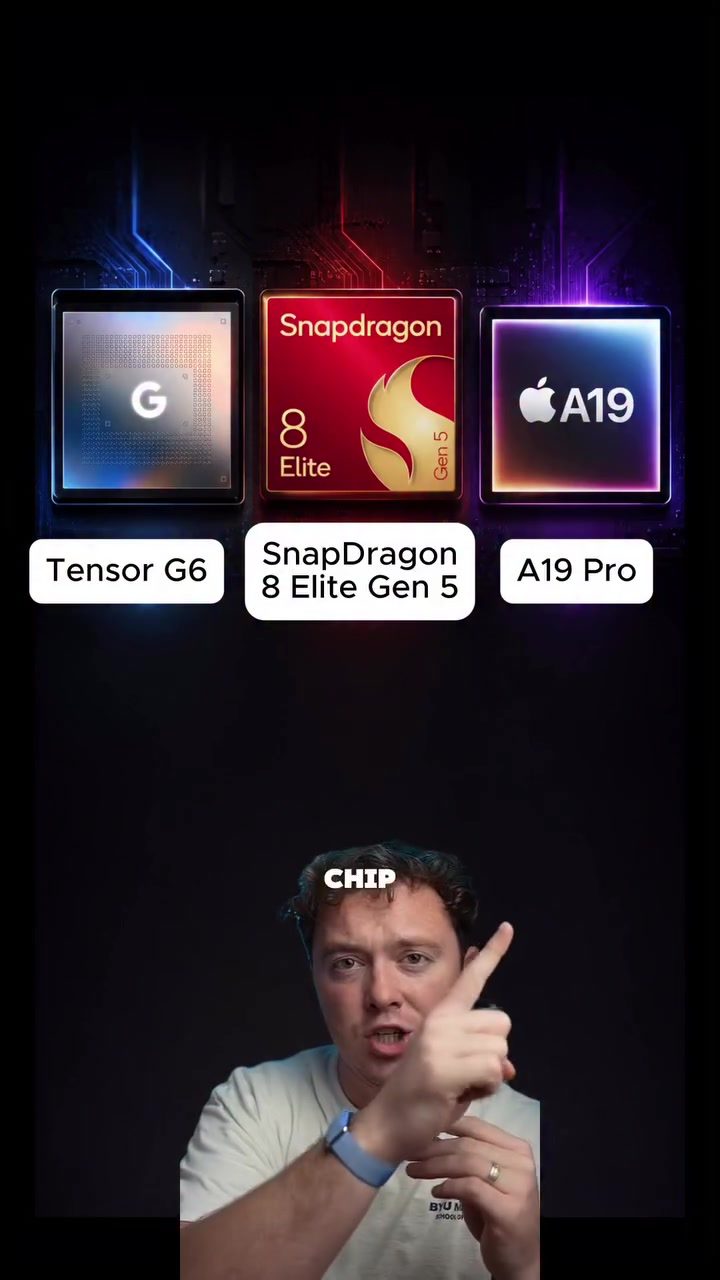
Chip Comparison: Apple A19, Snapdragon 8 Elite Gen 5, and Google Tensor G6
Smartphone chips are the backbone of modern mobile devices, driving performance across various tasks from gaming to everyday use. These chips, Apple's A19, Snapdragon 8 Elite Gen 5, and Google's Tensor G6, are all manufactured by the same company using 3-nanometer technology. But what sets them apart?
Why This Matters
Understanding the differences among these chips is crucial for consumers looking to purchase a new smartphone. Each chip is tailored to specific strengths, whether it's all-around performance, AI capabilities, or seamless integration with the device's software.
Main Discussion
Under the Hood: The Manufacturing Process
TSMC (Taiwan Semiconductor Manufacturing Company) serves as the manufacturing base for Apple, Qualcomm, and Google. Despite being produced by the same company, these chips differ due to unique blueprints designed by each company.
Snapdragon 8 Elite Gen 5: The All-Rounder
Snapdragon 8 Elite Gen 5 is engineered to be a versatile chip that can accommodate various smartphone models. It includes cores designed for gaming and a variety of other tasks, making it adaptable for different phone designs. This flexibility allows it to integrate well with a wide range of devices, enhancing the overall performance and efficiency of the phone.
Google Tensor G6: AI and Visual Excellence
Google's Tensor G6 chip is optimized for on-device AI tasks, offering speeds 3.5 times faster than its Snapdragon counterpart. This chip excels in features like Gemini, computational photography, and voice processing, which are priorities for Pixel phones. The Tensor G6 is particularly geared towards enhancing the AI capabilities of the device, making it a strong contender for users who prioritize these features.
Apple A19 Pro: Integration and Control
Apple's A19 Pro chip offers Apple significant control over the entire ecosystem, from iOS to the camera and software. This integration ensures a seamless experience for users. Apple's control over the entire hardware and software stack allows for more streamlined performance and a consistent user experience across all Apple devices.
Practical Tips
When choosing a smartphone based on its chip:
- For Versatility: If you want a chip that can handle a variety of tasks and integrate well with different devices, the Snapdragon 8 Elite Gen 5 is a solid choice.
- For AI and Visual Capabilities: If AI tasks and computational photography are crucial to your needs, consider a device powered by the Tensor G6.
- For Seamless Integration: If you are already invested in the Apple ecosystem and want a harmonious experience, the A19 Pro chip is ideal.
Important Takeaways
- Manufacturing Process: All three chips are manufactured by the same company using 3-nanometer technology, but each company designs unique blueprints.
- Snapdragon 8 Elite Gen 5: Known for its versatility and adaptability, making it suitable for various smartphone models.
- Google Tensor G6: Optimized for AI and visual tasks, prioritizing features like computational photography and voice processing.
- Apple A19 Pro: Offers seamless integration with Apple's ecosystem, providing a unified user experience.
Conclusion
Choosing the right smartphone chip depends on your specific needs and preferences. Whether you prioritize versatility, AI capabilities, or seamless integration, understanding the strengths of the A19 Pro, Snapdragon 8 Elite Gen 5, and Tensor G6 chips can help you make an informed decision. Each chip has its unique advantages, making the selection process more about personal priorities than about any single chip being universally superior.
Watch the Reel
Questions readers ask
What are the key differences between the Apple A19, Snapdragon 8 Elite Gen 5, and Tensor G6 chips?
The Apple A19 chip is designed for seamless integration with Apple's ecosystem, offering a cohesive user experience. The Snapdragon 8 Elite Gen 5 is an all-round performer, excelling in various tasks from gaming to everyday use. The Tensor G6 chip, on the other hand, leads in AI and visual capabilities, making it ideal for users who prioritize advanced visual processing and AI features.
Why is the Tensor G6 considered superior in AI and visual capabilities?
The Tensor G6 chip is optimized for AI tasks and visual processing, which means it can handle complex computations more efficiently. This makes it a top choice for users who rely on AI-driven features and high-quality visuals in their smartphones.
Which chip is best for users who prioritize overall performance?
For users who need a chip that performs well across a variety of tasks, the Snapdragon 8 Elite Gen 5 is the best choice. It is designed to handle everything from everyday tasks to demanding applications, ensuring smooth and efficient performance.
What makes the A19 Pro chip unique among smartphone chips?
The A19 Pro chip stands out due to its seamless integration with Apple's ecosystem. This ensures that users have a consistent and optimized experience across all Apple devices and services, making it a great choice for those already invested in the Apple ecosystem.
How do the Tensor G6 and Snapdragon 8 Elite Gen 5 compare in terms of AI capabilities?
The Tensor G6 clearly outpaces the Snapdragon 8 Elite Gen 5 in AI capabilities. Tensor G6 is specifically tailored for advanced AI tasks, making it more efficient and powerful for these functions compared to the Snapdragon 8 Elite Gen 5.
Related deep dives
Similar reads based on topic and creator.




Recent articles
Fresh deep dives from the latest Reels we unpacked.




Comments
Be the first to comment.