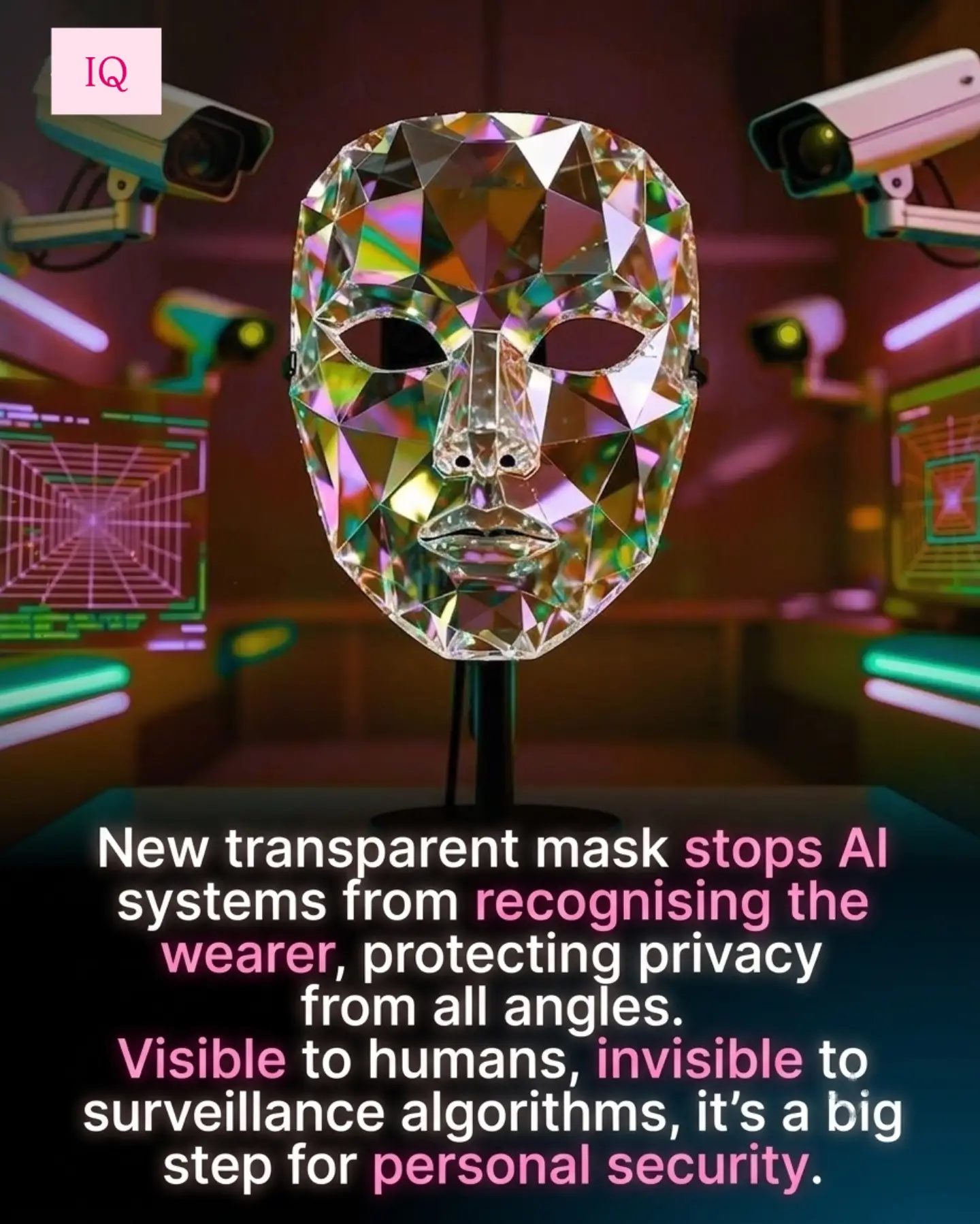
Privacy Mask
Privacy masks represent a cutting-edge advancement in personal security, designed to protect individuals from the ever-expanding reach of AI surveillance. These innovative masks are crafted to be visible to humans while remaining undetectable by surveillance algorithms, offering a unique solution to the challenges posed by facial recognition technology.
Why This Matters
In an era where facial recognition systems are ubiquitous, the ability to control who can identify you from your face is increasingly important. Facial recognition relies on biometrics, measuring the precise geometry of the face to identify individuals instantly. While this technology has numerous applications, from security to convenience, it also raises significant privacy concerns. Privacy masks address these issues by disrupting the algorithms' ability to recognize faces, thereby protecting personal privacy from all angles.
The Design and Functionality of Privacy Masks
How They Work
Privacy masks, such as the one designed by Dutch artist Jip van Leeuwenstein, operate on a sophisticated principle. The mask is designed like a complex lens that bends and distorts the light reflecting off the wearer's face. This distortion creates a jumbled pattern of shifting light and shadow, making it nearly impossible for AI systems to recognize the facial metrics. To a human observer, the wearer remains visible and expressive, but to surveillance algorithms, the face becomes unrecognizable.
The Transparent Feature
One of the most distinctive features of these masks is their transparency. Unlike traditional masks that obscure the face, transparent masks allow humans to see the wearer's facial expressions and interact with them normally. This design element ensures that social interactions remain natural while providing a robust layer of privacy protection.
The Twist
The real twist lies in the mask's ability to be both visible and invisible. The faceted design of the mask ensures that it is visible to humans, allowing for clear communication and facial expressions. However, the way it distorts light means that AI surveillance systems see only a chaotic pattern, effectively rendering the wearer faceless to these systems.
The Future of Privacy
The Impact on Personal Security
The introduction of privacy masks marks a significant step in personal security. In a world where surveillance is becoming more pervasive, having a tool that can protect personal privacy without compromising social interaction is invaluable. These masks offer a tangible solution to the growing concerns about data privacy and the misuse of facial recognition technology.
Ethical and Social Implications
While the technology behind privacy masks is undeniably innovative, it also raises important ethical and social questions. On one hand, it provides a means for individuals to protect their privacy in an increasingly surveilled world. On the other, it challenges the norms of identification and recognition, which are deeply ingrained in modern society. The use of privacy masks could lead to new conversations about the balance between personal privacy and societal security.
Practical Tips
Choosing a Privacy Mask
When considering a privacy mask, it's important to look for a design that effectively disrupts facial recognition algorithms. The transparency and iridescent faceting are key features to look for. Ensure that the mask is durable and comfortable to wear for extended periods, as it will need to withstand daily use in various environments.
Incorporating the Mask into Daily Life
Practically, incorporating a privacy mask into daily life involves a bit of adaptation. While the mask is designed to be visible to humans, it may still draw attention, especially in environments where facial recognition is not expected. Start by wearing the mask in controlled settings, such as at home or with trusted friends, before gradually incorporating it into public spaces.
Addressing Social Stigma
One of the potential challenges of using a privacy mask is addressing the social stigma that may come with it. As these masks are relatively new, people may not be familiar with their purpose or functionality. It may help to explain the privacy benefits of the mask to those around you, fostering a greater understanding and acceptance of the technology.
Important Takeaways
Privacy in the Digital Age
Privacy masks highlight the importance of personal privacy in the digital age. As technology advances, so do the methods to protect individual rights. The innovation of privacy masks showcases a proactive approach to maintaining control over personal data and identity.
Balancing Privacy and Security
The use of privacy masks also underscores the need for a balanced approach to privacy and security. While these masks offer a layer of protection, they also challenge traditional notions of identification. This balance is crucial in shaping future policies and technologies that respect individual privacy while ensuring public safety.
The Role of Innovation
Innovation continues to play a pivotal role in addressing modern challenges. The development of privacy masks is a testament to the power of creative thinking and technological advancement. It serves as a reminder that innovative solutions can address complex issues, providing new avenues for protecting personal privacy.
Conclusion
Privacy masks represent a remarkable step forward in the realm of personal security. Their unique design, which combines transparency with advanced light-distorting technology, offers a practical solution to the privacy concerns posed by facial recognition systems. As society continues to grapple with the implications of AI surveillance, tools like privacy masks provide a tangible means to safeguard personal privacy. Whether it is seen as a significant step for personal security or a dystopian tool, the impact of these masks is undeniable, and their role in shaping future privacy practices is yet to be fully realized.
Watch the Reel
Questions readers ask
How do anti-surveillance masks protect privacy?
Anti-surveillance masks protect privacy by confounding facial recognition algorithms. The masks are specially designed to appear normal to the human eye, but they distort the facial features in ways that make it difficult for AI systems to scan and identify individuals.
Can I still interact with people while wearing an anti-surveillance mask?
Yes, anti-surveillance masks are designed to be visible to humans, allowing for natural social interactions. You can converse and engage with others without any hindrance while still protecting your facial identity from AI surveillance.
How do facial recognition systems typically work?
Facial recognition systems use biometric data to identify individuals. They measure distinctive facial features, such as the distance between the eyes, the shape of the nose, and the contours of the face, to create a unique digital map that can be used to identify a person instantly.
Are there different types of privacy masks available?
Yes, there are various types of privacy masks available, including transparent designs that allow your face to be visible to others while confusing AI systems. Some masks are designed for specific occasions, such as public events or everyday use, and come in different styles and materials.
How can a transparent mask for privacy protect me from AI surveillance?
A transparent mask for privacy achieves this by incorporating subtle patterns or distortions that are imperceptible to the human eye but disrupt the algorithms used by facial recognition systems. This ensures that while others can see your face, AI cannot accurately scan and identify it.
Can I use an anti-surveillance mask for everyday activities?
Absolutely, anti-surveillance masks can be used for everyday activities, whether you are commuting, attending events, or simply walking around in public spaces. They provide a discreet way to enhance your personal security and protect your identity from AI-driven surveillance systems.
Related deep dives
Similar reads based on topic and creator.

Recent articles
Fresh deep dives from the latest Reels we unpacked.




Comments
Be the first to comment.