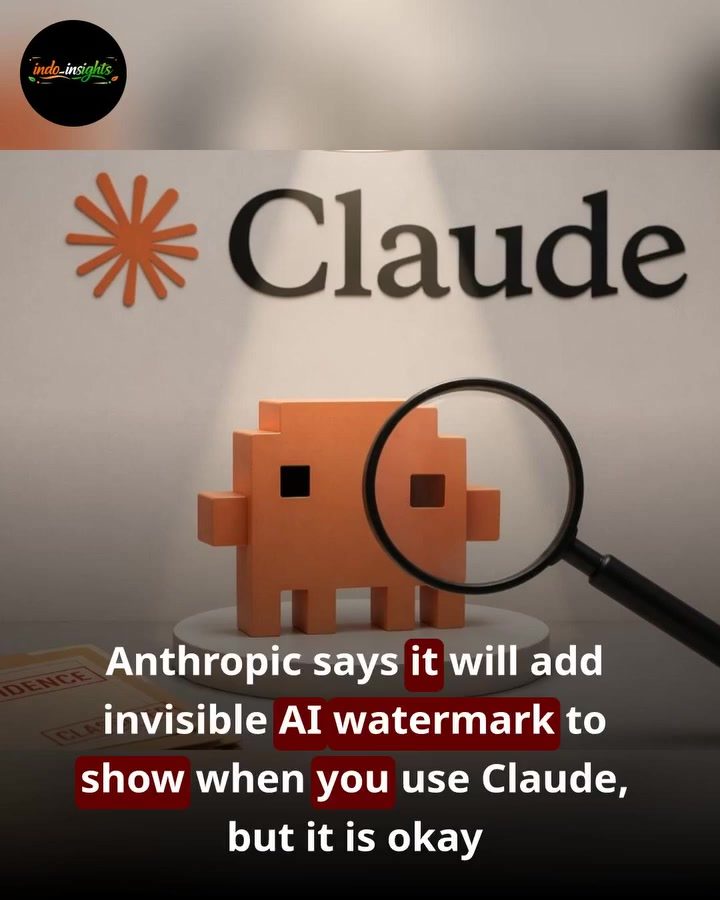
AI Watermarking: Anthropic's New Approach to Detecting AI-Generated Text
Anthropic, a leading AI company, is introducing an innovative solution to help detect whether a text was generated by AI. By adding an invisible watermark to texts created by their AI model, Claude, Anthropic aims to comply with the EU’s AI Act and provide transparency to users.
Context / Why this Matters
The EU’s AI Act is a significant regulatory framework designed to ensure that AI systems are developed and used responsibly. One of the key aspects of this act is the need for transparency, particularly in identifying AI-generated content. Anthropic's new watermarking system is a direct response to this regulatory requirement, demonstrating their commitment to ethical AI practices.
Main discussion
What is AI Watermarking?
AI watermarking involves embedding a unique, invisible mark into AI-generated content. This mark is designed to be imperceptible to the human eye but detectable by specialized algorithms. In the case of Anthropic, the watermark will be added to texts generated by their AI model, Claude, to indicate that the content was created by an AI.
How Does the Watermark Work?
The watermark works by altering the statistical properties of the text in a way that is undetectable to humans but can be identified by algorithms. This process does not affect the readability or integrity of the text; it merely adds a layer of metadata that can be used to verify the origin of the content. The watermark will be embedded in a manner that ensures it cannot be easily removed or tampered with, maintaining the authenticity of the AI-generated text.
Limitations of AI Watermarking
While AI watermarking is a powerful tool for detecting AI-generated content, it is not without its limitations. One of the primary challenges is ensuring that the watermark is robust enough to survive various transformations and modifications that text might undergo. For example, if the text is translated, formatted differently, or edited, the watermark might be compromised.
Another limitation is the potential for false positives or negatives. Although the watermark is designed to be highly accurate, there is always a risk of misidentifying text as AI-generated when it is not, or vice versa. Anthropic will need to continuously refine their algorithms to minimize these errors and improve the reliability of the watermarking system.
Why Is Anthropic Introducing This Feature?
Anthropic's decision to introduce an invisible AI watermark to texts generated by Claude is driven by several factors. Firstly, it is a proactive step to comply with the EU’s AI Act, which emphasizes the need for transparency in AI-generated content. By adding a watermark, Anthropic can provide users and regulators with clear evidence that the content was created by an AI.
Secondly, the watermarking system enhances user trust. Knowing that content is AI-generated can help users make more informed decisions about the information they consume. It also sets a standard for transparency that other AI companies may follow, potentially leading to a more ethical and responsible AI industry.
Lastly, the watermarking system serves as a deterrent for malicious use. If someone attempts to use AI-generated content for deceptive purposes, the watermark can be detected, and the content can be traced back to its AI origin. This helps to maintain the integrity of AI-generated content and reduces the risk of misuse.
Practical Tips
While the AI watermarking system is designed to be user-friendly, there are a few practical tips to keep in mind when using AI-generated content:
- Check for Watermarks: If you are unsure whether a piece of text is AI-generated, look for the watermark. Specialized algorithms can help you detect the watermark and verify the origin of the content.
- Keep Records: Maintain records of AI-generated content for transparency and accountability. This can help you track the source of the content and ensure that it is being used appropriately.
- Stay Informed: Keep up-to-date with the latest developments in AI regulations and best practices. This will help you understand the implications of AI-generated content and ensure that you are complying with all relevant laws and guidelines.
Important Takeaways
- Compliance with Regulations: Anthropic's move to add an invisible AI watermark to texts generated by Claude is a direct response to the EU’s AI Act, ensuring compliance with regulatory requirements.
- Transparency and Trust: The watermarking system enhances transparency and builds trust with users by providing clear evidence that the content was created by an AI.
- Deterrent for Misuse: The watermark serves as a deterrent for malicious use, helping to maintain the integrity of AI-generated content and reduce the risk of misuse.
Conclusion
Anthropic's introduction of an invisible AI watermark to texts generated by Claude is a significant step towards ensuring transparency and accountability in AI-generated content. By complying with the EU’s AI Act and enhancing user trust, Anthropic sets a new standard for ethical AI practices. While the watermarking system has its limitations, it represents a powerful tool for detecting AI-generated content and maintaining the integrity of the information we consume. As AI technology continues to evolve, initiatives like these will be crucial in shaping a responsible and transparent AI landscape.
Watch the Reel
Questions readers ask
What is an invisible AI watermark and how does it work?
An invisible AI watermark is a unique, hidden identifier embedded within AI-generated text. It is designed to be undetectable to the human eye but can be identified using specific technology. This allows for the tracking and verification of AI-generated content without altering the text's appearance or readability.
Why is Anthropic adding watermarks to Claude's generated text?
Anthropic is adding watermarks to Claude's generated text to comply with the EU’s AI Act, which requires transparency in AI-generated content. This helps users and regulators identify when text has been created by AI, promoting ethical AI practices and regulatory compliance.
How does this new approach aid in AI detection?
By embedding invisible watermarks, Anthropic makes it possible to trace the origins of text. This enables the detection of AI-generated content, ensuring that users and systems can distinguish between human-written and AI-generated text. This aids in maintaining the integrity of information.
What is the EU’s AI Act and why is it important?
The EU’s AI Act is a regulatory framework designed to ensure that AI systems are developed and used responsibly. It emphasizes the need for transparency, particularly in identifying AI-generated content, which is crucial for maintaining trust and integrity in AI applications. Anthropic's watermarking is a direct response to these regulatory requirements.
Can invisible AI watermarks be removed or tampered with?
While the specifics of the watermarking technology are not fully disclosed, the design of invisible watermarks aims to be robust against tampering. They are intended to be resistant to modification, ensuring that the integrity of the watermark and the associated metadata is maintained.
How does this technology benefit users?
For users, this technology offers greater transparency and trust in the content they consume. By knowing when a text is AI-generated, users can make more informed decisions and better understand the context and potential biases of the information they encounter.
What steps can individuals take to detect AI-generated content?
Individuals can use tools and services that support AI content detection, although these details may vary. Anthropic's approach to watermarking provides a foundational step towards widespread detection. Regulators and developers continue to innovate in this area to make AI content detection more accessible and reliable.
Related deep dives
Similar reads based on topic and creator.

Recent articles
Fresh deep dives from the latest Reels we unpacked.




Comments
Be the first to comment.