The Fascinating Origin of the Word "Testify"
The words "testify" and "testament" have a story behind them, one that stretches back to ancient customs and religious practices. These words are deeply rooted in the concept of oath-taking, particularly in traditions that involved holding or swearing on one's testicles, which were seen as a symbol of life and fertility.
Historical and Cultural Context
The roots of the words "testify" and "testament" can be traced back to a time when men would hold their testicles while swearing an oath. This act was significant because it was believed that testicles were the source of life and the future of the family. By swearing on them, individuals were essentially pledging the truth of their words on the prosperity and continuation of their lineage.
This practice was prevalent during the time of Jesus and was a common way to ensure the sincerity and credibility of one's statements. The term "testify," which means to swear or declare under oath, and "testament," which means to testify or serve as evidence, both derive from this ancient tradition.
The Role of Testicles in Ancient Oaths
In ancient cultures, testicles held a profound symbolic value. They were seen as the embodiment of life, strength, and the potential for future generations. When a man took an oath by holding his testicles, he was essentially putting his very existence and the future of his family on the line, thereby emphasizing the gravity and truthfulness of his words.
The Connection to Religious Practices
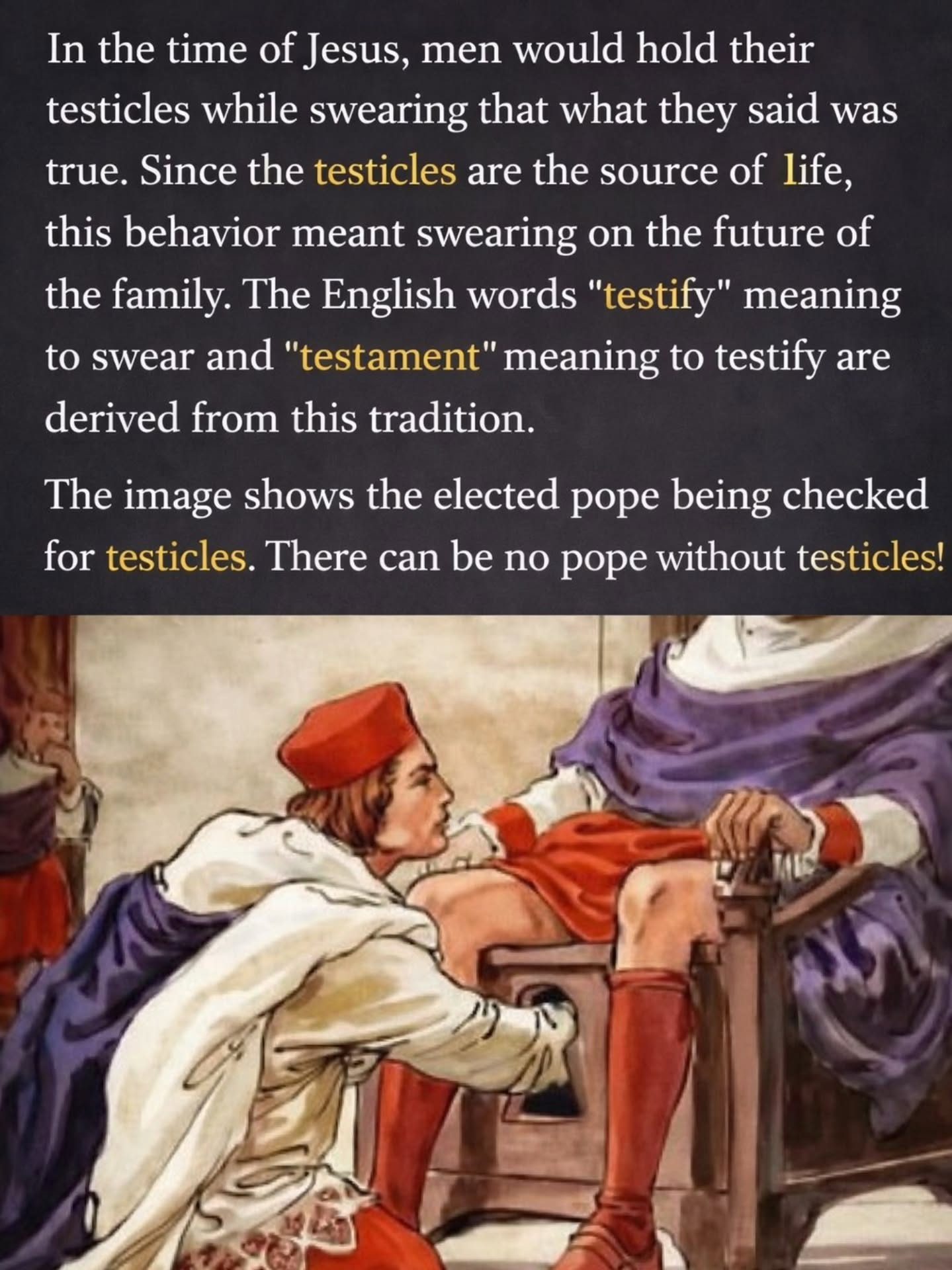
The practice of swearing on one's testicles extended into religious practices, particularly within the context of the Papacy. Historically, popes were required to undergo a physical examination to ensure they possessed testicles. This examination was crucial for determining the eligibility of a candidate for the papacy, as the absence of testicles could disqualify someone from holding the position. The image of a pope being examined for testicles underscores the significance of this practice in ensuring the legitimacy and purity of the religious leadership.
The Evolution of Language and Customs
Over time, the physical act of holding one's testicles while swearing an oath has evolved into the more abstract concepts of "testifying" and providing a "testament." These words carry the same weight and significance as the ancient practice, emphasizing the importance of truth and sincerity in our communications and commitments.
Practical Tips for Understanding Historical Claims
When encountering bold claims about the past, it's essential to approach them with a critical mindset:
- Pause and Reflect: Take a moment to consider the claim and its implications.
- Verify the Source: Check the credibility of the source to ensure it is reliable and accurate.
- Question the Evidence: Look for corroborating evidence and cross-reference multiple sources to verify the claim's authenticity.
Important Takeaways
The words "testify" and "testament" have a rich and fascinating origin rooted in ancient traditions and religious practices. Understanding the historical context and symbolic significance of these words can add depth to our appreciation of language and the cultural practices that have shaped it.
Conclusion
The story behind the words "testify" and "testament" is a testament to the enduring influence of ancient customs on modern language. By delving into the historical and cultural significance of these words, we gain a deeper understanding of the traditions that have shaped our linguistic and religious practices. This knowledge not only enriches our appreciation of language but also encourages us to approach historical claims with a discerning eye and a critical mindset.
Watch the Reel
Questions readers ask
What is the origin of the word 'testify'?
The word 'testify' comes from ancient oath-taking rituals. The root of the word is linked to the practice of holding or swearing on one's testicles. This practice was meant to emphasize the gravity and truthfulness of one's words. This is a symbolic reference to life, fertility, and the importance of the oath being taken.
Why were testicles used in ancient oath-taking rituals?
In ancient cultures, testicles were seen as a symbol of life, fertility and the continuation of a family's lineage. By swearing on them, individuals were signifying the seriousness of their oath, essentially pledging the truth of their words on the prosperity and continuation of their lineage.
How did ancient oath-taking rituals influence the etymology of 'testament'?
The word 'testament' is derived from the same oath-taking rituals that influenced 'testify.' A testament was often a formal declaration or affirmation, and the rituals involved in taking these oaths gave the word a sense of gravity and truthfulness, even though the act of swearing on testicles was not always required.
How did oath-taking rituals evolve over time?
Over time, the practice of swearing on testicles became less common and evolved into other forms of oath-taking. The rituals became more symbolic and verbal, and the act of swearing was integrated into legal, religious and cultural customs. Today, these ancient practices can be seen in the solemnity of taking an oath in a court of law or during a religious ceremony.
What role did religious contexts play in the development of 'testify' and 'testament'?
Religious contexts played a significant role in the development of these words. In ancient times, oaths were often taken in religious settings to invoke the power of a higher authority. This connection to religion contributed to the gravity and solemnity associated with the words 'testify' and 'testament'. Today, these words are still used in religious ceremonies.
Why were oaths considered so important in ancient cultures?
Oaths were considered crucial in ancient cultures because they served as binding agreements that held individuals accountable for their words and actions. By swearing an oath, especially one involving a symbol as significant as testicles, individuals were held to a higher standard of truthfulness and commitment, and violating such an oath would have serious consequences.
In ancient cultures, how did the word 'testament' become associated with written declarations?
The word 'testament' became associated with written declarations, particularly in the context of wills or religious texts, due to its origin in oath-taking rituals. As the practice of swearing on testicles evolved, the concept of a solemn, truthful declaration was extended to written documents, which also required a high degree of truthfulness and formality. This is why the word 'testament' is often used in legal and religious documents today.
Related deep dives
Similar reads based on topic and creator.


Recent articles
Fresh deep dives from the latest Reels we unpacked.




Comments
Be the first to comment.