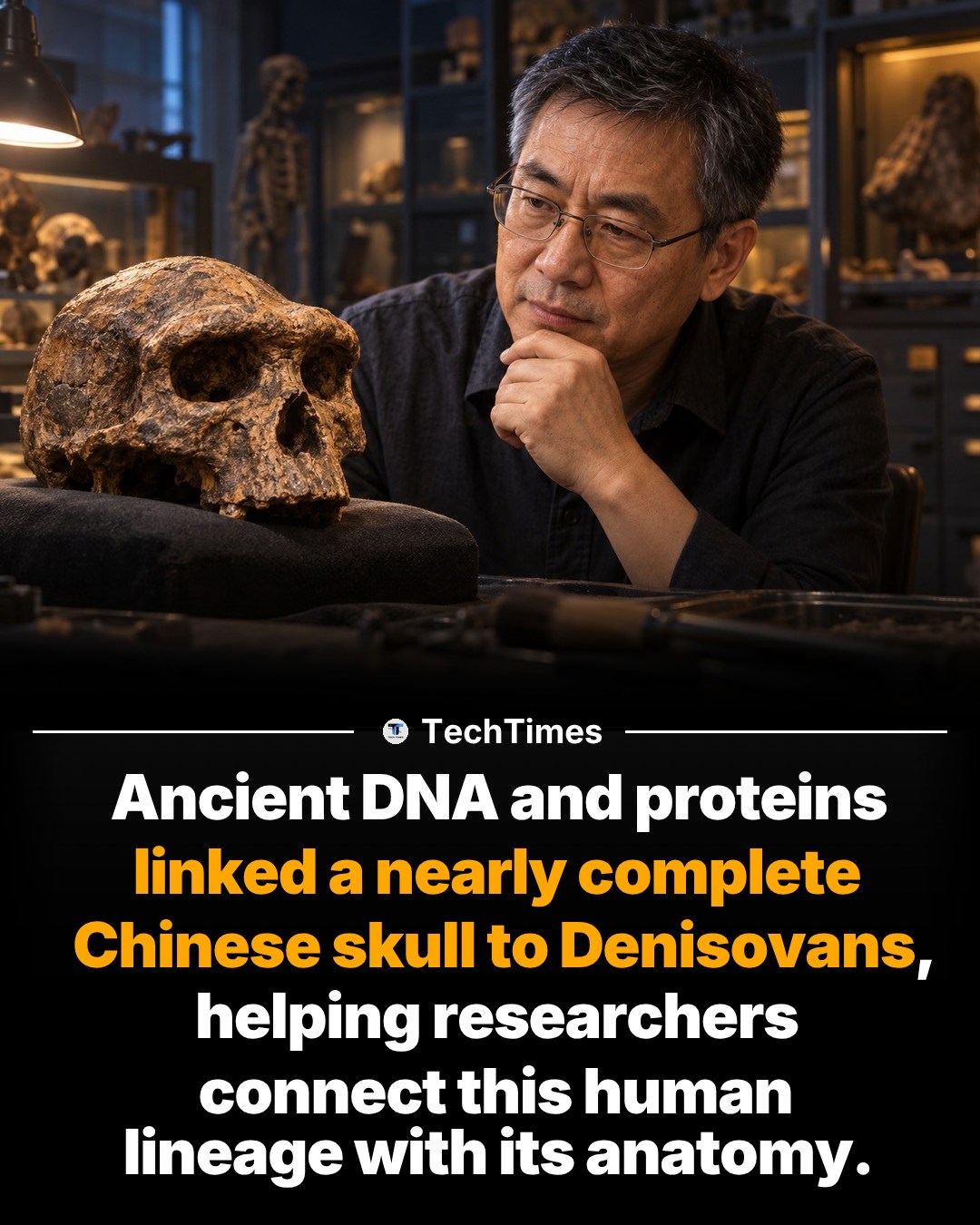
The Denisovans left few solid clues of their existence, but a single skull discovered in China is transforming what we know about these ancient hominids. Modern researchers have mapped the artifact's ancient DNA and proteins, drawing a clear genetic link between the skull and the enigmatic Denisovan lineage. The most complete fossil of its kind - the recently discovered skull is central to ongoing research on human evolution, shedding distinctive light on the Denisovan. With no close fossil records, Denisovans are known through only a small, assorted handful of remains and artifacts. Arising some 600,000 years ago, these hominids thrived in Asia and interbred with other Homo species, altering the course of human lineage. With no close fossil records, Denisovans are known through only a small, assorted handful of remains and artifacts, including a fragment of a pinky finger and a lower jawbone.
What is a Denisovan?
The Denisovan designation is derived from the Siberian cave where the first fossil, a pinky bone, was found in 2008. Like the Neanderthals, Denisovans are archaic hominids, part of the genus Homo. Their lineage arose as long as 600,000 years ago, with a lineage that extended across Eurasia. Denisovans are genetically distinct from Neanderthals, with whom they share a common ancestor. Although they lived as late as 40,000 years ago, Denisovan fossils are scarce, with only a small collection of remains and artifacts to guide research. The recent discovery of a nearly complete skull in China, whose DNA and proteins firmly link it to the enigmatic Denisovans, marks a significant contribution to their fossil record. The skeleton's anatomical features, including its large size and robust build, suggest it is a Denisovan. The team linked the fossil to Denisovans by sequencing DNA from one of the skull bones. The mitochondrial DNA matched Denisovan samples. A thornier process, protein sequencing confirmed the identification. The genus evolved distinctive features that set it apart from other Homo species. These include a large and flat mid-face, a broad and high cranial vault, and robust jaw structures. Researchers are hopeful that further analysis of the skull will yield more clues about how these hominids lived and interacted with each other and other species. The skull is known as an "incredibly complete specimen", leading to an accurate depiction that is "unparalleled in the Denisovan history." Despite some preservation minor damage, most of the bone preserves well. This allows for a detailed characterization of the Denisovans.
Cultural significance Deniseovan DNA
Recent studies show Denisovans played a significant role in the genetic makeup of modern Asian, Melanesian, and Aboriginal Australian populations. These individuals inherited 4% to 6% of their genomes from Denisovans, demonstrating a deep and lasting impact on modern humans. The recent discovery of a nearly complete Chinese Denisovan skull, which is linked to Denisovans, contributes significantly to our understanding of Denisovan anatomy. However, this artifact is unique, as most Denisovan fossils consist only of minute fragments, making the skull an invaluable addition to the fossil record. Denisovans are known for their genetic contribution to contemporary human lineages. Denisovan DNA is believed to have shaped the immune systems of early humans, making it easier for them to adapt to different environments and viruses.
How Denisovans differ from Neanderthals
The Denisovan fossil record is skeletal and sparse, focusing on bone fragments and artifacts, giving researchers a fragmented picture of their ancient hominids. Recent research reveals Denisovans and Neanderthals were distinct species. Several features distinguish Denisovans from Neanderthals, including differences in facial structure, high-vaulted skulls, thick jawbones, and a dental arcade. Scientists speculate Denisovans and Neanderthals diverged from a common ancestor some 500,000 to 700,000 years in the past. Denisovans lived in Siberia, Asia, and East Asia during the late Pleistocene epoch. Their likely range covered vast expanses, including North East Asia, Indonesia, and the history of Australian and Melanesian populations. The Denisovan range was extensive. Studies of modern humans confirm that Denisovans made significant contributions to the modern human genome.
Proteins mimicking the past
Proteins, extracted from the Chinese skull, are opening a novel pathway to uncover the Denisovan lineage. Advanced methods are allowing researchers to reconstitute ancient proteins, which are preserved for the long term in fossilized bones. These proteins can then be compared to proteins from other hominids, creating a picture of the relationship between species. This allows researchers to bridge the gap between fossil records and genetic data. The new methods suggest Denisovans are an early branch of the genus Homo.
Deciphering Denisovan anatomy
The skull reflects Denisovan adaptations and anatomy, which helps researchers better comprehend their evolution and lineage. The skull is found to have a significant relationship with previous Denisovan fossil evidence.
Denisovans in modern human DNA
Humans still carry Denisovan DNA, passed down from ancient ancestors. They predominantly appear in genomes from Melanesian, Aborigines of Australia, and the indigenous tribes of Southeast Asia, China, and the Philippines. Their DNA contributed to the development of the human immune system, blood coagulation, and the metabolism of fats. Their DNA has also made Asian and Papua New Guinean populations more robust to altitude sickness.
A scientific breakthrough
Scientists believe the research could lead to a deeper understanding of human evolution and the development of the human immune system. Continued study of the Chinese skull could provide new insights into human evolution and reveal the genetic secrets behind modern humans' adaptations. By analyzing its proteins and DNA, researchers can glean insights into the Denisovans' lives, including their diet, lifestyle, and interactions with other species.
What does Denisovan research mean for potential and future studies?
Denisovans share similarities to other hominids but are mostly known for the distinctiveness of their genetic material and bone fragments. Hence, researchers must exercise caution and determination when studying these historical artifacts, as they are unique and rare.
Analyze a fossil
Mindful study and statistical analysis of proteins and genomics are essential to testing and interpreting the artifacts accurately.
Sequence proteins
Using advanced methods, proteins extracted from Denisovan fossils are reconstituted and then compared with other hominids, creating a picture of their relationship to other species.
Link fossils to DNA
Proteins can then be used to link fossils to DNA, creating a historical timeline of Denisovans and their relationship with other species. This is essential for understanding their evolution and adaptations.
Watch the Reel
Questions readers ask
What makes the recently discovered Chinese skull significant in the study of Denisovans?
The skull is significant because it is the most complete Denisovan fossil ever found. This completeness allows researchers to study the anatomy of Denisovans in greater detail than ever before, providing new insights into their physical characteristics and evolutionary history. The skull's well-preserved condition, despite some minor damage, offers an accurate depiction of Denisovan features, which were previously known only from small, fragmented remains.
How did researchers confirm that the skull belonged to a Denisovan?
Researchers confirmed the skull's Denisovan origin through a combination of DNA and protein sequencing. They extracted mitochondrial DNA from a skull bone, which matched known Denisovan samples. Additionally, protein sequencing further supported the identification, confirming the skull's genetic and evolutionary links to the Denisovan lineage. The skull's distinctive anatomical features, such as a large and flat mid-face, also aligned with known Denisovan characteristics.
What can the skull tell us about Denisovan interactions with other Homo species?
The skull provides valuable insights into Denisovan interactions with other Homo species. Denisovans are known to have interbred with other hominids, including modern humans, Neanderthals, and possibly other archaic Homo species. The DNA sequencing from the skull reveals genetic links to these interbreeding events, offering clues about how Denisovans contributed to the genetic makeup of modern humans, particularly in Asian, Melanesian, and Aboriginal Australian populations.
How do Denisovans differ from Neanderthals, and what are their defining characteristics?
Denisovans and Neanderthals are both archaic hominids, part of the genus Homo, but they are genetically distinct. Denisovans have distinctive features such as a large and flat mid-face, a broad and high cranial vault, and robust jaw structures. These characteristics set them apart from Neanderthals, who have their own unique traits. The Denisovan lineage arose around 600,000 years ago and thrived across Eurasia, interbreeding with other Homo species and leaving a lasting genetic impact on modern humans.
What is the significance of the Denisovan DNA found in modern populations?
The presence of Denisovan DNA in modern populations, particularly in Asian, Melanesian, and Aboriginal Australian individuals, highlights the significant role Denisovans played in human evolution. This genetic inheritance, which accounts for 4% to 6% of these populations' genomes, demonstrates the deep and lasting impact of Denisovan interbreeding with other Homo species. Understanding this genetic legacy helps researchers trace the evolutionary history of modern humans and the contributions of archaic hominids to our genetic makeup.
Why are Denisovan fossils so rare, and what challenges do researchers face in studying them?
Denisovan fossils are rare due to the scarcity of well-preserved remains. Most known Denisovan fossils consist of small, fragmented pieces, such as a pinky bone and a lower jawbone, rather than complete skeletons. This scarcity makes it challenging for researchers to study Denisovan anatomy and evolution in detail. The recent discovery of a nearly complete skull in China is a significant breakthrough, offering an unprecedented opportunity to learn more about these enigmatic hominids.
How does the discovery of the Chinese skull contribute to our understanding of Denisovan evolution?
The discovery of the Chinese skull contributes to our understanding of Denisovan evolution by providing a comprehensive view of their anatomy. The skull's completeness and well-preserved condition allow researchers to study Denisovan physical characteristics in detail, offering new insights into their evolutionary history. This discovery also highlights the importance of continued research and the potential for future finds to further enlighten our understanding of these ancient hominids.
Related deep dives
Similar reads based on topic and creator.




Recent articles
Fresh deep dives from the latest Reels we unpacked.




Comments
Be the first to comment.